
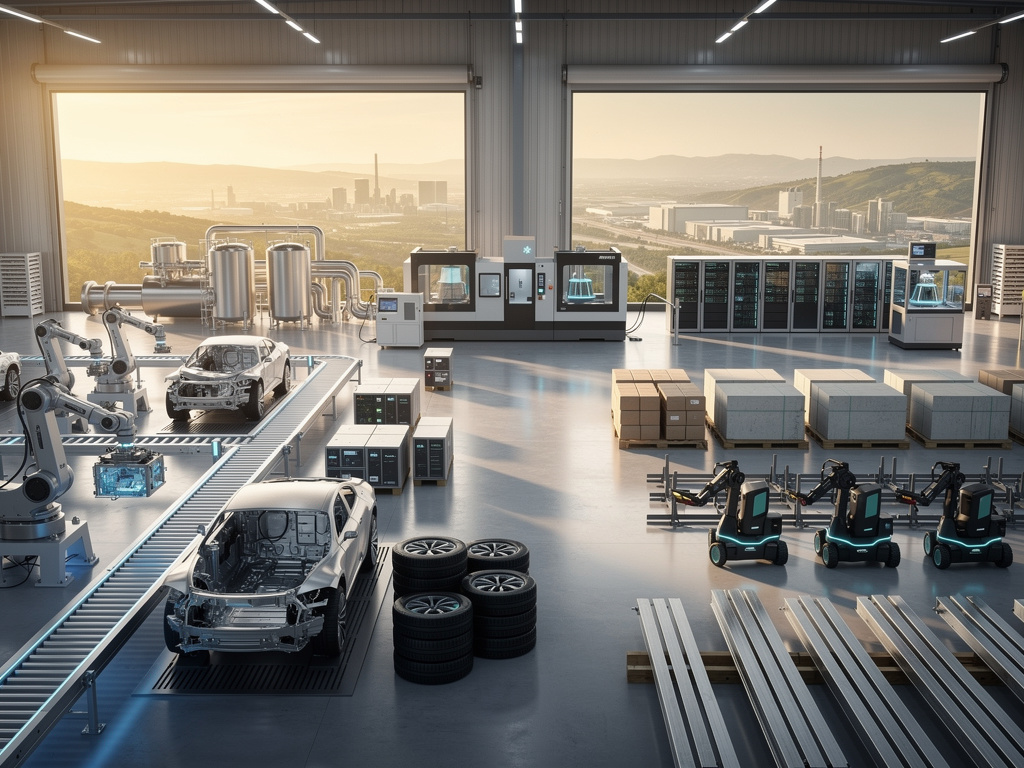
The manufacturing sector in the United States has entered a phase of noticeable expansion as demand from industrial buyers strengthens across multiple categories. According to a recent analysis published by Yahoo Finance, this recovery shows signs of broadening beyond a few isolated areas into a more widespread pattern that could sustain growth for months ahead. Industrial orders have climbed steadily, reflecting increased confidence among factory operators who now face fewer supply chain bottlenecks and steadier customer commitments.
Factory output rose in recent months after a period of contraction that followed the post-pandemic boom. The Institute for Supply Management reported that its manufacturing index moved back into expansion territory, crossing the key 50-point threshold that separates growth from decline. New orders, production levels, and employment figures all contributed to the positive reading. Companies that make machinery, chemicals, and fabricated metal products recorded some of the strongest gains, pointing to healthy demand from sectors such as construction, energy, and transportation.
This improvement arrives at a time when many businesses have completed inventory corrections that weighed on activity throughout much of the past two years. Manufacturers had built up large stockpiles during the supply chain crisis only to see orders slow as customers worked through their own excess holdings. That destocking process now appears largely complete in several key industries. With inventories better aligned to sales, purchasing managers have begun placing larger orders again, which in turn supports production schedules and hiring plans.
The energy sector stands out as a major contributor to this momentum. Oil and gas companies continue to invest in drilling equipment, pipelines, and related infrastructure despite fluctuating commodity prices. Renewable energy projects have added another layer of demand, with manufacturers of solar panels, wind turbines, and battery storage systems reporting order books that extend well into next year. This dual dynamic has created opportunities for suppliers across the materials spectrum, from specialty steel producers to electronics component makers.
Construction activity has also played a significant role. Federal infrastructure spending authorized under the Bipartisan Infrastructure Law has started to translate into concrete projects on the ground. Roads, bridges, water systems, and broadband networks all require substantial amounts of manufactured goods ranging from concrete reinforcements to electrical transformers. Private commercial construction has shown resilience too, particularly in warehouses and data centers that support the continued expansion of online retail and cloud computing.
The automotive industry, while facing its own set of challenges with electric vehicle adoption rates, has stabilized after earlier chip shortages. Assembly plants have ramped up production of both traditional and electric models, driving demand for everything from aluminum castings to advanced semiconductors. Suppliers further down the chain report that order visibility has improved, allowing them to plan capital expenditures with greater certainty than they had during the height of the pandemic disruptions.
One notable aspect of the current recovery involves its geographic spread. While the South and Midwest have traditionally dominated manufacturing employment, recent data shows gains appearing in states across the Northeast and West as well. Reshoring initiatives have encouraged some companies to bring production back from overseas, particularly for products where speed to market or intellectual property protection carries high value. Announcements of new factories for semiconductors, pharmaceuticals, and electric vehicle batteries have dotted the map from Arizona to Ohio, each one creating ripple effects for local suppliers of components and support services.
Labor markets within manufacturing have tightened in response to this growth. The sector added jobs at a pace that outstripped many other parts of the economy during the first half of the year. Wage pressures have increased, yet companies appear willing to pay more to secure workers with specialized skills in areas such as CNC machining, robotics programming, and quality control. Training programs run through community colleges and industry associations have expanded to meet this need, though gaps remain in certain technical fields.
Inflation, while still a concern, has moderated in many manufacturing supply chains. Commodity prices for steel, copper, and plastics have retreated from their peaks, giving factory managers more room to absorb wage increases without immediately passing costs to customers. Transportation expenses have also normalized as shipping container rates and trucking capacity returned closer to pre-pandemic levels. These cost dynamics help explain why business confidence surveys show improving sentiment even as interest rates remain higher than they were during the easy-money period of the last decade.
The Federal Reserve has taken notice of these developments. Policymakers have signaled that they will monitor manufacturing data closely when considering future moves on interest rates. Strong industrial demand could complicate efforts to bring inflation fully back to target if it leads to renewed price pressures in core goods. At the same time, healthy factory activity supports overall economic growth and helps offset weakness that may appear in other sectors such as housing or consumer discretionary spending.
Global factors also shape the outlook. European manufacturing has shown tentative signs of stabilization after a difficult period marked by high energy costs following the Ukraine conflict. Chinese industrial production continues to expand, though at a slower pace than in previous years due to property market troubles and weaker export demand. These international trends influence American manufacturers both through export opportunities and through competition in domestic markets. Tariffs and trade policies remain points of discussion, with some industries advocating for continued protection while others push for freer access to foreign inputs.
Technology adoption has accelerated amid the recovery. Factories have invested in automation equipment to address labor shortages and improve productivity. Collaborative robots, vision systems, and data analytics platforms have moved from pilot programs into regular use on production floors. These investments often require manufacturers to work more closely with software providers and systems integrators, creating additional business for technology firms that serve industrial customers.
Small and medium-sized manufacturers have participated in the upswing, though not always at the same pace as their larger counterparts. Many smaller shops rely on defense contracts or specialized components for medical devices, both areas that have seen steady demand. Access to capital for equipment upgrades remains a challenge for some, particularly as banks have tightened lending standards in response to higher interest rates and economic uncertainty. Government loan programs and tax incentives have helped bridge some of these gaps.
Looking forward, several risks could slow the momentum. A renewed escalation in geopolitical tensions might disrupt key supply routes or drive energy prices higher. Persistent inflation could force the Federal Reserve to maintain restrictive policy for longer than markets currently anticipate. Consumer spending might weaken if employment growth slows in service industries, reducing demand for goods that ultimately flow through factories. Despite these potential headwinds, the breadth of current industrial demand suggests the manufacturing recovery has a solid foundation.
Companies that have already adapted to higher interest rates and tighter supply chains appear best positioned to benefit. Those with strong balance sheets and flexible operations have used the past few years to streamline processes and build stronger relationships with customers and suppliers. The result is a manufacturing base that may prove more resilient than in previous business cycles.
The broadening of industrial demand across sectors and regions marks a departure from the narrow recovery seen immediately after the initial pandemic shock. Instead of depending on a few hot categories such as home goods or electronics, the current expansion draws strength from energy investment, public infrastructure, automotive stabilization, and continued technological upgrading. This diversity reduces vulnerability to shocks in any single area and increases the odds that manufacturing can contribute positively to economic growth over the next several quarters.
As orders continue to flow and production schedules lengthen, the focus for many executives has shifted from crisis management to strategic planning. Questions about capacity expansion, workforce development, and sustainability goals have moved to the forefront. The recovery has given companies breathing room to address these longer-term issues while still meeting near-term customer requirements. How effectively they balance these priorities will help determine the strength and duration of the manufacturing upswing in the years ahead.
The data from recent months paints a picture of gradual but meaningful progress. Purchasing managers report better supplier performance, shorter lead times, and more predictable costs. Customers appear more willing to commit to future deliveries rather than operating on a hand-to-mouth basis. These changes in behavior signal growing confidence that the worst of the post-pandemic disruptions has passed and that a more normal industrial environment is taking shape.
Economists will continue to watch monthly indicators for signs that the recovery is gaining or losing steam. The combination of domestic policy support, private sector investment, and global stabilization creates conditions that could allow manufacturing to sustain its current trajectory. While challenges certainly remain, the evidence suggests that American factories have turned a corner and are now operating with increasing momentum across a widening range of industries. This development carries positive implications for workers, communities, and the overall economy as production volumes rise and industrial activity spreads more broadly than at any time since the recovery began.


 WebProNews is an iEntry Publication