
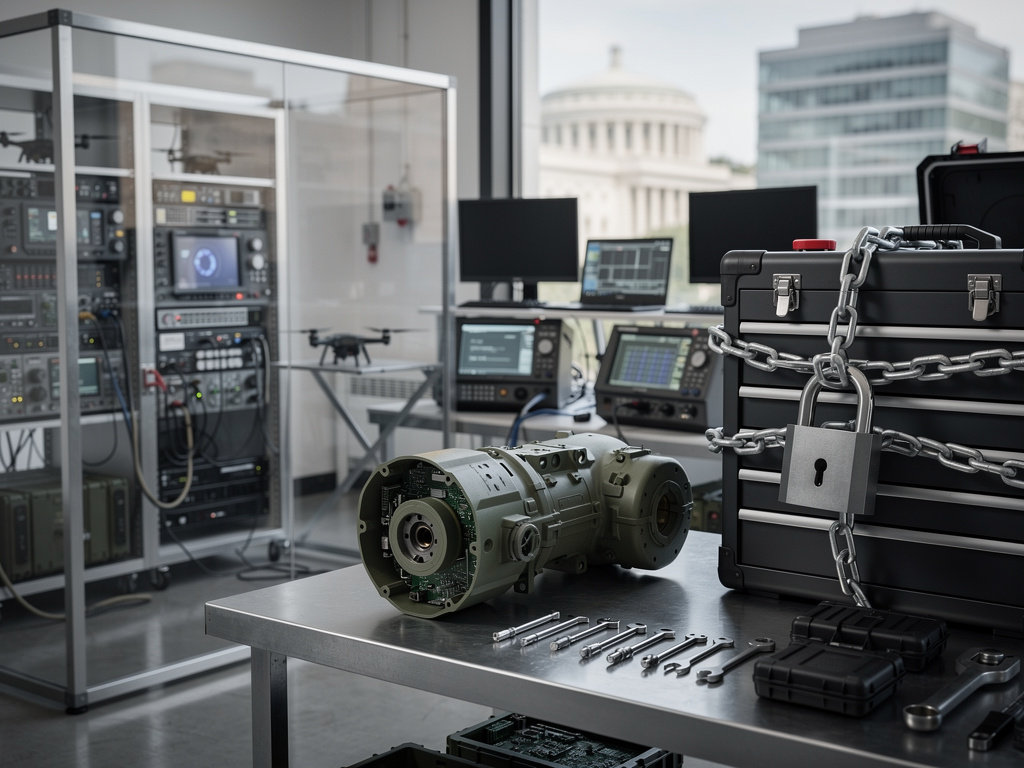
In a surprising turn of events that has sent ripples through the technology and defense sectors, U.S. lawmakers have stripped provisions from the National Defense Authorization Act (NDAA) for fiscal year 2026 that would have empowered military personnel to repair their own equipment. This decision, embedded in the sprawling annual defense policy bill, reverses earlier bipartisan momentum toward granting service members greater autonomy over maintenance tasks. Advocates argue that the removal underscores the outsized influence of defense contractors, who stand to lose billions in service contracts if troops could fix gear independently.
The NDAA, a must-pass piece of legislation that outlines military priorities and spending, had initially included language in both House and Senate versions aimed at bolstering right-to-repair rights within the armed forces. These provisions sought to ensure access to tools, parts, and manuals for repairing everything from vehicles to electronics, potentially saving taxpayers money and improving operational readiness. However, the final compromise bill, unveiled this week, excised these elements entirely, leaving repair policies status quo and dependent on proprietary contractor services.
This development comes amid broader debates over repair rights in consumer and industrial contexts, where companies like Apple and John Deere have long restricted independent fixes to protect intellectual property and revenue streams. In the military realm, the stakes are higher: delayed repairs can compromise missions, and the Department of Defense spends an estimated $80 billion annually on maintenance, much of it funneled to private firms. The removal has drawn sharp criticism from reform advocates, who see it as a missed opportunity to modernize military logistics.
The Push for Repair Autonomy in Military Operations
The right-to-repair movement has gained traction in recent years, with states like New York and Colorado passing laws mandating manufacturer support for independent repairs. In the federal arena, the defense bill represented a key battleground. Earlier this year, as reported by Federal News Network, Rep. Mike Rogers highlighted efforts to include such language, noting it had garnered attention from the private sector. “We put language in the NDAA — it still needs some love and attention,” he said, signaling optimism that was ultimately dashed.
Opposition from industry groups, including the National Defense Industrial Association (NDIA), played a pivotal role. Sen. Elizabeth Warren accused the defense industry of blocking reforms in a statement covered by the same outlet, describing NDIA’s efforts as a “desperate attempt to cling to a status quo.” This lobbying pressure intensified as the bill moved through conference committees, where House and Senate negotiators reconciled differences.
The proposed repairs would have applied to a wide array of military assets, from fighter jets to communication devices, allowing troops to bypass exclusive contractor deals. Proponents, including the Public Interest Research Group, emphasized cost savings and efficiency. According to a statement from the group referenced in Startup News, the removal means the military remains beholden to contractors for routine fixes, potentially inflating budgets and slowing response times in the field.
Industry Influence and Legislative Maneuvering
Behind the scenes, defense contractors like Lockheed Martin and Raytheon have argued that unrestricted repairs could compromise security and intellectual property. They contend that proprietary diagnostics are essential for maintaining equipment integrity, a view echoed in industry briefings to lawmakers. This perspective clashed with reformists who pointed to successful right-to-repair implementations in other sectors, such as agriculture, where farmers have fought similar restrictions.
The NDAA’s broader context adds layers to this decision. As detailed in The New York Times, the bill authorizes nearly $900 billion in spending, exceeding the White House’s request by $8 billion and including a 4% pay raise for troops. Yet, amid these allocations, the excision of repair language highlights priorities skewed toward contractor interests over innovation.
Recent posts on X (formerly Twitter) reflect public frustration, with users decrying the move as a capitulation to corporate lobbying. One post from a right-to-repair advocate noted the provisions’ inclusion in initial drafts only to be stripped by committee leadership, amplifying sentiments of betrayal among military families and taxpayers. These online reactions underscore a growing disconnect between legislative actions and public demands for transparency in defense spending.
Implications for Military Readiness and Taxpayer Costs
Without these reforms, the Pentagon faces ongoing challenges in maintenance backlogs. A Government Accountability Office report from last year estimated that repair delays contribute to billions in lost operational hours annually. By mandating contractor involvement, the current system often requires shipping equipment off-site, a process that can take weeks or months—time that’s critical in active deployments.
Advocates like Nathan Proctor from the U.S. Public Interest Research Group have voiced disappointment, pointing out in X discussions that the military’s right to repair could set a precedent for civilian sectors. The removal, they argue, perpetuates a monopoly where contractors charge premium rates for parts and services that troops could handle in-house with proper resources.
Comparatively, other nations have embraced similar reforms. The European Union, for instance, has advanced directives requiring manufacturers to provide repair information, leading to faster turnaround times in their defense apparatuses. U.S. military leaders have privately expressed support for such changes, according to sources familiar with internal deliberations, but political hurdles remain formidable.
Broader Ramifications for the Right-to-Repair Movement
The defense bill’s outcome reverberates beyond the Pentagon, influencing the national conversation on repair rights. Consumer groups have long pushed for federal legislation, with bills like the FAIR Act stalling in Congress. This latest setback, as analyzed in Reuters, occurs against a backdrop of heightened scrutiny on defense spending under the incoming administration, which has signaled a focus on efficiency.
Industry insiders suggest the removal was a compromise to expedite the bill’s passage, avoiding veto threats or delays. The NDAA also targets other priorities, such as countering Chinese technological influence through investment restrictions and tech bans, as outlined in Fox News. Yet, critics argue this prioritization shortchanges long-term sustainability.
On X, discussions have linked the decision to broader “anti-woke” themes in the bill, with some users speculating that repair rights were collateral in ideological battles. For example, the legislation cuts funding for IVF for military families and repeals old war authorizations, as noted in Military.com, framing it as a “Peace Through Strength” agenda by GOP lawmakers.
Future Prospects and Advocacy Efforts
Looking ahead, right-to-repair proponents are not deterred. Organizations plan to reintroduce similar language in future bills, potentially tying it to cost-saving measures that appeal to fiscal conservatives. Sen. Warren’s office has indicated ongoing investigations into industry lobbying, building on her earlier accusations.
The Department of Defense itself could push for internal policy changes, bypassing Congress through executive orders. Historical precedents, such as the military’s adoption of open-source software, show pathways for innovation despite legislative roadblocks.
Meanwhile, state-level actions continue to build momentum. California’s recent right-to-repair law, effective next year, mandates access to repair tools for electronics, which could indirectly pressure federal standards. As one X user poignantly stated, echoing widespread sentiment, the fight for repair autonomy is far from over—it’s just shifting battlegrounds.
Strategic Shifts in Defense Procurement
Delving deeper into procurement dynamics, the removal highlights tensions in how the U.S. acquires and maintains advanced weaponry. Contractors often embed restrictive clauses in contracts, limiting third-party interventions to safeguard trade secrets. This model, while protecting innovation, has led to criticisms of over-reliance on a few dominant players, as explored in reports from ExecutiveGov.
Economists estimate that enabling in-house repairs could shave 10-20% off maintenance costs, freeing funds for personnel or new technologies. In an era of budget constraints, this potential is significant, yet political alliances with industry giants prevail.
International comparisons further illuminate the issue. Allies like the UK have implemented modular repair systems in their forces, reducing downtime and enhancing flexibility. U.S. adoption could align with NATO interoperability goals, but the NDAA’s stance delays such alignment.
Voices from the Field and Policy Recommendations
Service members on the ground have shared anecdotes of frustration with contractor dependencies. In anonymous forums and X threads, veterans describe waiting for authorized repairs during exercises, contrasting with DIY fixes that could restore functionality swiftly.
Policy experts recommend hybrid models, where sensitive components remain contractor-exclusive, but routine maintenance opens up. This balanced approach, advocated in think tank papers, could mitigate security concerns while promoting efficiency.
As the bill heads to a vote, possibly by year’s end according to Politico, observers watch closely. The removal may galvanize a coalition of reformers, from consumer advocates to military efficiency hawks, setting the stage for renewed debates in 2027.
Evolving Dynamics in Tech and Defense Intersections
The intersection of technology policy and national security grows more complex. With emerging threats like cyber warfare, repair rights tie into resilience—quick fixes could counter disruptions. Yet, the decision reinforces a conservative approach, prioritizing established contracts over adaptive strategies.
Advocacy groups are mobilizing, with petitions and campaigns amplifying the issue. Recent X posts from influencers in the tech space call for public pressure on lawmakers, potentially influencing midterm narratives.
Ultimately, this episode reveals the intricate web of interests shaping U.S. defense policy. While the 2026 NDAA advances other fronts, the sidelining of repair reforms leaves a critical gap in modernizing America’s military backbone, inviting scrutiny and calls for change in the years ahead.


 WebProNews is an iEntry Publication