
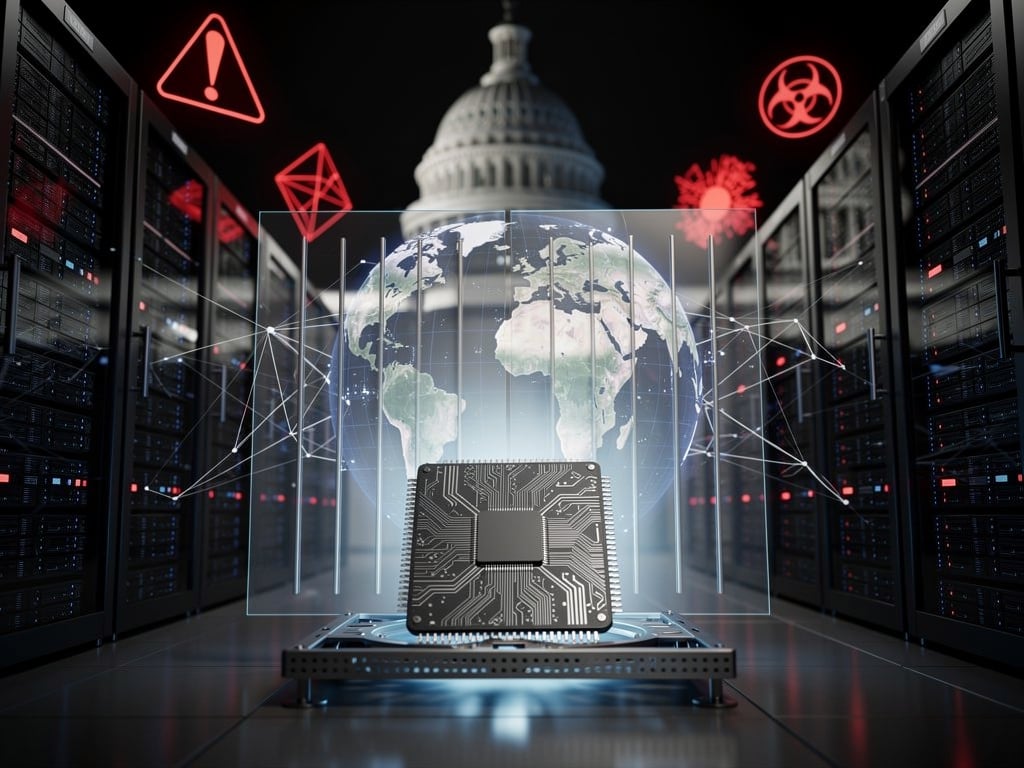
An Ars Technica report from June 2026 has brought fresh attention to the tangled relationship between frontier AI companies and government regulators. The story suggests that Anthropic may have unintentionally strengthened the case for an outright ban on exporting advanced AI models by revealing details about its own safety testing procedures during public testimony and internal documents that later reached policymakers.
The episode centers on how Anthropic executives described their approach to evaluating dangerous capabilities in large language models. In closed-door briefings and subsequent written submissions to congressional committees, the company outlined a series of tests designed to measure whether its systems could assist in the development of biological weapons, cyber attacks on critical infrastructure, or the evasion of existing safeguards. These evaluations, known internally as “red teaming” exercises, involved prompting models with increasingly specific instructions related to pathogen design, genetic manipulation, and secure network penetration.
What began as an effort to demonstrate responsibility appears to have backfired. Lawmakers and national security officials interpreted the detailed descriptions not as evidence of careful stewardship but as proof that current models already possess knowledge that could be misused if transferred to adversarial nations. The testimony highlighted specific scenarios in which Claude models correctly identified weaknesses in common biosafety protocols and suggested modifications that could increase virulence or transmissibility. Although the company emphasized that these outputs were carefully contained and never acted upon, the mere existence of such capabilities in a commercially available system alarmed those responsible for export controls.
This development arrives at a moment when the United States is actively revising its framework for dual-use technologies. The Bureau of Industry and Security within the Department of Commerce has been updating rules that govern the transfer of advanced computing hardware and the software that runs on it. Until now, software has largely escaped the strict licensing requirements applied to physical goods like semiconductors. The Anthropic disclosures may accelerate efforts to place frontier AI models under the same regime that restricts the sale of high-end GPUs to China and other countries of concern.
Industry observers point out that the company’s transparency campaign, once viewed as a competitive advantage, has supplied regulators with concrete examples they can cite in rulemaking. When Anthropic released model cards and safety reports that catalogued failure modes in vivid detail, the documents became reference material for staffers drafting new regulations. One former Commerce Department official, speaking on background, described the reports as “a roadmap for why these systems need to stay domestic.”
Anthropic was founded in 2021 by former OpenAI employees who wanted to prioritize constitutional principles and long-term safety over rapid commercialization. The company quickly gained a reputation for caution, refusing certain contracts and investing heavily in interpretability research. Its decision to publish extensive evaluations of model behaviors, including those related to biological and chemical risks, aligned with a broader movement among AI labs to share findings with the academic community and government partners.
Yet that same openness created vulnerabilities. By specifying exact thresholds at which a model would be deemed too dangerous for release, Anthropic effectively told regulators what to measure. When subsequent versions of Claude approached those thresholds in internal testing, the company delayed deployment and reported the results to oversight bodies. These reports, intended to build trust, instead fueled arguments that the technology had already crossed red lines that justified export prohibitions.
The potential ban would not only affect foreign sales but could reshape domestic research partnerships as well. Universities and private labs in allied countries rely on access to the latest American models for collaborative projects on drug discovery, materials science, and climate modeling. If those models become unavailable, researchers fear a fragmented global research environment where progress slows and duplication of effort increases. European and Asian governments have already begun expressing concern that American policy is shifting from promotion of AI leadership to outright protectionism.
Critics within the industry argue that the proposed restrictions misunderstand the nature of the technology. Unlike a physical weapon or a piece of specialized equipment, an AI model is a bundle of statistical weights that can be replicated once the training recipe is known. Determined actors could, in theory, recreate similar capabilities using openly available research papers and domestic computing resources. Banning exports might therefore provide only temporary advantages while damaging diplomatic relationships and economic opportunities.
Supporters of tighter controls counter that replication is not trivial. Training a model at the scale of Claude 4 requires thousands of specialized chips, vast amounts of energy, and months of careful experimentation. Nations currently subject to semiconductor export controls would face significant barriers to independent development. From this perspective, keeping the most capable models inside trusted borders buys time for defensive measures and further safety research.
The controversy also raises questions about the effectiveness of voluntary industry standards. For years, AI companies have participated in forums like the Partnership on AI and have engaged with the National Institute of Standards and Technology to develop voluntary guidelines. Anthropic’s experience suggests that self-regulation may inadvertently highlight risks that governments then feel compelled to address through mandatory rules. Once regulators see evidence that models can outline steps for synthesizing fentanyl analogues or modifying influenza viruses, the pressure to act becomes difficult to resist.
Congressional staffers have begun circulating draft language that would classify any AI system scoring above certain benchmarks on biosecurity, cybersecurity, and persuasion tests as subject to export licensing. The benchmarks in question draw heavily from evaluations first publicized by Anthropic and other labs. This creates a strange feedback loop in which companies trying to prove they are safe inadvertently define the criteria used to restrict them.
Anthropic has responded by emphasizing that its models include multiple layers of safeguards, including constitutional principles that instruct the system to refuse harmful requests. Company representatives argue that the evaluations were conducted in controlled environments and that real-world deployment includes additional protections such as output filtering and human oversight. They maintain that responsible disclosure strengthens rather than weakens the case for continued American leadership in AI development.
Nevertheless, the momentum toward restrictions appears strong. Bipartisan concern about AI-enabled biological threats has grown since the release of several high-profile studies linking large language models to increased risks in synthetic biology. Intelligence assessments shared with lawmakers reportedly describe scenarios in which state actors use stolen or licensed models to accelerate bioweapon programs. In this environment, even companies known for caution find themselves caught in the regulatory crossfire.
The situation also highlights tensions between different parts of the U.S. government. While the Commerce Department focuses on export controls, the State Department worries about diplomatic fallout with allies. The Pentagon seeks to maintain technological superiority, and the White House attempts to balance innovation with security. Reconciling these priorities has proven difficult, and the Anthropic episode has added another complicating factor to already complex negotiations.
Looking ahead, the AI industry faces a period of regulatory uncertainty. Companies must now weigh the benefits of transparency against the risk that detailed safety reports will be used as evidence for tighter controls. Some executives have begun speaking more cautiously in public, limiting the specificity of their comments about dangerous capabilities. Others continue to publish research but with redactions that shield the most sensitive findings from casual readers while still allowing expert review.
For Anthropic specifically, the episode represents both a validation of its safety focus and a cautionary tale about the limits of that approach. The company set out to build systems aligned with human values and to demonstrate that alignment through rigorous testing. In doing so, it may have convinced policymakers that those systems are too powerful to share freely. The resulting policy conversation will likely shape the global AI order for years to come, determining which nations maintain access to the most advanced tools and which must rely on domestic alternatives or older versions.
Policymakers now confront a difficult choice. They can pursue strict export bans that preserve a technological lead at the cost of international cooperation and potential innovation slowdowns. Or they can adopt a more nuanced approach that allows controlled sharing with trusted partners while maintaining safeguards against misuse. The evidence provided in Anthropic’s own reports will weigh heavily in that decision, serving as both a warning and a benchmark for future rules.
The company continues to develop new models while engaging with regulators to explain the practical limitations of any ban. Training runs require enormous resources, and the pace of progress depends on access to global talent and data. Isolating American AI development from international feedback loops could, over time, reduce the quality and safety of domestic systems. This argument has gained traction among some officials who worry that overly aggressive restrictions might ultimately weaken rather than strengthen national security.
As committees prepare to mark up legislation, the AI community watches closely. The outcome will signal whether governments view advanced models primarily as strategic assets to be guarded or as research tools to be shared responsibly. Anthropic’s experience suggests that the path of maximum transparency may not always lead to the regulatory outcomes its practitioners intend. The company that tried to lead by example now finds itself at the center of a debate it helped create, one whose resolution could determine the future geography of artificial intelligence development.


 WebProNews is an iEntry Publication