
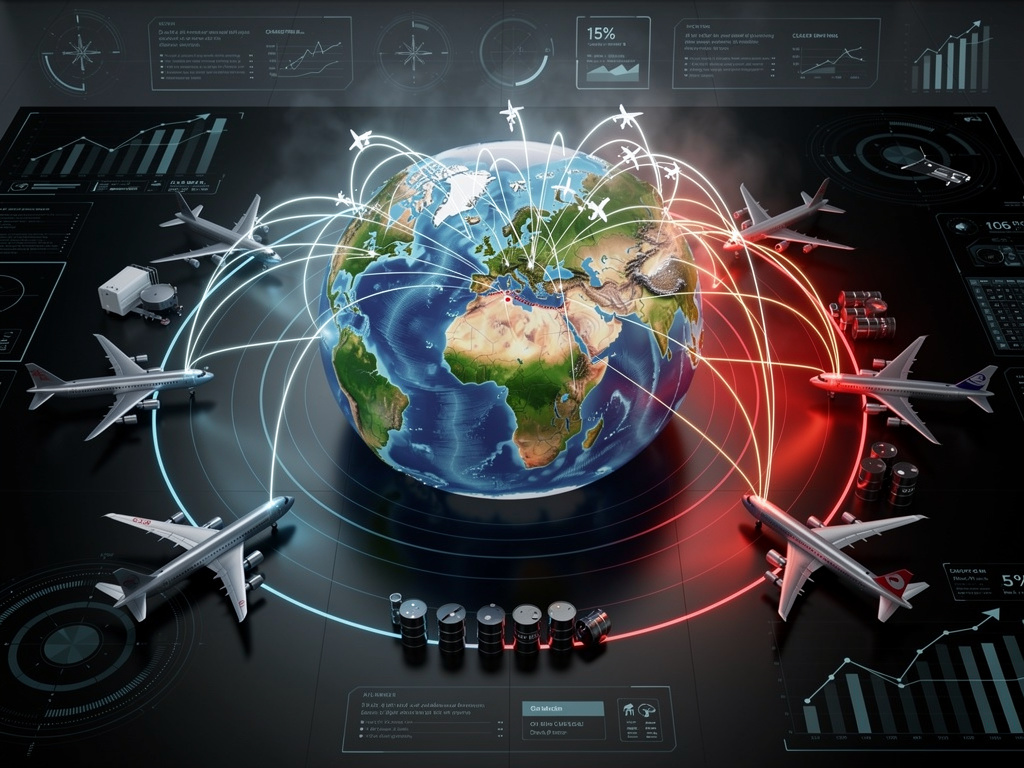
The escalating tensions between the United States and Iran have cast a long shadow over global air travel, leading to widespread disruptions that affect millions of passengers. Recent reports highlight how military conflicts in the Middle East, particularly those involving Iran, can trigger a cascade of issues for airlines and travelers alike. For instance, airlines have been forced to reroute flights to avoid volatile airspace, resulting in longer travel times, higher fuel costs, and a surge in ticket prices. This situation echoes past incidents where geopolitical strife has upended the aviation industry, but the current dynamics suggest even more profound implications for the years ahead, especially as projections point toward potential escalations by 2026.
Airspace closures represent one of the most immediate consequences of such conflicts. When Iran and its allies engage in military actions, vast swaths of airspace over the Persian Gulf and surrounding regions become off-limits to commercial aircraft. This forces carriers to detour around these zones, often adding hundreds of miles to flight paths. A prime example occurred during heightened U.S.-Iran tensions in early 2020, when the Federal Aviation Administration issued notices prohibiting U.S. airlines from flying over Iranian airspace following the downing of a Ukrainian jetliner amid missile strikes. Similar restrictions could intensify if conflicts flare up again, compelling flights from Europe to Asia to take northern routes over Russia or southern paths skirting the Arabian Peninsula. These detours not only extend flight durations—sometimes by several hours—but also increase operational expenses, which airlines inevitably pass on to consumers through elevated fares.
Ticket prices have already begun to reflect these pressures. Data from aviation analytics firms indicate that routes affected by Middle Eastern instability see fare hikes of up to 20-30% during peak tension periods. For budget-conscious travelers, this means reevaluating plans or facing unexpected costs. Business class and premium economy seats, which offer more flexibility, experience even steeper increases as demand shifts toward safer, more reliable options. Moreover, the uncertainty breeds hesitation among potential flyers, leading to lower booking rates and prompting airlines to adjust pricing strategies dynamically. In a report from Business Insider, experts predict that by 2026, persistent Iran-related conflicts could drive average transcontinental ticket prices up by an additional 15%, factoring in rising oil prices tied to regional instability.
Cancellations form another critical aspect of this chaos. Airlines often preemptively cancel flights to mitigate risks, leaving passengers stranded or scrambling for alternatives. During the 2019-2020 U.S.-Iran standoff, major carriers like United Airlines and Delta suspended services to destinations in the Middle East, citing safety concerns. Such decisions ripple outward, affecting connecting flights and global networks. Passengers with layovers in hubs like Dubai or Istanbul might find their itineraries disrupted, with rebookings complicated by overbooked alternatives. The financial toll on airlines is significant; cancellations lead to revenue losses and compensation payouts under regulations like the European Union’s EC 261, which mandates refunds and assistance for affected travelers. For individuals, this translates to lost time, additional expenses for hotels and meals, and the stress of navigating rescheduling in unfamiliar airports.
Diversions add yet another layer of complexity. When flights encounter unexpected closures or threats en route, pilots must divert to the nearest safe airport, often in countries not originally on the itinerary. This can result in passengers landing in places like Turkey or India instead of their intended destinations in Southeast Asia. The logistics of handling diverted flights strain airport resources, from ground crews to customs officials, and can delay onward travel by days. Fuel considerations play a role here too; aircraft carrying extra fuel for potential detours increase weight and burn rates, further inflating costs. Historical data from conflicts in the region shows that diversions spike during missile alerts or naval blockades, with airlines like Emirates and Qatar Airways frequently adjusting operations to maintain safety.
Beyond immediate operational hurdles, the broader economic impact on the aviation sector cannot be overlooked. Oil prices, heavily influenced by Middle Eastern stability, directly affect jet fuel costs, which account for about 30% of an airline’s expenses. Iran’s position as a key player in the Strait of Hormuz—a chokepoint for global oil shipments—means any disruption there could send fuel prices soaring. Analysts forecast that a full-scale conflict by 2026 might push crude oil above $100 per barrel, translating to higher surcharges on tickets. This scenario would hit low-cost carriers hardest, potentially leading to route cuts or even bankruptcies for smaller operators. International trade suffers as well, with cargo flights facing similar restrictions, delaying shipments of goods and exacerbating supply chain issues worldwide.
Passenger experiences during these turbulent times reveal the human side of the disruptions. Stories abound of families separated by sudden cancellations, business travelers missing crucial meetings, and tourists abandoning dream vacations due to safety fears. Social media platforms buzz with accounts of endless queues at rebooking counters and frustration over inadequate communication from airlines. In one notable case from the 2020 tensions, a flight from London to Mumbai was diverted to Baku, Azerbaijan, leaving passengers without clear information for hours. Such incidents underscore the need for better contingency planning, including enhanced communication protocols and partnerships between airlines and governments to streamline responses.
Regulatory bodies are stepping in to address these challenges. The International Civil Aviation Organization (ICAO) works to standardize airspace management during conflicts, providing guidelines for safe routing and real-time updates. National authorities, such as the FAA and the European Union Aviation Safety Agency (EASA), issue advisories that airlines must heed, often at the cost of efficiency. However, these measures sometimes lag behind rapidly evolving situations, leaving gaps that expose vulnerabilities. Calls for improved technology, like advanced satellite-based navigation systems, aim to offer more flexible routing options, reducing dependency on fixed airways that cross conflict zones.
Looking ahead to 2026, projections based on current geopolitical trends suggest that Iran-related instability could become a recurring theme. With ongoing proxy conflicts in Yemen, Syria, and Iraq, the risk of escalation remains high. Climate change adds another dimension, as extreme weather in detour regions could compound delays. Airlines are investing in fuel-efficient aircraft and alternative fuels to buffer against price volatility, but these adaptations take time to implement. For travelers, strategies like purchasing flexible tickets or travel insurance that covers geopolitical disruptions become essential. Some opt for overland alternatives or virtual meetings to sidestep air travel risks altogether.
The interplay between technology and aviation offers some hope amid the turmoil. Innovations in air traffic management, such as AI-driven route optimization, could help minimize detours by predicting safe paths in real-time. Drones and unmanned systems might eventually handle cargo in restricted areas, preserving supply lines without endangering human crews. Yet, these advancements must contend with regulatory hurdles and the inherent unpredictability of international relations. As nations navigate diplomatic channels to de-escalate tensions, the aviation industry watches closely, aware that peace in the Middle East is key to stable skies.
In reflecting on these developments, it’s clear that the ramifications extend far beyond individual flights. Global connectivity, a cornerstone of modern life, faces tests from such conflicts, prompting a reevaluation of how we approach international travel. Airlines, governments, and passengers must adapt to this reality, fostering resilience through preparedness and innovation. While the path forward remains uncertain, proactive measures can mitigate the worst effects, ensuring that air travel endures as a vital link in our interconnected world. The lessons from past disruptions, combined with forward-thinking strategies, will shape the industry’s response to whatever challenges arise by 2026 and beyond.


 WebProNews is an iEntry Publication