
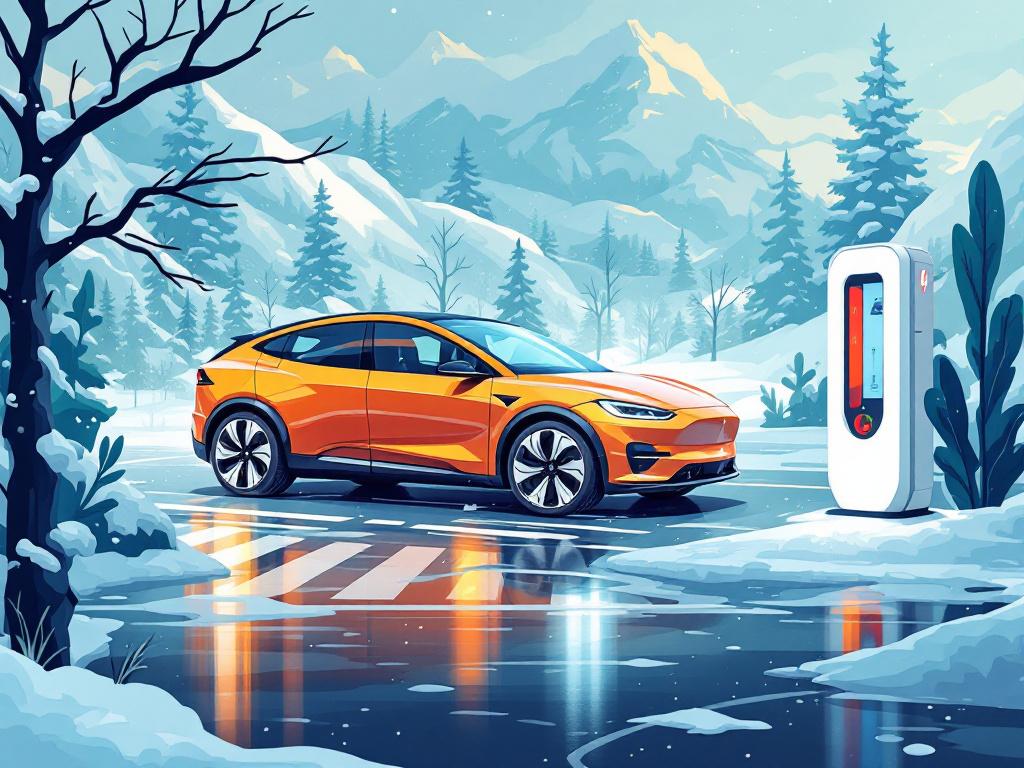
As the chill of winter sets in across the United States, the electric vehicle sector is facing its own kind of freeze. Automakers like Tesla, Ford, and General Motors are grappling with a confluence of policy shifts, trade barriers, and supply disruptions that threaten to slow the once-rapid push toward electrification. This downturn comes at a pivotal moment, just as the industry had begun to gain momentum with record sales in recent quarters. Yet, with federal incentives winding down and new tariffs looming, executives are rethinking strategies that once bet heavily on battery-powered models.
The troubles began mounting earlier this year, as changes in Washington reshaped the incentives that had fueled consumer adoption. The phase-out of the $7,500 federal tax credit for electric vehicles, which ended in September, has left buyers hesitant, particularly in a market where high interest rates already make financing pricier. Data from industry trackers shows that while EV sales hit over 1 million units in the first nine months of 2025—a record, according to reporting from CNBC—the momentum is faltering as subsidies vanish. Tesla, which has long dominated the space, reported a dip in deliveries, while legacy players like GM saw surges from models such as the Chevy Equinox EV, only to face broader headwinds.
Beyond policy, global supply chains are adding to the strain. Tariffs on imported components, especially batteries and rare-earth materials from China, have escalated costs for manufacturers. Ford, for instance, has delayed expansions at its Tennessee plant, citing these economic pressures, as noted in analyses from Business Insider. This isn’t just a U.S. issue; similar challenges are echoing in Europe and Asia, where competition from affordable Chinese EVs is intensifying.
Policy Shifts and Incentive Cliff
The elimination of federal EV tax credits marks a stark reversal from the supportive environment of previous years. Automakers had ramped up production expecting continued government backing, but the Trump administration’s rollback has forced a pivot. GM’s third-quarter sales jumped 8% overall, driven partly by EVs, yet executives warn that without incentives, demand could cool significantly, per details in a CNBC report on quarterly figures. This policy vacuum is particularly acute in colder states, where battery performance in winter conditions already deters some buyers.
Industry insiders point to a broader reevaluation of electrification goals. Ford, which once aimed for an all-EV lineup in Europe by 2030, has scaled back amid these uncertainties. Recent posts on X from automotive analysts highlight sentiment that EV market share might stagnate at around 9% this year, a flatline from previous growth trajectories, echoing projections from J.D. Power shared on the platform. Tesla’s Elon Musk has publicly acknowledged the slowdown, tweeting about the need for innovation to counter competitive pressures.
Supply chain disruptions compound these issues. Hurricanes and port strikes have delayed key parts, while tariffs on Chinese imports—potentially reaching 100% on EVs—threaten to inflate prices further. A CNN Business piece details how automakers are now doubling down on hybrids as a bridge technology, with GM investing billions in flexible manufacturing lines to produce both electric and gas-powered vehicles.
Tariffs and Global Trade Tensions
Trade policies are reshaping the competitive field, with proposed tariffs on Mexican imports adding another layer of complexity for companies like Ford and GM that rely on cross-border assembly. These measures, intended to protect domestic jobs, could inadvertently hike consumer prices, making EVs less accessible. Business Insider’s coverage emphasizes how this “nightmare combination” has led to layoffs and revised targets, with Tesla joining peers in slowing factory ramps.
In China, where much of the world’s battery production occurs, export restrictions on critical minerals like lithium are tightening supplies. This has ripple effects in the U.S., where automakers are scrambling for alternatives. A Reuters article from earlier this year, Reuters, noted Tesla’s caution in expanding capacity, a stance that persists into 2025 amid fears of oversupply.
Consumer behavior is shifting too. While South America sees booming EV sales without heavy reliance on Tesla, as reported in another Reuters story, the U.S. market shows buyers favoring hybrids over pure electrics. Posts on X from industry watchers like Car Dealership Guy underline this, with data suggesting electrified vehicles (including hybrids) could reach 25% market share, but pure EVs might hover at 10%.
Automaker Strategies in Flux
Tesla, long the pacesetter, is feeling the pinch from an aging lineup. Sales in key markets like Europe and China are slipping, with rivals introducing fresher models. A post on X from WION highlighted Tesla’s challenges, noting competition from dozens of new EVs from Ford and GM. The company’s focus on autonomous driving tech, like the Cybercab, aims to differentiate, but analysts question if that’s enough to reverse the slump.
Ford’s response has been pragmatic, boosting hybrid production while trimming EV ambitions. The Mustang Mach-E saw record sales earlier this year, but overall, the company is bracing for a tougher 2026, as per earnings previews in CNBC. GM, meanwhile, doubled its EV sales in the second quarter, driven by affordable options like the Equinox, according to Battery Tech Online. Yet, even GM is hedging bets, with CEO Mary Barra emphasizing a “customer-led” approach in recent statements.
Infrastructure gaps remain a hurdle. Charging networks, while expanding, lag in rural and cold-weather areas, where range anxiety peaks during winter. Business Insider reports that automakers are lobbying for more federal support, but with policy winds blowing against it, private investments—from Tesla’s Supercharger network to partnerships with Electrify America—are filling voids unevenly.
Market Share Battles and Consumer Sentiment
EV market share data for 2025 reveals a mixed picture. CarEdge’s updates show Tesla holding 41% of U.S. sales through the third quarter, but growth is slowing globally, as outlined in a FinancialContent market analysis. Hybrids are gaining ground, with Toyota and Honda leading that segment, forcing U.S. players to adapt.
Sentiment on X reflects broader unease. Users discuss how high prices and charging woes deter adoption, with one analyst noting that no electric pickup has exceeded 50,000 annual sales due to these barriers. This contrasts with optimistic forecasts from earlier years, like BloombergNEF’s 2024 report shared on the platform, which predicted record global sales but didn’t anticipate the U.S. policy U-turn.
Looking ahead, automakers are diversifying. Ford’s pivot to software updates for existing EVs aims to extend vehicle life cycles, while GM explores battery recycling to cut costs. Tesla’s push into energy storage could offset vehicle slowdowns, as Musk has hinted in earnings calls.
Supply Chain Vulnerabilities Exposed
The sector’s reliance on global supplies has been laid bare. Disruptions from geopolitical tensions, including Middle East conflicts affecting shipping routes, have delayed battery shipments. Automotive Manufacturing Solutions detailed how these issues are causing the sharpest production decline in five years, with tariffs exacerbating the pain.
In response, companies are onshoring. GM’s joint ventures with LG Energy Solution for U.S. battery plants are accelerating, though not without teething problems like labor disputes. Business Insider notes that this shift, while strategic, increases upfront costs at a time when margins are thin.
Consumer preferences are evolving amid economic pressures. With inflation easing but not gone, buyers are opting for value-driven options. MotorWatt’s blog on 2025 trends reports a 30% sales jump in the third quarter, largely due to last-minute tax credit rushes, but questions linger about sustained demand.
Economic Ripples and Workforce Impacts
The slowdown is rippling through the workforce. Layoffs at EV-focused plants, such as Ford’s in Tennessee, highlight the human cost. Unions like the UAW are pushing back, demanding protections as automakers pivot to hybrids. CNBC’s coverage of earnings underscores how these changes are reshaping labor dynamics in Detroit.
Investors are wary too. Stock prices for Tesla, Ford, and GM have fluctuated, with analysts downgrading outlooks amid the “EV winter.” Benzinga’s recent piece warns of a myriad of obstacles threatening expansion, from policy to supply woes.
Yet, innovation persists. Startups like Rivian are partnering with established players, while Tesla’s Full Self-Driving advancements could reignite interest. As winter deepens, the industry watches closely—adaptability may determine who thaws first.
Pathways to Recovery
Recovery strategies vary. Tesla bets on scale, planning lower-cost models for 2026. Ford integrates EVs with its profitable truck lineup, like the F-150 Lightning hybrids. GM leverages its Ultium platform for modular batteries, allowing quick adaptations.
Global contrasts offer lessons. South America’s EV boom, per Reuters, shows success without heavy subsidies, driven by local manufacturing. U.S. firms might emulate this by focusing on affordability.
Ultimately, the sector’s resilience will hinge on balancing short-term survival with long-term electrification goals. As challenges mount, the coming months will test whether this winter is a temporary frost or a longer ice age for electric vehicles in America.


 WebProNews is an iEntry Publication