
Electric Ambitions on Hold: Unpacking America’s Hesitant Embrace of EVs in 2026
In the opening days of 2026, the electric vehicle sector in the United States finds itself at a crossroads, grappling with persistent challenges that have kept adoption rates stubbornly low despite years of hype and investment. A recent survey highlighted by Ars Technica paints a sobering picture: EVs remain a niche preference, with only a fraction of American consumers seriously considering them for their next purchase. This comes amid broader market shifts, where hybrid vehicles are surging ahead, and full battery-electric models face headwinds from policy changes, infrastructure gaps, and shifting consumer priorities.
The survey, conducted by a leading automotive research firm, reveals that just 6% of respondents plan to buy a battery-electric vehicle as their next car, a figure that underscores a slowdown in momentum. This reluctance is not new but has been amplified by recent events, including the expiration of federal tax credits that once buoyed sales. Automakers like General Motors and Ford, which had bet heavily on electrification, are now pivoting back toward traditional internal-combustion engines and hybrids, acknowledging that consumer demand hasn’t kept pace with ambitious production goals.
Drawing from real-time data, industry reports indicate that EV sales in 2025 reached over 2.27 million units nationwide, marking a 16.37% increase from the previous year, according to figures from the Federation of Automobile Dealers Associations reported in The Economic Times. However, this growth was uneven, with a notable surge in electric passenger cars—up 77%—while other segments like two-wheelers grew more modestly. As we enter 2026, forecasts suggest a contraction, with sales expected to slow dramatically due to regulatory uncertainty and economic pressures.
Policy Shifts and Market Realities
The reversal of pro-EV policies under the current administration has played a pivotal role in this downturn. Incentives that made electric models more affordable have been scaled back, leading to a collapse in EV sales in the fourth quarter of 2025, as detailed in a report from Autobody News. Hybrids, by contrast, have seen a surge, filling the gap for consumers seeking fuel efficiency without the full commitment to battery power. This hybrid boom is evident in sales data from Cox Automotive, which forecasts overall new-vehicle sales at 15.8 million for 2026, a slight dip from 2025, with electrification trends fragmenting the market.
Consumer sentiment, as captured in various polls and social media discussions, further illuminates the barriers. Posts on X (formerly Twitter) from industry observers highlight persistent concerns over range anxiety, charging infrastructure, and costs. For instance, one widely viewed post noted that 57% of Americans are unlikely to buy an EV due to high costs compared to gas vehicles, echoing findings from older Ipsos polls but resonating into 2026. These online conversations reflect a broader hesitation, where even loyal EV owners—94% of whom would buy again, per J.D. Power—represent a small but dedicated base.
Global comparisons add context to the U.S. situation. While China and Europe have seen more robust adoption, driven by aggressive subsidies and mandates, the American market lags. A 2025 analysis from S&P Global shows U.S. EV penetration at around 10% in late 2025, far below China’s 30% or Europe’s 20%. Factors like vast geographic distances and a preference for larger vehicles contribute to this disparity, making the one-size-fits-all approach to electrification less viable here.
Infrastructure Hurdles and Consumer Doubts
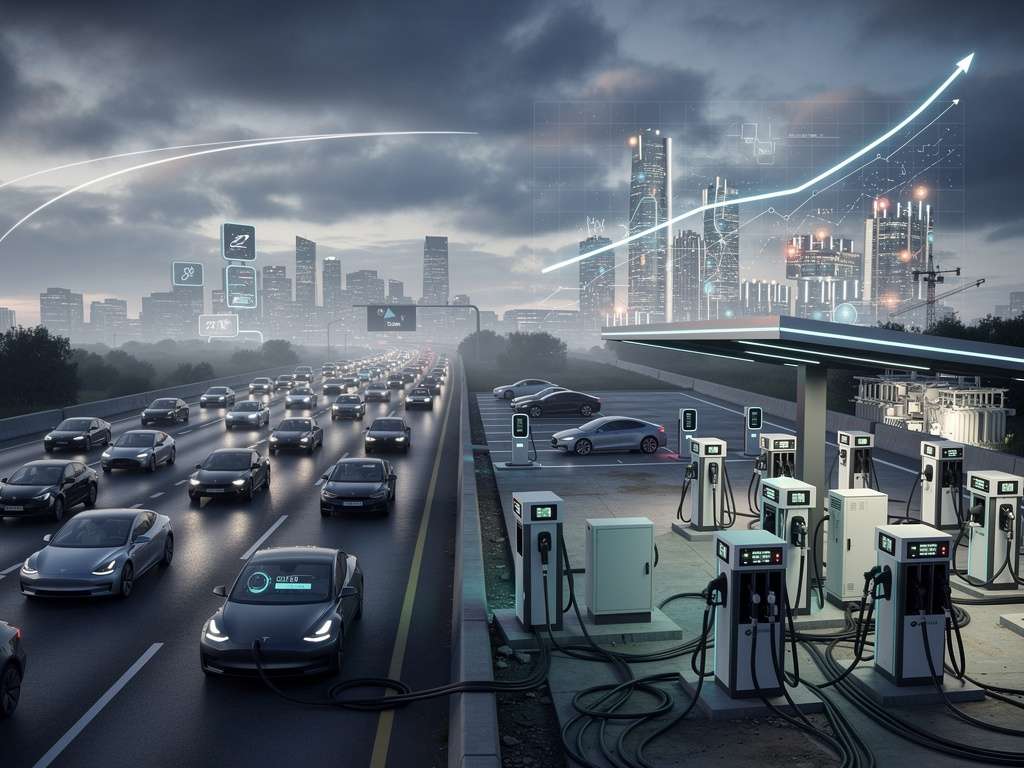
Charging networks remain a critical pain point, with many potential buyers citing inadequate public stations as a deterrent. The International Energy Agency’s Global EV Outlook 2025 emphasizes that while infrastructure has expanded, it hasn’t kept up with demand in rural and suburban areas, where most Americans live. This mismatch exacerbates range concerns, particularly for long-distance travel, a staple of U.S. driving culture.
Battery costs and replacement fears also loom large. A post-pandemic spike in raw material prices has kept EV prices elevated, even as manufacturers like Tesla cut costs to stimulate demand. According to BloombergNEF’s Electric Vehicle Outlook, global battery prices are trending downward, but in the U.S., the average EV still costs significantly more than its gas counterpart, deterring budget-conscious buyers.
Moreover, the used EV market is underdeveloped, with depreciation rates higher than anticipated due to rapid technological advancements. Industry insiders note that early adopters are trading in vehicles, flooding the market with models that lack the latest features, further eroding confidence. This cycle reinforces the perception of EVs as a risky investment, as highlighted in consumer studies from Deloitte, which in 2024 already signaled slowing momentum with two-thirds of Americans preferring fossil-fuel vehicles.
Innovation and Competitive Pressures
Amid these challenges, innovation continues to drive pockets of optimism. Automakers are investing in next-generation batteries with longer ranges and faster charging, aiming to address key pain points. For example, solid-state batteries promise to revolutionize the sector, potentially debuting in production models by late 2026, as forecasted in reports from EV Volumes at ev-volumes.com. Such advancements could tip the scales, but they must contend with a market where hybrids offer a compelling middle ground.
Competition from abroad adds another layer. Chinese manufacturers like BYD are eyeing U.S. expansion, offering affordable models that could undercut domestic players. However, trade tensions and tariffs may limit their impact, as discussed in a recent Virta Global overview of the 2025 market. This influx could either accelerate adoption by lowering prices or spark a backlash against foreign imports, complicating the domestic industry’s recovery.
Consumer preferences are evolving, albeit slowly. Surveys indicate a growing interest in electrification among younger demographics, with J.D. Power data showing 60% of new-vehicle shoppers considering EVs in the next year—a rise from previous months. Yet, this interest often translates to hybrids rather than pure electrics, as Americans prioritize practicality over environmental ideals in their purchasing decisions.
Economic Factors and Future Projections
Economic conditions in 2026 are poised to influence EV trajectories further. With gasoline prices hovering below $2.50 per gallon and electricity rates climbing above $0.20 per kWh on average, the operating cost advantage of EVs diminishes, as noted in recent X posts analyzing demand stabilization. This economic reality, coupled with higher interest rates on auto loans, makes financing an EV less attractive for many households.
Projections for the year ahead vary, but most point to tempered growth. Market.us estimates the U.S. EV market will reach $367.9 billion by 2035, growing at a 12.6% CAGR from 2025’s $112.3 billion base, per their report. However, 2026 is expected to see the slowest expansion since the pandemic, with global sales up just 13% to 24 million units, according to Bloomberg analyses shared on X. In the U.S., contraction is anticipated, driven by policy rollbacks and cooling demand.
Automakers’ responses will be crucial. Companies like GM, Hyundai, and Ford are recalibrating strategies, focusing on profitable segments like large trucks and SUVs while maintaining EV investments. A CNBC piece from late 2025 suggests this realism could lead to more sustainable growth, as firms align with consumer realities rather than policy-driven mandates.
Voices from the Ground and Broader Implications
On-the-ground perspectives from dealers and owners provide nuanced insights. Dealership networks report that while EV inquiries are up, conversions to sales remain low due to test-drive experiences revealing real-world limitations like cold-weather performance. Social media buzz, including posts from figures like Car Dealership Guy, underscores how hybrids are bridging the gap, with market share accelerating as full EVs plateau.
The broader implications for energy and transportation sectors are profound. Slower EV uptake delays the shift away from fossil fuels, impacting oil demand and emissions goals. Yet, as NPR’s coverage of 2025’s bumpy road notes, interest holds steady amid disruptions, suggesting resilience in the face of adversity.
Looking ahead, stakeholders must address multifaceted barriers through targeted investments in infrastructure, education, and incentives tailored to American needs. While EVs may remain niche for now, incremental progress in technology and policy could eventually broaden their appeal, transforming hesitation into widespread acceptance. The path forward demands patience and adaptability from an industry navigating uncharted territory.


 WebProNews is an iEntry Publication