
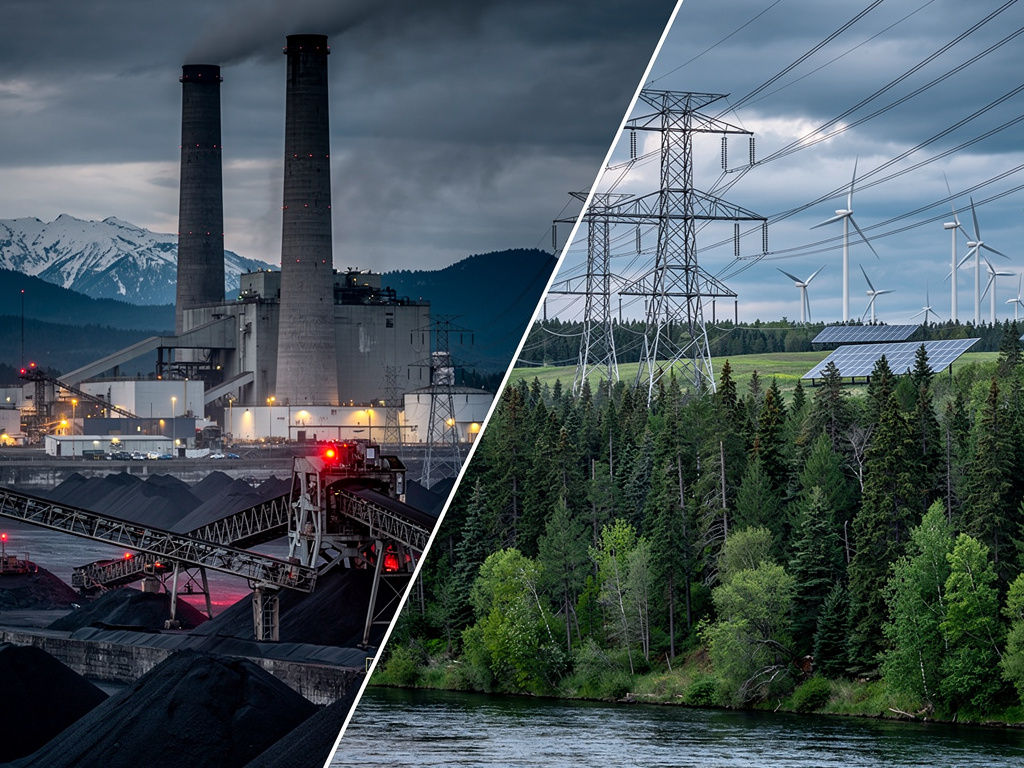
Clash of Powers: Federal Mandate Revives Washington’s Last Coal Plant Amid State Resistance
In a dramatic escalation of tensions between federal energy priorities and state environmental goals, the U.S. Department of Energy has issued an emergency order compelling Washington’s sole remaining coal-fired power plant to continue operations beyond its planned shutdown. The directive, announced just weeks before the facility’s scheduled closure on December 31, 2025, pits the Trump administration’s push for energy security against Washington’s longstanding commitment to phasing out coal. The plant in question, TransAlta’s Centralia facility, has been a cornerstone of the region’s power grid for decades, but its fate now hangs in the balance of legal and political battles.
The order, signed by Energy Secretary Chris Wright, cites an impending energy “emergency” in the Pacific Northwest, invoking Section 202(c) of the Federal Power Act to mandate continued coal burning at the 730-megawatt plant. This move comes as the region grapples with surging electricity demand from data centers, electric vehicle adoption, and population growth, compounded by variable renewable sources like wind and solar. According to reports from Ars Technica, Wright declared the emergency to avert potential blackouts, emphasizing the plant’s role in maintaining grid reliability during peak winter demand.
State officials, however, view this as an overreach that undermines years of planning and environmental policy. Washington’s Clean Energy Transformation Act, passed in 2019, mandates the elimination of coal from the state’s energy mix by the end of 2025. The law reflects a broader shift toward carbon-free electricity, with utilities like Puget Sound Energy already inking deals to transition the Centralia plant to natural gas. As detailed in the Washington State Standard, the federal order directly conflicts with this statute, setting the stage for a courtroom showdown.
Federal Intervention and Its Rationale
The Department of Energy’s decision isn’t isolated; it’s part of a pattern where the administration seeks to prop up coal assets amid retirements nationwide. Earthjustice, an environmental advocacy group, has criticized the order as “illegal” and based on a “false” emergency, noting that the plant’s closure was meticulously planned over 15 years. Their press release highlights how TransAlta had secured a $600 million deal with Puget Sound Energy to repower the facility with natural gas turbines, ensuring continued operation without coal’s emissions.
Industry analysts point out that the Pacific Northwest’s grid faces unique challenges. Hydroelectric power, which supplies much of the region’s baseload, is vulnerable to droughts and seasonal fluctuations. Recent winters have seen tight energy supplies, with utilities importing power from coal-heavy states like Montana and Wyoming. Utility Dive reports that similar emergency orders could target at least five other coal plants slated for shutdown, signaling a broader federal strategy to bolster fossil fuels.
Environmental groups argue that the emergency declaration lacks substantiation. Data from the Northwest Power and Conservation Council suggests that while demand is rising, alternative sources—including expanded natural gas, renewables, and energy storage—could fill the gap without extending coal’s lifespan. The order’s timing, just days before the deadline, has fueled suspicions of political motivations, especially given President Trump’s vocal support for coal during his campaign.
State Backlash and Legal Maneuvers
Washington Governor Jay Inslee and Attorney General Bob Ferguson have vowed to fight the order vigorously. In statements echoed across local media, they decry it as an assault on state sovereignty and climate progress. The KUOW notes that the Centralia plant is the state’s largest source of climate pollution, emitting millions of tons of carbon dioxide annually. Shutting it down was projected to cut Washington’s greenhouse gas emissions by about 5%, a significant step toward the state’s net-zero goals by 2050.
Legal experts anticipate a multifaceted challenge. The state could argue that the federal order violates the Supremacy Clause by preempting state law without clear justification. Ferguson has already signaled plans to sue, potentially in federal court, drawing parallels to past disputes over environmental regulations. Posts on X from users like environmental lawyers and energy commentators reflect widespread outrage, with many labeling the move as a regression to outdated energy policies amid global calls for decarbonization.
TransAlta, the plant’s operator, finds itself caught in the crossfire. The company had invested heavily in the natural gas conversion, including workforce retraining and community transition funds. Now, under the federal mandate, it must navigate compliance while facing potential state penalties for violating the coal ban. Industry insiders whisper that this could lead to operational chaos, with the plant possibly running at reduced capacity or facing shutdowns if legal injunctions are granted.
Economic Ripples and Community Impact
The Centralia area, a former coal mining hub, has long depended on the plant for jobs and economic stability. The original shutdown plan included $55 million in community support from TransAlta, aimed at diversifying the local economy. Federal intervention could preserve hundreds of jobs in the short term, but at the cost of delaying this transition. Local leaders, as reported in KOMO News, express mixed feelings—relief for employment but concern over prolonged pollution.
Broader economic implications extend to ratepayers. State officials warn that continued coal operations could inflate electricity costs due to Washington’s carbon pricing system, which taxes fossil fuel emissions. The Climate Commitment Act imposes fees that make coal uneconomical, potentially passing costs onto consumers. Conversely, proponents of the federal order argue that avoiding blackouts prevents even steeper economic losses from disruptions to industries like tech and manufacturing.
Energy markets are already reacting. Natural gas futures have dipped slightly on news of delayed conversions, while coal suppliers eye renewed demand. Analysts from firms like S&P Global predict that if the order stands, it could encourage similar interventions elsewhere, reshaping investment in renewables.
Environmental Stakes and Broader Policy Conflicts
At the heart of this dispute is the clash between immediate energy reliability and long-term sustainability. Washington’s push to eliminate coal aligns with international efforts to combat climate change, but the federal government prioritizes grid stability amid what it calls an “energy crisis.” Environmentalists, via groups like Earthjustice, contend that perpetuating coal use exacerbates air quality issues in the Lewis County region, where the plant has historically contributed to respiratory health problems.
Recent X posts highlight public sentiment, with users decrying the order as a step backward in the fight against climate change. One prominent thread discusses how this could set precedents for overriding state environmental laws, drawing comparisons to past federal-state tussles over pipelines and drilling. The debate underscores a national divide: red states favoring fossil fuels versus blue states accelerating clean energy transitions.
Policy watchers note that this isn’t Washington’s first coal-related battle. In 2017, the state denied permits for a major coal export terminal, citing environmental concerns, as covered in historical reports from Engineering News-Record. The current saga revives those tensions, potentially influencing upcoming elections and regulatory reforms.
Potential Outcomes and Future Trajectories
As legal proceedings unfold, several scenarios emerge. If the courts side with Washington, the plant could shutter as planned, forcing the region to accelerate alternative energy deployments. A federal victory might extend operations indefinitely, prompting appeals to higher courts or even congressional intervention. Insiders speculate that compromise could involve a phased extension, allowing time for grid reinforcements.
The order’s ripple effects extend beyond Washington. Other states with aggressive clean energy mandates, like California and New York, are watching closely. If successful, the DOE’s approach could embolden similar actions, challenging the decentralized nature of U.S. energy policy. Conversely, a rebuke might strengthen state authority over environmental matters.
For industry stakeholders, this episode highlights the volatility of energy transitions. Utilities must balance regulatory compliance with operational realities, while investors reassess risks in fossil-dependent assets. As winter demand peaks, the Centralia plant’s fate will test the resilience of the Pacific Northwest’s power system.
Voices from the Ground and Expert Insights
Community voices add nuance to the narrative. Workers at the plant, many with decades of service, express gratitude for job security but anxiety over uncertainty. Local environmental groups rally against the order, organizing protests and petitions that echo sentiments found in recent X discussions emphasizing health and ecological costs.
Experts from think tanks like the Brookings Institution argue that true energy security lies in diversification, not prolonging coal. They advocate for federal-state partnerships to build transmission lines and storage capacity, mitigating the very emergencies cited in the order. Historical precedents, such as the Obama-era Clean Power Plan battles, suggest protracted litigation ahead.
Ultimately, this conflict encapsulates the broader struggle over America’s energy future. With climate imperatives clashing against reliability concerns, the resolution could redefine federal-state dynamics in the power sector for years to come. As the case progresses, all eyes remain on Centralia, a symbol of enduring tensions in the quest for sustainable power.


 WebProNews is an iEntry Publication