
Apple’s Chip Tariff Lifeline: A Strategic Delay in the U.S.-China Tech Standoff
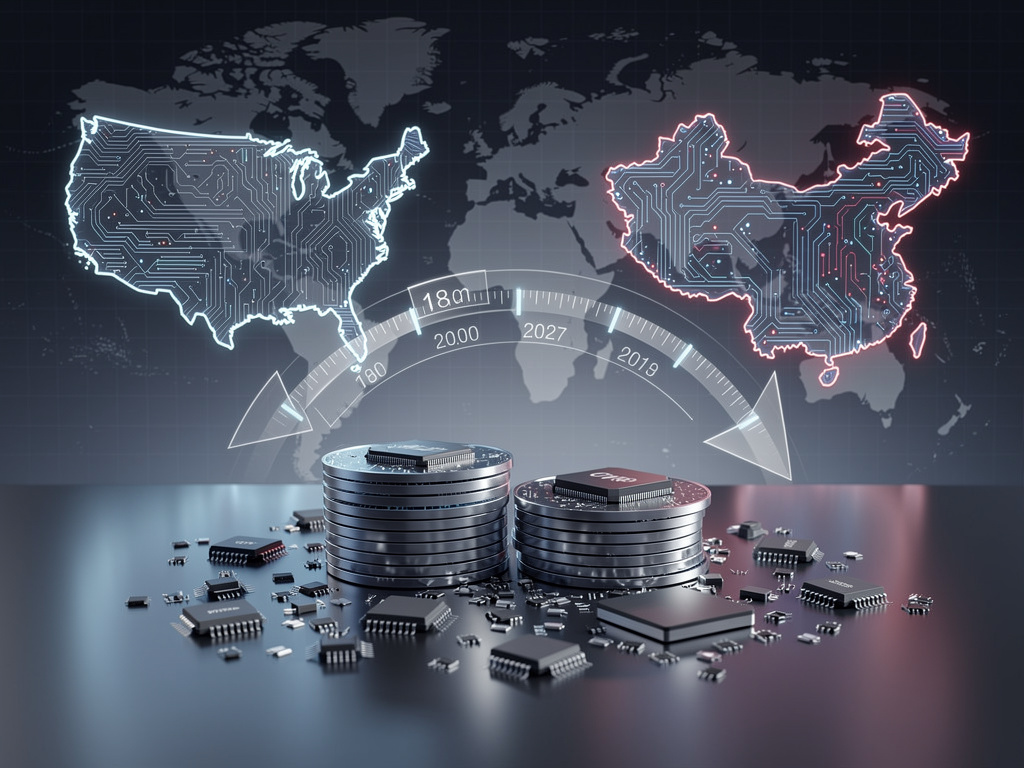
In a move that has sent ripples through the global semiconductor supply chain, Apple Inc. has secured a crucial breathing room from impending U.S. tariffs on Chinese-made chips. According to recent reports, the United States Trade Representative (USTR) has decided to postpone the effective imposition of these tariffs until June 2027, setting the initial rate at zero for the interim period. This delay provides Apple, a company heavily reliant on Chinese manufacturing for its components, with approximately 18 months to adjust its strategies without immediate financial strain.
The decision stems from an investigation into China’s semiconductor practices, which the U.S. deems unfair and aimed at dominating the industry. As detailed in a Federal Register filing, the tariffs are intended to counter Beijing’s aggressive subsidies and market manipulations, but their rollout has been staggered to minimize short-term disruptions. For Apple, this means continued access to cost-effective chip imports from China, a linchpin in producing devices like iPhones, Macs, and iPads.
Industry analysts view this as a calculated truce in the escalating U.S.-China trade tensions. President Donald Trump’s administration, while vocal about curbing China’s technological ascent, appears to balance national security concerns with economic realities. The delay allows time for domestic chip production to ramp up, potentially reducing reliance on foreign sources.
Balancing Trade Pressures and Supply Chain Realities
Apple’s sourcing model has long been intertwined with China’s vast manufacturing ecosystem. The company assembles most of its hardware in facilities operated by partners like Foxconn and Pegatron, with semiconductors often originating from Chinese fabs or those influenced by Beijing’s policies. This interdependence made Apple particularly vulnerable to tariff hikes, which could have inflated costs and squeezed profit margins.
Recent coverage from MacRumors highlights how the tariff deferral until 2027 gives Apple leeway to diversify its supply chain. The report notes that while tariffs will eventually apply, the zero-rate period acts as a buffer, allowing the company to explore alternatives without hasty disruptions.
Echoing this, insights from AppleInsider emphasize the financial reprieve for Apple’s component sourcing. The outlet points out that products like the Mac and iPhone, which incorporate Chinese semiconductors, will avoid immediate price pressures, potentially stabilizing consumer prices in the U.S. market.
Broader Implications for Tech Giants
The tariff delay isn’t isolated to Apple; it reverberates across the technology sector. Companies like Nvidia and Broadcom, which also depend on Chinese chips for graphics processing units and other components, stand to benefit similarly. Posts on X (formerly Twitter) from financial analysts suggest a bullish sentiment, with one noting that exemptions for tech items like smartphones and chips could spark market rallies, as seen in early 2025 when similar waivers were announced.
This sentiment aligns with broader discussions on X, where users have speculated on how such policies might encourage reshoring efforts. For instance, automation and domestic manufacturing incentives under initiatives like the CHIPS Act are frequently mentioned as counterbalances to tariff risks, though some posts caution that full decoupling from China remains challenging.
From a policy perspective, the USTR’s action reflects findings from a year-long probe, as reported by CBS News. The agency concluded that China’s practices distort global markets, justifying tariffs but deferring them to foster a smoother transition.
Strategic Shifts in Apple’s Operations
Apple’s response to these trade dynamics has been proactive. Under CEO Tim Cook, the company has accelerated efforts to shift production to countries like India and Vietnam, part of a “China+1” strategy to mitigate risks. However, as X posts from supply chain experts indicate, tariffs on exports from these alternatives—such as 25% on Indian-made iPhones—could complicate diversification, potentially increasing U.S. prices by 10-15%.
A deep dive into Apple’s 2025 activities, as covered by Yahoo Finance, reveals that beyond AI advancements, the firm’s focus on in-house chip design via its A-series and M-series processors has been pivotal. This vertical integration reduces dependence on third-party suppliers, positioning Apple to weather tariff storms better than peers.
Moreover, Apple’s lobbying prowess cannot be understated. Cook’s negotiations with U.S. officials have historically secured exemptions, as seen during previous trade wars. The current delay, per Reuters, ties into a temporary trade truce between Trump and Chinese President Xi Jinping, underscoring diplomacy’s role in tech policy.
Economic Ripples and Market Reactions
The semiconductor industry, valued at over $500 billion globally, faces ongoing volatility from such measures. Tariffs aim to bolster U.S. chipmakers like Intel and TSMC’s Arizona facilities, but delays acknowledge the time needed for these investments to yield results. X discussions often highlight how this could curb inflation by maintaining steady chip supplies, benefiting sectors from automotive to consumer electronics.
Analysts from CNBC note that the investigation uncovered China’s unfair subsidies, yet the 2027 timeline preserves current trade flows. This approach contrasts with more aggressive stances on other goods, suggesting a nuanced strategy for critical tech components.
Market reactions have been positive, with Apple’s stock showing resilience. As one X post from a trader observed, tech exemptions could lead to upward gaps in shares of companies like Apple and Nvidia, reflecting investor confidence in navigated trade hurdles.
Geopolitical Context and Future Uncertainties
At the heart of this tariff saga is the U.S. push for technological sovereignty amid rising geopolitical tensions. China’s dominance in legacy chips—essential for everyday devices—poses economic threats, as outlined in a South China Morning Post analysis. The delay, analysts say, prioritizes stability over rapid escalation, allowing firms like Apple to adapt.
However, uncertainties loom. The exact tariff percentage, to be announced 30 days before June 2027, could range significantly, impacting long-term planning. X conversations frequently debate this, with some users predicting rates as high as 25-60%, potentially forcing price hikes or supply chain overhauls.
Apple’s case exemplifies broader industry trends. As The New York Times reports, Big Tech’s alignment with Trump’s policies has yielded favorable outcomes, raising concerns among conservatives about undue influence. Yet, for insiders, this highlights the interplay between policy, innovation, and global commerce.
Innovation Amid Trade Constraints
Despite these challenges, Apple continues to innovate. The company’s pivot to custom silicon has not only enhanced device performance but also insulated it from some supply vulnerabilities. Insights from Yahoo Finance underscore how this, coupled with services growth, has fortified Apple’s position against trade volatilities.
On X, tech enthusiasts discuss how tariff delays could accelerate AI and chip advancements, with less immediate cost pressure allowing R&D investments. This optimism contrasts with warnings from earlier posts about potential “economic Armageddon” if tariffs were imposed swiftly, as echoed in analyses from Wedbush.
Ultimately, the delay buys time for strategic realignments. Apple might intensify partnerships in Taiwan or the U.S., leveraging subsidies from the CHIPS Act to build resilient networks.
Long-Term Strategies and Industry Adaptation
Looking ahead, the tech sector must prepare for a post-2027 reality. For Apple, this could involve ramping up production in exempted regions or advocating for further waivers. X posts from financial commentators suggest that ongoing negotiations might yield more concessions, especially if U.S.-China relations improve.
The Bloomberg report on the tariff hold-off, linked to a Trump-Xi truce, as per Bloomberg, reinforces this narrative. It positions the delay as a diplomatic tool rather than a permanent fix.
Industry insiders anticipate that by 2027, advancements in chip fabrication could alter dependencies, potentially rendering some tariffs moot. Apple’s trajectory will likely influence peers, setting benchmarks for navigating U.S.-China frictions.
Navigating Uncertainty with Agility
As the clock ticks toward June 2027, Apple’s agility will be tested. The company’s history of adaptation— from weathering the COVID-19 supply disruptions to antitrust battles—suggests readiness. References to MacRumors and AppleInsider underscore the immediate relief, but long-term success hinges on diversification.
X sentiment reflects a mix of relief and caution, with users noting potential inflationary effects if tariffs escalate. Yet, for now, the zero-rate period offers a window for recalibration.
In this high-stakes arena, Apple’s tariff lifeline exemplifies the delicate balance between protectionism and global integration, shaping the future of tech manufacturing.


 WebProNews is an iEntry Publication