
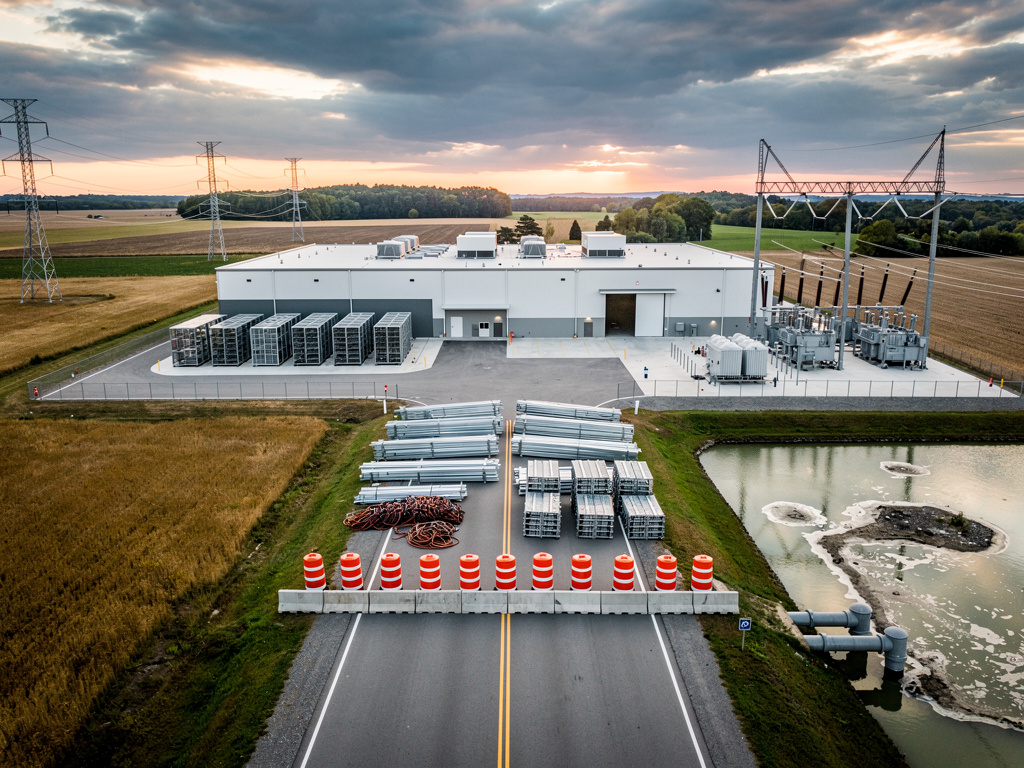
The rapid expansion of data centers across the United States has encountered significant pushback in 2026, with community groups, environmental organizations, and local residents successfully halting projects valued at more than 130 billion dollars so far this year. According to reporting from Ars Technica, these blocked initiatives represent a sharp increase in opposition compared to previous years, reflecting growing concerns over energy consumption, water usage, noise pollution, and the transformation of rural and suburban areas into industrial zones dominated by server farms.
This surge in protests comes as technology companies continue to pour resources into infrastructure that supports artificial intelligence training, cloud computing, and high-speed data processing. Major players like Amazon, Microsoft, Google, and Meta have announced ambitious plans to construct facilities that require enormous amounts of electricity, often equivalent to the output of multiple power plants. In many cases, these demands strain local grids already coping with residential and commercial needs, leading residents to question whether the economic benefits outweigh the long-term costs to their communities and the environment.
One prominent example involves a proposed hyperscale facility in rural Virginia, where residents organized against a development that would have consumed water resources equivalent to those of a small city. Local activists highlighted how the constant draw on aquifers could lower water tables and affect nearby farms and wells. After months of town hall meetings, petition drives, and legal challenges, county officials voted to deny the necessary zoning changes, effectively shelving a project estimated at 2.5 billion dollars. Similar stories have unfolded in states including Georgia, Ohio, Illinois, and parts of the Midwest, where agricultural communities fear that industrial-scale data centers will alter their way of life permanently.
Environmental advocates point to the carbon footprint associated with these facilities. Even though many operators promise to match their energy use with renewable sources, the immediate reality often involves reliance on natural gas or coal-fired plants during peak demand. Protesters have cited studies showing that the explosive growth in computing power for AI models could double electricity consumption in certain regions within five years. Organizations such as the Sierra Club and local chapters of the Environmental Defense Fund have joined forces with homeowners to document these impacts and present evidence at regulatory hearings.
Noise represents another frequent complaint. The massive cooling systems required to prevent servers from overheating generate constant low-frequency hums that travel for miles. In one case near Atlanta, residents recorded decibel levels that disrupted sleep patterns and affected livestock behavior. After filing complaints with state environmental agencies and gathering medical documentation of stress-related health issues, the community forced the operator to install additional sound barriers and eventually scale back expansion plans. The total value of projects canceled or indefinitely delayed in that metropolitan area alone exceeded 8 billion dollars.
Water usage has emerged as perhaps the most emotionally charged issue. Data centers require millions of gallons daily for evaporative cooling, and in drought-prone areas this demand creates direct competition with agriculture, municipal supplies, and natural ecosystems. In northern Arizona, a coalition of Native American tribes, environmental groups, and ranchers blocked a facility that would have drawn from already stressed Colorado River tributaries. Their campaign included scientific reports on projected groundwater depletion and testimony from hydrologists, which convinced federal permitting agencies to withhold approval. The 1.8 billion dollar project remains on hold while alternative sites are evaluated.
Economic arguments on both sides have complicated the debate. Supporters emphasize the jobs created during construction and the ongoing tax revenue that can fund schools and infrastructure. In some counties, data center operators promise hundreds of permanent positions with salaries well above local averages. Yet many of these roles involve technical maintenance that requires specialized skills not readily available in rural workforces, meaning companies often bring in employees from outside the area. Property values near proposed sites have become unpredictable, with some homeowners reporting difficulty selling homes due to uncertainty about future industrial development.
State governments have responded with varying approaches. Some legislatures have passed bills offering tax incentives and streamlined permitting to attract investment, arguing that blocking these projects risks losing out to competing states or even other countries. Others have introduced moratoriums on new constructions until comprehensive impact studies can be completed. In Virginia, which already hosts one of the largest concentrations of data centers in the world, lawmakers recently debated legislation requiring operators to offset their water consumption through conservation projects elsewhere in the watershed. The measure passed after intense lobbying from both technology firms and citizen groups.
The scale of investment at stake underscores the stakes involved. The 130 billion dollars in blocked projects includes not only direct construction costs but also associated infrastructure such as new substations, transmission lines, and fiber optic networks. When these facilities do move forward, they can transform local economies. A single campus might represent an investment of several billion dollars and generate substantial tax payments for decades. However, once operational, many centers employ relatively few people compared to traditional manufacturing plants of similar value, leading critics to describe them as “economic mirages” that deliver limited ongoing benefits.
Public sentiment appears to be shifting as more information becomes available about the operational realities of these facilities. Social media campaigns have amplified local voices, allowing residents in one state to learn from successful resistance efforts elsewhere. Templates for legal challenges, sample ordinances, and strategies for engaging with utility commissions now circulate widely among activist networks. This knowledge sharing has accelerated the pace of opposition, catching some developers off guard after years of relatively smooth project approvals.
Technology companies have begun adjusting their approaches in response. Several firms now conduct extensive community outreach before announcing formal plans, including open houses, virtual tours, and promises of community benefit agreements that fund local projects like park improvements or broadband expansion. Others have explored alternative cooling technologies that reduce water consumption, such as immersion cooling or advanced air filtration systems. While these innovations increase upfront costs, they may prove necessary to secure approvals in jurisdictions with heightened scrutiny.
The tension between digital infrastructure needs and local quality of life raises broader questions about how society values different forms of progress. Artificial intelligence applications promise advances in healthcare, scientific research, and productivity, yet the physical infrastructure supporting these tools must exist somewhere. Finding locations that can accommodate massive power and cooling requirements without disrupting established communities has become increasingly difficult as opposition grows more sophisticated and coordinated.
Regulatory bodies at both state and federal levels face pressure to develop clearer guidelines. The Federal Energy Regulatory Commission has started examining how data center demand affects grid reliability, while the Environmental Protection Agency considers updating standards for water withdrawal and thermal discharge. These reviews could establish minimum requirements for environmental mitigation that apply nationwide, potentially reducing project-by-project battles while ensuring more consistent protections.
Meanwhile, some communities have taken proactive steps by updating their comprehensive plans to designate specific zones suitable for data center development. This approach allows controlled growth while preserving residential and agricultural areas. Successful examples in North Carolina and Texas demonstrate that thoughtful planning can accommodate industry needs without widespread disruption. However, implementing such strategies requires technical expertise that many smaller municipalities lack, often leaving them vulnerable to aggressive development proposals.
The blocked projects documented by Ars Technica reflect a moment when public tolerance for unchecked expansion appears to be reaching its limit. As demand for computing resources continues to climb with the proliferation of AI tools and data-intensive applications, the industry must find ways to address legitimate concerns about sustainability and community impact. Failure to do so could result in further delays that slow technological advancement and increase costs for businesses and consumers alike.
Developers who engage transparently with affected populations tend to fare better than those who rely solely on political connections or financial incentives. Successful projects often include binding commitments to local hiring, renewable energy procurement with verifiable additionality, and independent monitoring of environmental metrics. These measures help build trust and reduce the likelihood of prolonged legal challenges that can add years to project timelines.
Looking ahead, the coming months will likely see continued friction as more proposals advance through planning stages. With global data creation expanding exponentially and AI models growing more complex, the pressure to build additional capacity will only intensify. Communities armed with better information and stronger organizational tools seem prepared to insist that this growth occurs on terms that respect their environmental limits and quality of life considerations. The outcome of these conflicts will help determine not just where data centers are built, but how the benefits and burdens of the digital economy are distributed across American society.


 WebProNews is an iEntry Publication