
The Invisible Threat: Hacking Fears Drive U.S. Crackdown on Chinese Tech in Autonomous Vehicles
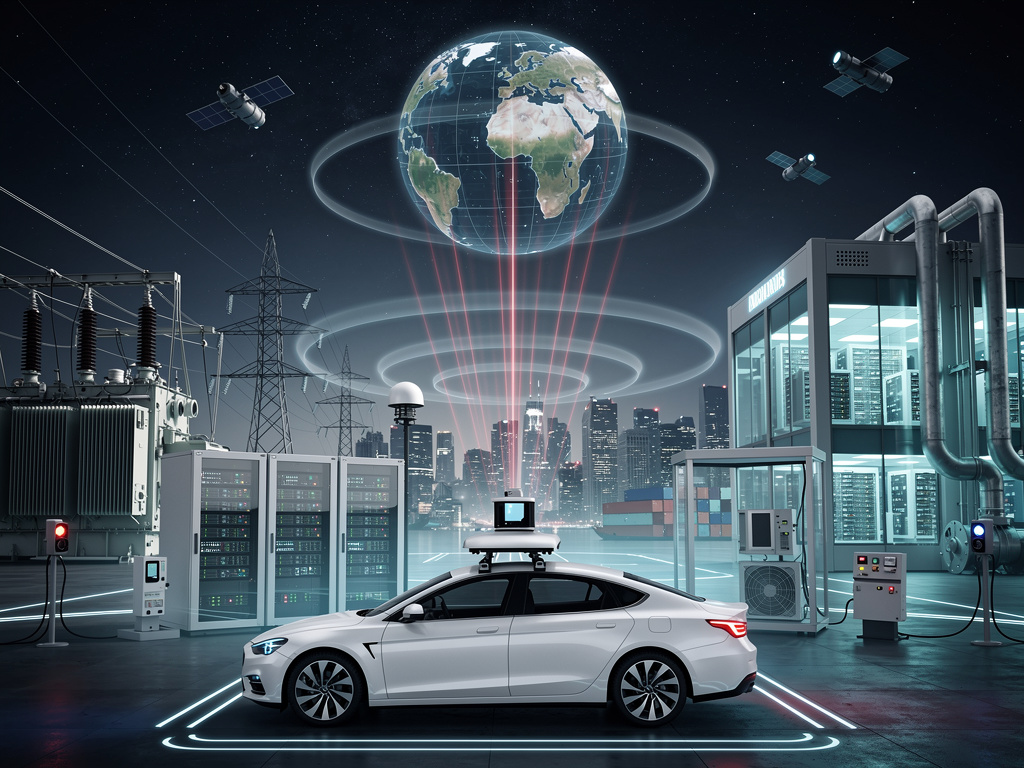
In the rapidly evolving world of autonomous vehicles, a new legislative push is poised to reshape the supply chains that underpin self-driving technology. A bill introduced by U.S. Rep. Raja Krishnamoorthi, a Democrat from Illinois, aims to phase out Chinese-made sensors in self-driving cars and critical infrastructure. This move comes amid growing concerns that these components could be vulnerable to remote hacking, potentially from space, during geopolitical conflicts. The proposal highlights escalating tensions between the U.S. and China over technology dominance, with national security at the forefront.
The bill specifically targets lidar sensors, which use laser pulses to create detailed 3D maps of surroundings, essential for navigation in robotaxis, autonomous trucks, and even automated systems at ports. According to reports, these sensors could be disabled en masse, crippling transportation networks in seconds. Krishnamoorthi, the ranking member on the House Select Committee on China, introduced the legislation in response to warnings from experts about the risks posed by foreign-made hardware in vital systems.
This isn’t the first time such concerns have surfaced. Earlier measures, like a proposed ban on Chinese software and hardware in connected vehicles announced by the Commerce Department in September 2024, set the stage for broader restrictions. That initiative, detailed in a Reuters exclusive, focused on preventing data collection on American drivers and potential remote manipulation. Now, the spotlight is on hardware components that could serve as backdoors for cyberattacks.
Escalating Security Risks in a Connected World
Industry insiders point out that Chinese firms dominate the lidar market, offering cost-effective solutions that have been widely adopted by U.S. automakers and tech companies. Companies like Hesai Group and RoboSense have supplied sensors to major players, including those developing self-driving fleets. However, a report from a think tank last year urged banning Chinese lidar from defense and critical sectors, citing national security implications, as noted in an article from The Epoch Times.
The fears aren’t hypothetical. Intelligence assessments suggest that in a conflict, adversaries could exploit satellite-based commands to shut down these sensors. This vulnerability was underscored in recent discussions on Capitol Hill, where experts testified about the potential for widespread disruption. For instance, automated cranes at U.S. ports, which rely on similar technology, could grind to a halt, affecting global trade.
Beyond transportation, the bill extends to other critical infrastructure, aiming for a three-year ban on new purchases of Chinese lidar and a five-year phase-out of existing equipment. This timeline gives companies time to pivot to domestic or allied suppliers, but it also raises questions about supply chain disruptions and increased costs for the autonomous vehicle sector.
The proposal builds on previous actions, such as the 2024 Commerce Department plan to prohibit key Chinese components in connected cars, which was motivated by worries over data privacy and foreign control. An Al Jazeera report highlighted U.S. concerns about vehicles being used for espionage or sabotage. As autonomous technology advances, with companies like Waymo and Cruise expanding operations, ensuring secure hardware becomes paramount.
Recent incidents have amplified these anxieties. A power outage in San Francisco earlier this month left hundreds of Waymo self-driving cars stranded, as reported by The Times of India. While not directly related to hacking, it illustrated the fragility of reliant systems. In contrast, China has surged ahead in autonomous driving, approving Level 3 vehicles from state-owned automakers, per a Reuters update from December 15, 2025.
This disparity underscores a broader competition. A piece in Rest of World noted that China’s government-backed approach has accelerated adoption, outpacing the U.S.’s more fragmented regulatory environment. American policymakers argue that without restrictions, the U.S. risks falling behind not just in innovation but in securing its technological edge.
Industry Ripples and Economic Implications
Automakers and tech firms are already feeling the pressure. Tesla, for example, might need to adjust its Full Self-Driving system under separate Democratic proposals, as covered by The Verge. The bill on Chinese sensors could force a reevaluation of supplier networks, potentially boosting U.S.-based companies like Luminar or Velodyne, which have lobbied against Chinese rivals.
Lobbying efforts have intensified, with domestic lidar producers mounting campaigns against Chinese imports. A 2023 Politico article described this as the newest front in the U.S.-China trade war, where safety tech intersects with geopolitics. Chinese companies, in turn, have ramped up their public relations to counter these narratives.
Economically, the phase-out could raise costs for consumers and delay deployments. Self-driving services, projected to generate billions in revenue, rely on affordable components. A report from MarketScreener echoed the bill’s focus on preventing catastrophic hacks that could disable systems instantly.
Posts on X (formerly Twitter) reflect public sentiment, with users discussing the bill’s implications for innovation and security. One thread highlighted the Autonomous Vehicle Acceleration Act of 2025, which aims to modernize regulations, while others debated the risks of foreign tech in vehicles. These online conversations often emphasize the need for tech sovereignty, mirroring official concerns.
In China, advancements continue unabated. Xpeng’s semi-autonomous systems, reviewed in a MotorTrend piece, are closing in on Tesla’s capabilities, fueled by heavy investment. This progress contrasts with U.S. efforts to restrict Chinese influence, potentially creating a bifurcated global market.
The bill’s introduction follows a pattern of escalating measures. Last year’s think tank advice, as mentioned earlier, warned of mapping vulnerabilities where Chinese sensors could inadvertently or deliberately collect data on U.S. roadways.
Navigating Regulatory Hurdles and Future Pathways
For industry players, compliance will require significant investment in alternative technologies. Domestic production ramps could mitigate shortages, but experts warn of short-term bottlenecks. The legislation also calls for audits of existing installations, ensuring no hidden risks persist.
Broader implications extend to international trade. Allies like the European Union are watching closely, with similar concerns about supply chain security. The U.S. push might encourage global standards that prioritize secure, non-adversarial sourcing.
Critics argue the bill could stifle competition and innovation by limiting access to advanced, affordable tech. However, proponents counter that the risks outweigh the benefits, especially in an era of hybrid warfare where cyber threats loom large.
Recent news underscores the urgency. A Claims Journal article from December 15 detailed the phase-out proposal, emphasizing hack fears. Similarly, a Yahoo Tech piece reiterated the space-based disablement scenario, linking it to broader infrastructure vulnerabilities.
On X, discussions often tie this to data privacy bills, like the Auto Data Privacy and Autonomy Act, which seeks to prevent automakers from monetizing driver data without consent. These threads highlight growing awareness of vehicles as potential surveillance tools.
As the bill progresses through committees, stakeholders are mobilizing. Automakers may lobby for extensions or exemptions, while security experts advocate for swift action.
Strategic Shifts in Global Tech Rivalry
The U.S. strategy reflects a shift toward decoupling from Chinese tech in sensitive areas. This mirrors actions in semiconductors and telecom, where Huawei faced bans over similar concerns.
In the autonomous sector, this could accelerate domestic R&D. Companies investing in alternative sensors might gain a competitive edge, fostering innovation in AI and machine learning for perception systems.
Looking ahead, the bill could set precedents for other technologies, from drones to smart grids, where foreign components pose risks.
Public opinion, gauged from X posts, shows a mix of support for protectionism and worries about higher costs. One user noted the bill’s focus on lidar’s role in mapping, potentially aiding adversaries in conflicts.
Industry reports suggest that while China leads in deployment, with approvals for advanced systems, the U.S. emphasizes safety and security. A December 15 update from Reuters on China’s Level 3 approvals contrasts with U.S. restrictions.
Ultimately, this legislation underscores the intersection of technology, security, and geopolitics. As self-driving cars become ubiquitous, ensuring their resilience against external threats will define the future of mobility.
The MSN slideshow on the topic, accessible via MSN, provides visual insights into affected vehicles and sensors, illustrating the real-world stakes.
Balancing Innovation with National Interests
Experts predict that if passed, the bill could reshape alliances, pushing companies toward suppliers in friendly nations like South Korea or Israel.
Challenges remain, including verifying the origin of components in complex supply chains. Blockchain or certification programs might emerge to track provenance.
In the end, this move signals a proactive stance against emerging threats, prioritizing long-term security over short-term gains.
Recent X activity includes posts praising the bill for safeguarding military readiness, with users citing potential space hacks as a clear danger.
As debates continue, the autonomous vehicle industry must adapt, potentially emerging stronger and more secure. This evolving dynamic between competition and caution will shape the path forward for transportation technology.


 WebProNews is an iEntry Publication