
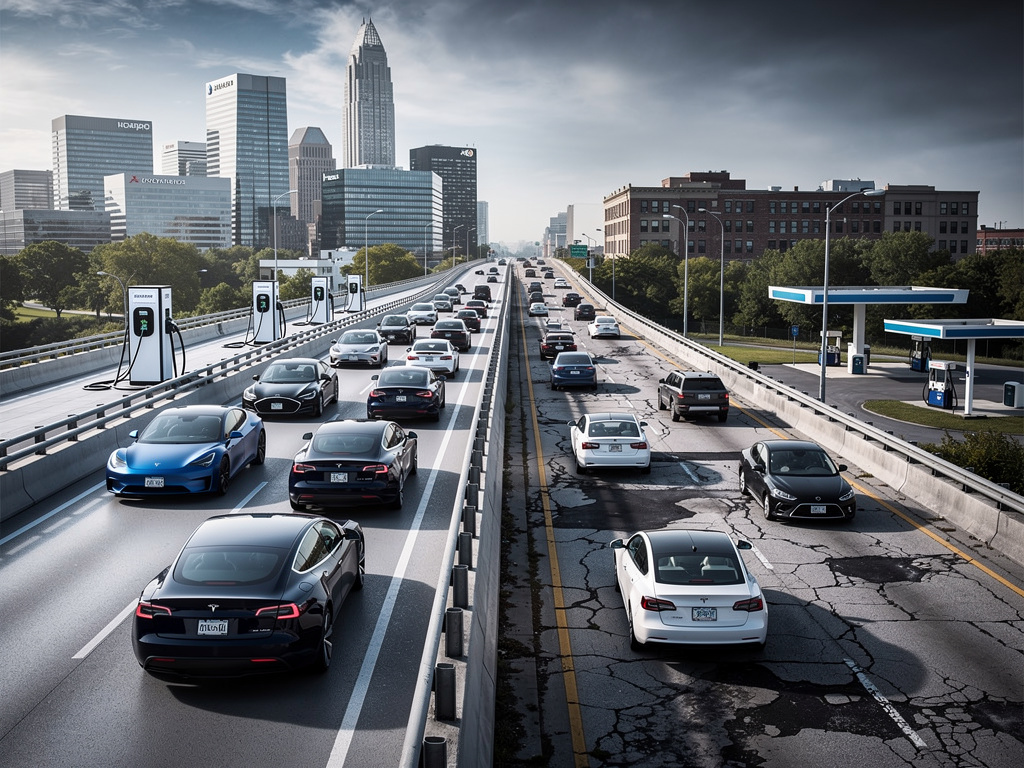
Affluent Wheels: How Wealth Drives the 2026 Auto Boom
In the opening days of 2026, the American auto industry is witnessing a paradoxical surge: new car sales are climbing, but not because of broad-based consumer enthusiasm. Instead, a growing cadre of affluent buyers is propelling the market forward, even as middle-class households grapple with soaring prices and elevated interest rates. This shift underscores a deepening divide in the economy, where the well-heeled continue to splurge on luxury vehicles while others retreat to used options or delay purchases altogether. Analysts point to this trend as a harbinger of broader economic stratification, with implications rippling through manufacturing, dealerships, and policy circles.
Data from recent reports illustrates this dynamic vividly. According to a fresh analysis in The New York Times, a larger proportion of new vehicles are snapping up by high-income Americans, fueled by resilient stock portfolios and wage gains at the top end. This comes amid average transaction prices hovering near $50,000, a threshold that prices out many average earners. The phenomenon isn’t isolated; it’s part of a pattern where luxury brands like Mercedes-Benz and Tesla are seeing robust demand, while mass-market models languish on lots.
Industry insiders note that this affluent-driven growth has kept overall sales projections optimistic, with estimates suggesting a total of around 16 million new vehicles sold in 2025, potentially carrying momentum into 2026 despite headwinds. Yet, the reliance on wealthy buyers raises questions about sustainability. If economic slowdowns hit even the upper echelons, the industry could face a sharper correction than anticipated.
The Pricing Pinch and Its Ripple Effects
High vehicle costs remain a central barrier, exacerbated by lingering supply chain issues and new tariffs. Insights from Kelley Blue Book reveal that average transaction prices dipped slightly to $49,766 in October 2025, but MSRPs are up 2.6% year-over-year, signaling no imminent relief. This pricing stubbornness stems from automakers offsetting higher production costs, including imported components now subject to elevated duties under recent trade policies.
For middle-income families, these figures translate to deferred dreams. Auto loans, with interest rates climbing toward 7-8% for many borrowers, add hundreds to monthly payments, making new cars feel like luxuries rather than necessities. In contrast, affluent buyers often pay cash or secure favorable financing, insulating them from these pressures. This bifurcation is evident in sales data: luxury segments grew by double digits in 2025, while entry-level sedans saw declines.
Moreover, the rebound in off-lease vehicles is providing some relief in the used market, as noted in reports from Edmunds. This influx of affordable pre-owned options is siphoning demand from new sales among budget-conscious consumers, further concentrating new purchases among the wealthy. Dealerships are adapting by emphasizing high-margin luxury models, but this strategy risks alienating a broader customer base over time.
Electric Vehicles in the Crosshairs
The electric vehicle (EV) segment, once hailed as the future of mobility, is experiencing its own version of this wealth divide. With federal tax incentives potentially waning under new administrations, EV adoption is cooling among mainstream buyers. Posts on X from industry observers, including accounts like Car Dealership Guy, highlight a surge in EV inventory and softening demand, particularly for non-Tesla models, even as loyalty among existing owners remains high at 94%.
Analysts at Cox Automotive forecast a 2.4% decline in overall new-vehicle sales to 15.8 million in 2026, attributing part of this to reduced EV incentives and economic slowdowns. Affluent consumers, however, continue to embrace EVs, drawn to premium offerings like the Rivian R1S or Lucid Air, which blend technology with status. This trend is bolstering sales for high-end EV makers, but it’s leaving mass-market EVs, such as those from Chevrolet or Hyundai, struggling to find buyers without subsidies.
The policy uncertainty adds another layer. Shifting EV incentives, as discussed in USA Today, could further entrench the divide, making battery-powered cars a playground for the rich while hybrids gain traction among the middle class for their practicality and lower upfront costs.
Market Share Shifts Among Giants
Looking at the competitive arena, the big players are consolidating power. Toyota, with its blend of reliable hybrids and luxury Lexus models, is projected to capture 15.5% market share in 2025, up from the previous year, per Cox Automotive data. This gain comes at the expense of smaller automakers, as the top four—General Motors, Toyota, Ford, and Hyundai—expanded their collective share by 2.6 points.
Affluent preferences are reshaping model lineups. Luxury SUVs and crossovers, favored for their space and features, dominate sales charts. Recent X posts from market watchers echo this, noting that SUVs are “dominating” new launches, with consumers prioritizing size and tech over economy models. This shift is pushing manufacturers to invest heavily in upscale variants, sometimes at the cost of affordable options.
However, not all is rosy for the giants. Regulatory uncertainties, including potential renegotiations of trade agreements like the USMCA, as outlined in Detroit Free Press, could inflate costs further, squeezing margins even for luxury-focused brands.
Inventory Dynamics and Dealer Strategies
Inventory levels are another critical factor in this affluent-led surge. New vehicle stock has ballooned to over 3 million units, a 29% increase year-over-year, according to X discussions from dealership insiders. This glut, driven by overproduction of 2025 models overlapping with 2026 arrivals, is forcing dealers to offer incentives on lower-end cars, but luxury inventory remains tight, commanding premiums.
Dealers are pivoting accordingly, with many focusing on personalized services for high-net-worth clients, such as concierge test drives and bespoke customizations. This approach is yielding higher profits per sale, but it also highlights the industry’s growing dependence on a narrow buyer demographic. In regions like California and New York, where wealth concentration is high, showrooms report brisk business, while heartland dealers struggle with slower turnover.
The used market’s resurgence, fueled by off-lease vehicles, is providing a safety valve. Edmunds predicts this will restore affordable options, potentially drawing back some middle-class buyers, but it may not fully offset the new sales dip forecasted for 2026.
Economic Undercurrents Fueling Disparity
Broader economic forces are amplifying this trend. Wage growth has outpaced inflation for over two years, but primarily for top earners, as noted in X posts analyzing market splits. Middle-class households, facing stagnant real incomes and rising living costs, are prioritizing essentials over new wheels.
Interest rate hikes compound the issue. With auto loan rates elevated, financing a $50,000 vehicle can add thousands in interest, deterring average buyers. The New York Times analysis underscores how this is leading to a “retreat” by middle-class consumers, with sales projections for 2026 slipping as a result.
Yet, for the affluent, robust stock market performance and bonus-heavy compensation packages make car purchases an afterthought. This is evident in luxury brand earnings, where companies like BMW report record profits despite overall market softness.
Forecasts and Forward-Looking Risks
Peering ahead, experts from S&P Global project December 2025 sales at 1.4 million units, closing a year of modest growth. For 2026, Cox Automotive anticipates a slowdown, influenced by slower job creation and policy shifts.
Risks abound: tariffs could spike prices further, as warned in Detroit Free Press reports, while geopolitical tensions might disrupt supply chains. If affluent spending cools—perhaps due to market corrections—the industry could face a reckoning.
Automakers are responding by diversifying. Ford and GM are ramping up hybrid production to appeal to cost-conscious buyers, while Tesla bets on autonomous tech to maintain its premium allure. Still, the core challenge remains bridging the wealth gap to sustain volume.
Global Echoes and Domestic Implications
This U.S. trend mirrors global patterns. In India, X posts from analysts like CA Vivek Khatri describe an auto sector booming with EVs and SUVs, projected to hit 26 million vehicles by 2030, driven by emerging affluent classes. Similarly, in Europe, luxury electric models are outselling economy cars amid subsidy cuts.
Domestically, the implications extend to jobs. Manufacturing hubs in the Midwest could see layoffs if mass-market demand falters, while coastal tech-driven plants thrive on EV production for the wealthy.
Policymakers are watching closely. Debates over reinstating EV credits or addressing trade imbalances could reshape the market, potentially democratizing access or further entrenching divides.
Strategic Adaptations in a Divided Market
To navigate this, industry leaders are innovating. Subscription models and shared ownership are gaining traction among younger, less affluent demographics, offering access without full commitment. Luxury brands, meanwhile, are enhancing digital sales platforms to cater to time-poor executives.
Dealership networks are consolidating, with larger groups acquiring smaller ones to focus on high-end inventory. X sentiment from traders like CHItrader warns of stock volatility for companies like Ford and GM if middle-class retreat persists.
Ultimately, the 2026 auto market’s trajectory hinges on economic inclusivity. If growth broadens, sales could stabilize; otherwise, the industry may evolve into a boutique for the elite, leaving mainstream mobility in flux.
Voices from the Front Lines
Interviews with dealers reveal optimism tempered by caution. One Midwest operator, speaking anonymously, noted that “luxury crossovers fly off the lot, but sedans sit for months.” This echoes broader data from MarkLines, which reported a 6.7% sales drop in November 2025 due to weakening EV demand.
On X, figures like Caleb Barnes highlight how rising prices threaten to push sales lower, with middle-class hesitation at the fore.
As 2026 unfolds, the auto sector stands at a crossroads, where affluence powers progress but risks leaving many behind. The coming months will test whether this boom can expand or if it’s destined for a narrower path.


 WebProNews is an iEntry Publication