
Revolutionizing the Underbelly: Tech’s Assault on the Air Force’s Dirtiest Duties
In the dimly lit hangars of U.S. Air Force bases, where the roar of jet engines gives way to the clank of tools and the scent of aviation fuel, a quiet revolution is underway. For decades, airmen tasked with maintaining aerial refueling tankers have endured one of the military’s most grueling jobs: crawling into confined fuel tanks to inspect for corrosion, leaks, and structural weaknesses. These spaces, often no larger than a coffin, expose workers to toxic fumes, slippery surfaces, and the constant risk of injury or even death from oxygen deprivation. But as 2025 unfolds, emerging technologies are poised to alleviate these hazards, making what was once a perilous necessity into a safer, more efficient operation.
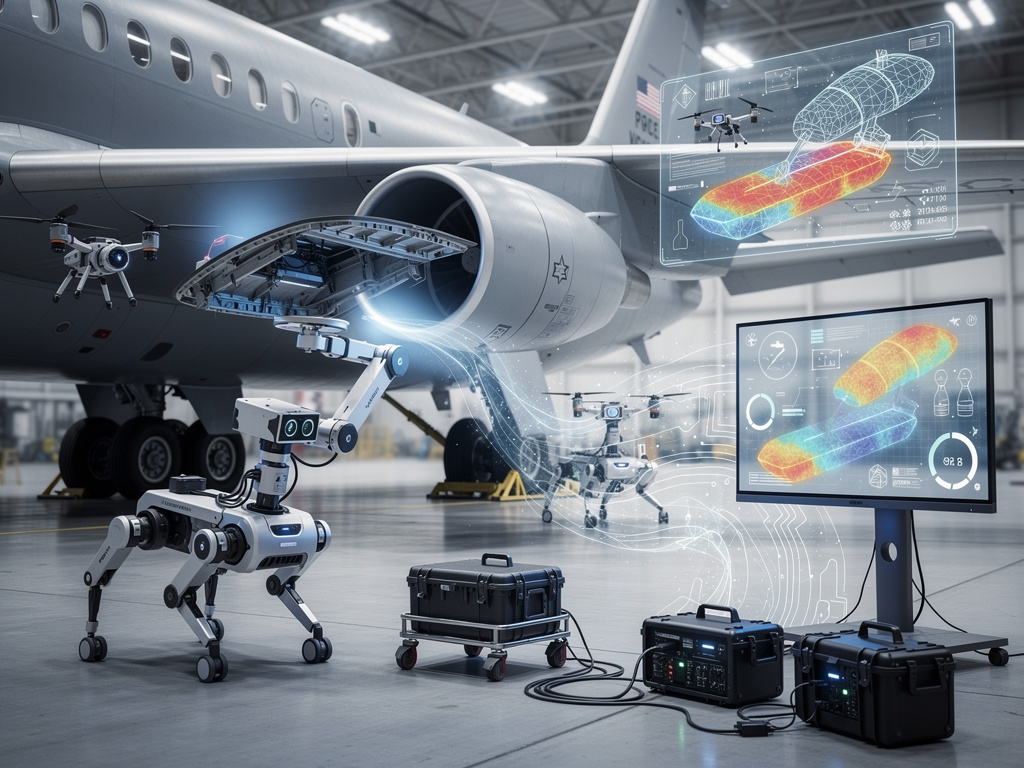
The catalyst for this shift lies in innovative tools that blend artificial intelligence, high-resolution imaging, and robotics. At the heart of the effort is a system developed in collaboration with defense contractors and tech firms, allowing remote inspections without human entry. Maintenance crews can now deploy slender probes equipped with cameras and sensors that navigate the tank’s interior, beaming back real-time data to operators outside. This not only reduces physical strain but also enhances accuracy, as AI algorithms analyze footage for anomalies that the human eye might miss. According to reports from Business Insider, this technology is already being tested on KC-135 Stratotankers, the workhorses of the Air Force’s refueling fleet, promising to cut inspection times by up to 70% while minimizing exposure to harmful chemicals.
Beyond the immediate benefits, this innovation reflects a broader push within the Department of Defense to modernize labor-intensive roles. The Air Force, facing recruitment challenges and an aging workforce, is investing heavily in automation to retain talent and boost readiness. Officials note that such advancements could extend to other high-risk maintenance tasks, like engine overhauls or munitions handling, where precision and safety are paramount.
Evolving Tools for Confined Spaces
The specifics of the new system involve a combination of endoscopic cameras, similar to those used in medical procedures, paired with machine learning models trained on vast datasets of tank imagery. These models can detect hairline cracks or residue buildup with remarkable precision, flagging issues before they escalate into costly repairs or flight risks. In one pilot program at Tinker Air Force Base in Oklahoma, technicians reported a dramatic drop in confined-space entries, from several per week to just a handful per month. This shift not only preserves human health but also accelerates turnaround times for aircraft, ensuring more tankers are mission-ready amid rising global tensions.
Drawing from parallel developments in other branches, the Army’s experiments with 3D-printed drones for reconnaissance offer a glimpse into how unmanned systems could further transform Air Force operations. Posts on X from military accounts highlight how such tech is being adapted for “dirty jobs,” with users praising the integration of AI for real-time hazard assessment. For instance, autonomous drones could soon scour fuel tanks autonomously, mapping interiors in 3D and predicting maintenance needs through predictive analytics.
Yet, the transition isn’t without hurdles. Integrating these technologies requires retraining personnel, many of whom have spent careers relying on hands-on expertise. The Air Force is addressing this through specialized courses at its technical schools, emphasizing digital literacy alongside traditional mechanics. As detailed in coverage from Air Force Times, leadership is reevaluating specialty codes to incorporate tech-savvy roles, blending old-school grit with new-age innovation.
Broader Implications for Military Readiness
This tech infusion extends beyond tank maintenance to encompass a suite of innovations targeting the Air Force’s most arduous tasks. Consider the realm of munitions loading, where airmen heft heavy ordnance in extreme conditions. Robotic exoskeletons, now in advanced testing phases, augment human strength, reducing back injuries that plague load crews. According to insights from Lockheed Martin, similar systems are being refined for Army applications, with potential cross-service adoption that could standardize safety protocols across the military.
In the domain of environmental cleanup—another notoriously grimy duty—bioremediation tech is gaining traction. Air Force bases often deal with contaminated soil from fuel spills or outdated munitions. New microbial agents, engineered to break down pollutants, are being deployed via drone sprayers, minimizing human contact with hazardous materials. Recent news from We Are The Mighty underscores how these breakthroughs, straight out of science fiction, are becoming reality, with AI optimizing dispersal patterns for maximum efficacy.
Moreover, the push for innovation is fueled by strategic imperatives. With peer competitors like China advancing their own military tech, the U.S. Air Force is prioritizing directed energy and hypersonics, as noted in announcements from the War Department. Yet, these high-profile areas don’t overshadow the need for ground-level improvements; in fact, they depend on them. Reliable aircraft maintenance ensures that advanced fighters can deploy without delay, linking the dirty work to overarching national security goals.
Challenges in Adoption and Integration
Despite the promise, scaling these technologies faces logistical and budgetary constraints. The Air Force’s re-optimization efforts, as outlined in updates from Air & Space Forces Magazine, involve discarding outdated programs to fund emerging ones, but competition for dollars is fierce. Critics argue that while AI-driven inspections sound revolutionary, initial costs for equipment and training could strain resources, especially for reserve units with limited budgets.
On the human side, there’s a cultural shift required. Veteran maintainers, accustomed to the tactile feedback of manual inspections, express skepticism about relying solely on digital readouts. X posts from aviation enthusiasts and service members reveal a mix of excitement and caution, with some likening the change to the advent of fly-by-wire systems decades ago—transformative but initially met with resistance. To bridge this gap, the Air Force is piloting hybrid approaches, where tech augments rather than replaces human oversight.
Furthermore, cybersecurity emerges as a critical concern. As maintenance tools connect to networks for data sharing, they become potential vectors for cyber threats. Drawing from lessons in critical infrastructure protection, as discussed in Defense Department briefings, robust encryption and regular audits are being embedded into these systems to safeguard against hacks that could compromise fleet integrity.
Innovations Spanning the Spectrum
Looking ahead, the Air Force is exploring augmented reality (AR) headsets for on-the-job guidance, overlaying digital schematics onto physical components during repairs. This could revolutionize tasks like wiring harness replacements in cramped cockpits, where visibility is poor. Insights from Popular Science‘s 2025 innovation roundup highlight how such tools are part of a wave of efficiency boosters, from AI-optimized logistics to bold engineering feats.
In parallel, environmental monitoring in harsh conditions—think de-icing runways in subzero temperatures—is benefiting from sensor networks that predict ice formation, deploying automated heaters preemptively. This reduces the manual labor of scraping and salting, a backbreaking chore that exposes airmen to frostbite and slips. News from DefenseScoop notes the Pentagon’s narrowed focus on key tech areas, including AI, which underpins these predictive capabilities.
The ripple effects extend to recruitment and retention. By alleviating the physical toll of “dirty jobs,” the Air Force aims to attract a more diverse pool of talent, including those deterred by the prospect of hazardous duties. As per recruitment drives on the U.S. Air Force website, STEM-focused careers are emphasized, positioning tech-savvy roles as gateways to innovation.
Strategic Horizons and Future Visions
As these technologies mature, their integration could redefine operational tempos. Faster maintenance cycles mean quicker responses to contingencies, from humanitarian aid to combat deployments. X discussions among military analysts point to how drone-based inspections, inspired by civilian applications like sewer mapping, are accelerating this trend, with posts praising the zero-risk approach to toxic environments.
Collaboration with industry partners is key. Firms like Boeing and Raytheon are co-developing these tools, leveraging commercial off-the-shelf tech to speed deployment. A recent BizToc summary echoes the excitement around AI and video tech eliminating guesswork from refueling tanker upkeep, a process unchanged for half a century.
Ultimately, this wave of innovation underscores a commitment to valuing human capital in an era of high-tech warfare. By tackling the grimiest aspects of service, the Air Force not only enhances safety but also sharpens its edge, ensuring that the men and women who keep the skies secure can focus on strategy rather than survival. As 2025 progresses, these advancements may well set the standard for how militaries worldwide approach their most demanding roles, blending cutting-edge science with the unyielding demands of duty.


 WebProNews is an iEntry Publication