
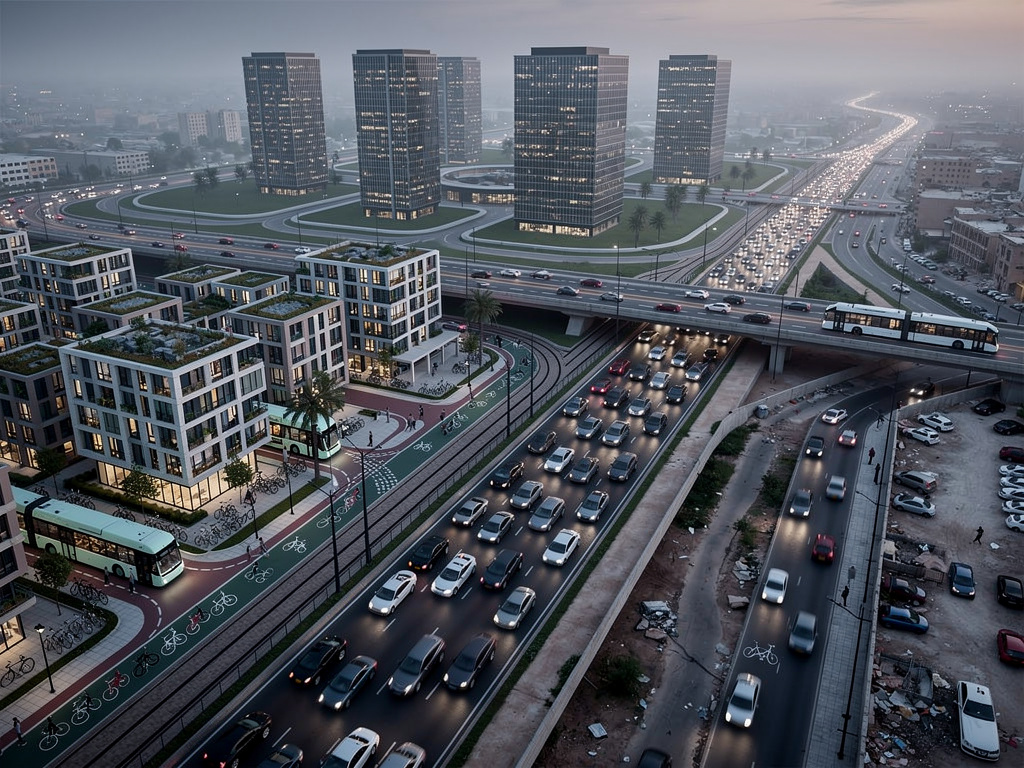
As urban populations swell and climate pressures mount, cities worldwide grapple with entrenched obstacles to sustainable transport systems. Decades of car-centric planning have locked in sprawl, high emissions, and inefficient networks, making the shift to public transit, cycling, and walking a monumental task. Financial shortfalls, aging infrastructure, fragmented governance, and public resistance form a web of barriers that demand coordinated, long-term strategies.
Public transport rarely covers its costs, relying on subsidies that strain municipal budgets amid competing priorities like housing and education. In developing regions, the gap is stark: rapid urbanization overwhelms outdated roads and buses, exacerbating congestion that costs economies billions in lost productivity. Even advanced economies face dilemmas, with declining gas taxes eroding funding as electric vehicles proliferate.
Car Culture’s Deep Roots
The dominance of private vehicles stems from historical urban designs favoring highways over multimodal options. “Urban mobility is one of the defining challenges of modern cities,” notes Urban Mobility Solutions, where car dependency leads to chronic congestion, induced demand filling new lanes, and reinforcement of unsustainable habits. Residents cling to the flexibility of cars, perceiving alternatives as slower or less reliable, a bias deepened by sprawl that scatters jobs and services.
In the U.S., aging networks require massive reinvestment; the Interstate System shows 39% of major roads in poor or mediocre condition, per Deloitte’s 2025-2026 trends report. Extreme weather, with 27 disasters costing over $1 billion each in 2024, further strains systems, disrupting services and deterring active travel. “The journey toward reliable, safe, and resilient mobility will likely be influenced by both public sector leadership and technological developments,” states Deloitte Insights.
Social equity compounds the issue: low-income groups spend disproportionate income on transport, facing unreliable buses and inaccessible paths. “Lack of coordination leads to inefficient transfers, inconsistent ticketing, and confusing user experiences,” hindering shifts to green modes, according to Urban Mobility Solutions. Vulnerable populations—disabled, elderly, caregivers—bear the brunt, deepening exclusion.
Infrastructure’s Heavy Burden
Many cities, especially in the Global South, lack dedicated bus lanes, safe cycling paths, or resilient pedestrian routes. Upgrades disrupt daily life and carry steep capital costs; maintenance of aging assets diverts funds from expansion. npj Sustainable Mobility highlights infrastructural hurdles like inadequate mixed-use planning and last-mile gaps, with freight demands surging post-pandemic.
In Europe, Dutch cities like Rotterdam and Maastricht exemplify conflicts: national funds bias toward roads for congestion relief, forcing sustainable projects into car-framed proposals. “Every problem is redefined [in terms of] an infrastructure solution, because that’s what you can get money for,” a policymaker told researchers in a European Journal of Risk Regulation study. EU TEN-T funding built Maastricht’s highway tunnel, boosting car use despite local goals.
Climate events like floods and heatwaves expose vulnerabilities, discouraging non-car modes. Deloitte warns of cybersecurity risks in smart systems and scaling AI beyond pilots, while data gaps impede real-time planning for Mobility-as-a-Service (MaaS).
Funding’s Persistent Shortfall
Insufficient investment plagues progress; public systems depend on subsidies amid restrictive guidelines. U.S. gas taxes face a 39% drop by 2035, prompting pilots in tolling and mileage fees, but scalability lags. Globally, project-based funding locks cities into obsolete assets, per MDPI’s analysis of urban transitions.
“Future-Readiness Gaps reflect a culture of project-based funding, where cities invest in fixed infrastructure (e.g., charging stations) without building adaptive capacity,” warns MDPI Urban Science. Initiatives like Climate-KIC’s Sustainable Cities Mobility Challenge offer grants until 2026, but scale poorly against needs. P3s show promise—Virginia’s dynamic tolls saved 33 million hours—but political will varies.
Electric bus fleets demand upfront costs; Santiago, Chile, plans 4,400 by 2026 via policy and financing, cutting noise 44%, as noted by ITDP. Yet, many falter without stable revenue like congestion pricing, proven in London to cut traffic 30%.
Governance and Policy Fragmentation
Disjointed departments—transport, land-use, energy—yield conflicting aims. “Governance Silos are perpetuated by institutional path dependency,” states MDPI, with short cycles disrupting continuity. Dutch silos pit economic growth against decarbonization; Rotterdam bypassed constraints via regional MRDH funding for rail strategies.
Sustainable Urban Mobility Plans (SUMPs) falter without integration, per Eurocities. Political influence from auto lobbies dilutes efforts; npj notes policy gaps in aligning emissions cuts with behaviors. The World Economic Forum cites San Francisco’s sandbox for robotaxis, but acceptance lags: 68% fear AVs, per Deloitte.
Equity demands inclusive planning; without it, low-emission zones regressively burden the poor. “Without sequencing and social embedding, smart city mobility policies risk reinforcing fragmentation and inequality,” per MDPI.
Social and Behavioral Resistance
Public pushback greets parking removals or charges; framing as restrictions fuels fatigue. “Sustainable mobility approaches are often normatively sound… yet in practice they tend to be implemented too quickly, in fragmented or chaotic ways, lacking reflection and citizen participation,” highlights MDPI. Tokenistic consultations erode trust.
Behavior clings to cars for status and convenience; post-COVID shifts favored private vehicles. X discussions echo this: interchanges and last-mile woes consume 50% of trips in Indian metros, per policy researcher Bhaumik Gowande. Equity gaps persist—women, marginalized groups underserved.
Amman’s BRT serves 315,000 daily, cutting 48,000 tonnes CO2e yearly, proving pilots build acceptance, per ITDP. Helsinki leads with EV incentives and car-free zones, but scaling requires affective alignment—framing gains like safety over losses.
Technology’s Promise and Pitfalls
AI, AVs, and MaaS offer tools, but integration falters. AVs promise 40% less fuel use, yet mixed traffic risks collisions; user acceptance is low. “Increasing user acceptance of AVs and adapting AVs to HVs driving habits… remains a substantial hurdle,” per npj Sustainable Mobility.
Data silos and privacy hinder; cybersecurity threats rose 175% in transport. Deloitte urges design-phase protections. Singapore’s AI chatbots aid transit, but equity demands accessible platforms. Helsinki’s hydrogen plant eyes $250B market by 2030.
Finalists like Kochi’s water metro leverage low-cost hybrids for islands, generating jobs and access, sidestepping land hurdles.
Equity and Climate Resilience
Low-income areas suffer poor options; segregation worsens. “An equitable shift towards greener mobility needs to address rising levels of residential segregation,” though not directly quoted here. Flood-prone Salvador built resilient BRT with drainage.
Climate demands resilient designs; digital twins forecast floods. Bhubaneswar’s e-buses target marginalized via gender inclusion. “Sustainable urban mobility is vital to advancing the world’s economic, environmental, and social objectives,” per ITDP.
Cities must sequence substitutes before curbs, foster co-creation, and secure flexible funding to prevail.


 WebProNews is an iEntry Publication