
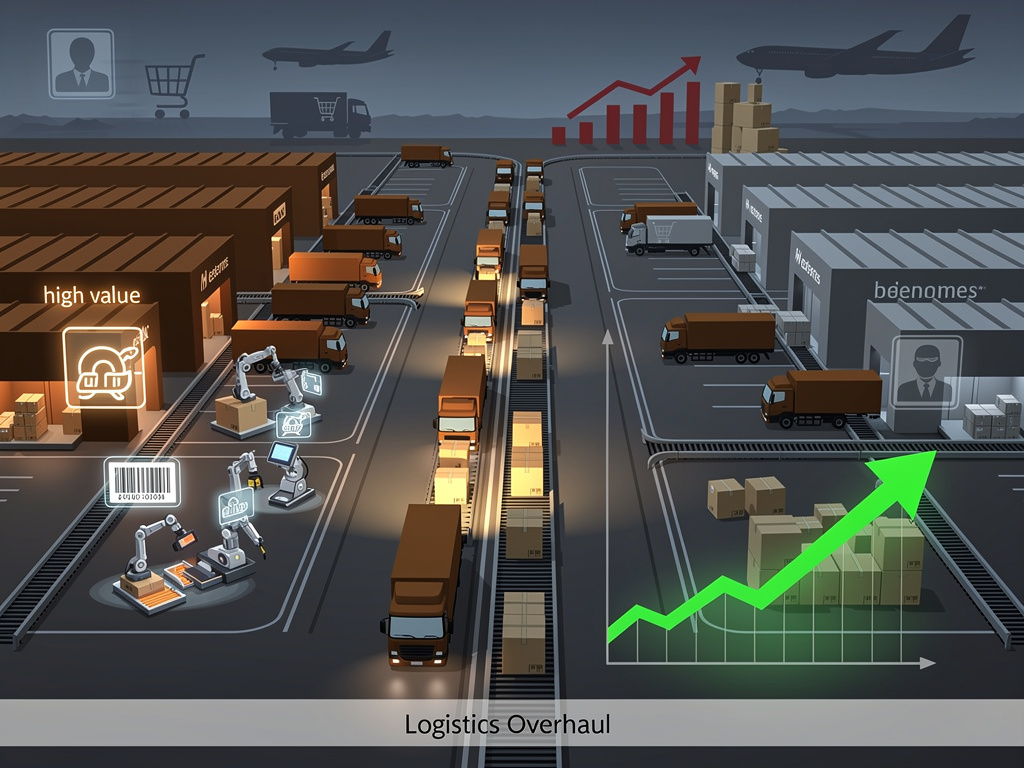
United Parcel Service Inc. disclosed plans to eliminate up to 30,000 operational roles in 2026, intensifying a multiyear overhaul as it scales back its once-vital partnership with Amazon.com Inc. The announcement, made during the company’s fourth-quarter earnings call on January 27, 2026, follows the elimination of 48,000 positions in 2025 and signals a aggressive pivot toward higher-margin deliveries. Chief Financial Officer Brian Dykes confirmed the cuts target drivers and package handlers amid network reconfiguration.
UPS, the world’s largest package carrier with roughly 490,000 employees at the start of 2025, beat Wall Street estimates for the holiday quarter and projected 2026 revenue of $89.7 billion, up from $88.7 billion in 2025, according to Reuters. Shares rose 2.8% in early trading, reflecting investor approval of the efficiency drive despite the human toll.
The moves cap a turbulent period for UPS, which shuttered operations at 93 facilities in 2025 and plans to close 24 more in 2026. CEO Carol Tomé described the strategy on the call: “We’re in the final six months of our Amazon accelerated glide down plan and for the full year 2026, we intend to glide down another million pieces per day while continuing to reconfigure our network,” as reported by CNBC.
Amazon Volumes Fade, Margins Take Priority
Amazon, UPS’s largest customer for nearly three decades, agreed in January 2025 to halve its volume by mid-2026, shedding low-profit fulfillment-center outbound shipments that Tomé called “not profitable for us, nor a healthy fit for our network,” per filings cited in multiple reports. This “glide down”—already down 16% in early 2025—frees capacity for lucrative business-to-business, healthcare, and international express services.
Prior cuts included 34,000 operational jobs and 14,000 management roles through September 2025, yielding $2.2 billion in savings and targeting $3.5 billion for the full year, according to a regulatory filing highlighted by AP News. The 2026 reductions build on this, aiming for sustained profitability amid labor costs elevated by the 2023 Teamsters contract.
Teamsters General President Sean M. O’Brien has asserted UPS remains “contractually obligated to create 30,000 Teamsters jobs under our current national master agreement,” a point reiterated in earlier responses to volume shifts, as noted by CBS News.
Turnaround Roots in Post-Pandemic Pressures
UPS’s “Network Reconfiguration and Efficiency Reimagined” initiative, launched after a weak 2023, addresses sagging volumes, tariff disruptions, and competition from Amazon’s logistics buildup. Tariffs slashed China import volumes nearly 30% in Q3 2025, per The New York Times, compounding e-commerce normalization.
Tomé emphasized compliance with union terms during October 2025 disclosures, where shares surged 12% post-earnings on cost momentum. The program has drawn Wall Street praise, with Bloomberg noting it “smashed expectations” after exceeding prior targets by 70% in operational cuts, via Bloomberg.
Analyst reactions on X underscored the shift: “UPS is aggressively restructuring to improve profitability amid rising competition and shifting delivery economics,” posted by @Washington_Rep, capturing sentiment around the Amazon decoupling.
Labor Fallout and Union Tensions Escalate
With over 75% of U.S. workers unionized, the cuts—primarily non-managerial—risk labor strife. O’Brien’s warnings echo April 2025 statements amid 20,000 job announcements tied to initial Amazon reductions, covered by Reuters. No immediate Teamsters response followed the latest reveal.
Voluntary buyouts supplemented involuntary separations in 2025, offering drivers $1,800 per year of service—up to $36,000 for veterans—as a softer cost-control tactic, per X discussions from @historyinmemes.
Geographic impacts remain unspecified, though Amazon-heavy regions face outsized risks, fueling X chatter like @dailyjobcuts: “UPS announced it will eliminate an additional 30,000 operational jobs as it winds down its partnership with Amazon.”
Financial Gains Amid Broader Industry Shifts
Cost savings have boosted margins, with Q4 2025 operating profit exceeding forecasts. UPS anticipates continued network streamlining through 2027, blending closures, automation, and robotics to offset wage hikes, as detailed in World Socialist Web Site analysis of filings.
Revenue growth projections hinge on premium segments, where average revenue per piece outpaces residential e-commerce. Seeking Alpha framed it as UPS “outlines 30K job cuts as it slows down the lower-margin Amazon part of the business,” linking to 50% volume reduction by 2026.
Peers like FedEx face similar pressures, but UPS’s scale—22 million daily packages—amplifies the stakes. X user @finaxus noted: “Major restructuring signals deeper operational pivot beyond earnings beat narrative.”
Rivals, Automation, and Road Ahead
Amazon’s self-delivery expansion, now handling over half its U.S. volume, erodes UPS reliance. Broader trends include AI-driven efficiencies; X posts tally 2025 layoffs across UPS (48,000), Amazon (30,000), and Intel (24,000), warning “job security is an illusion,” from @FluentInFinance.
Tomé positions UPS for resilience: “The macro environment may be uncertain, but with our actions, we will emerge as an even stronger, more nimble UPS,” echoing prior statements in Times of India.
Investors monitor execution, with shares’ lag versus peers pressuring returns. As @MacroEdgeRes posted: “UPS to cut another 30,000 jobs in 2026 as it doubles down on turnaround.” The strategy bets lean operations yield enduring value in a consolidating sector.


 WebProNews is an iEntry Publication