
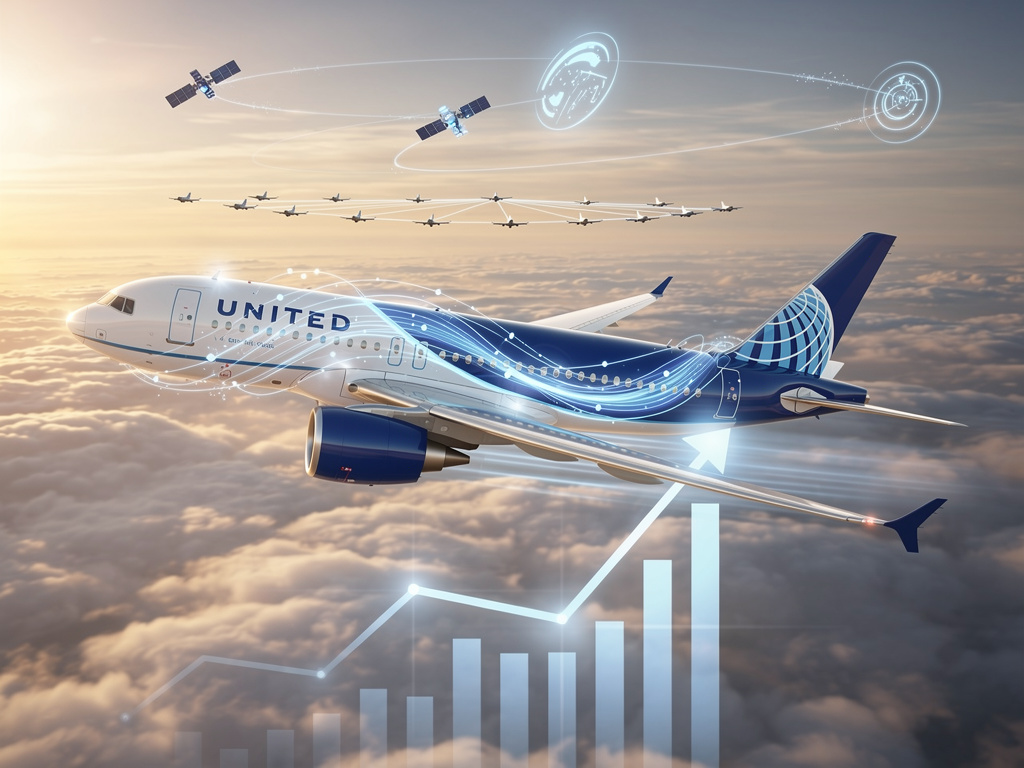
United Airlines Holdings Inc. kicked off 2026 with a robust fourth-quarter performance, signaling potential record earnings for the year amid sustained demand for premium travel and the rapid rollout of free Starlink satellite Wi-Fi across its fleet. The carrier reported adjusted earnings per share of $3.37 for Q4 2025, surpassing analyst expectations of $2.93, while full-year adjusted EPS reached $10.62, up from the prior year. Revenue climbed 4.8% to $15.4 billion in the quarter, driven by strong bookings in both economy and premium cabins.
Chief Executive Officer Scott Kirby highlighted the “strong revenue momentum” carrying into the new year, with premium revenue up 7% year-over-year and basic economy demand also exceeding forecasts. United’s capacity grew 3.5% amid a 5.2% traffic increase, yielding a load factor of 85.4%. Free cash flow for the year hit $2.7 billion, bolstering the balance sheet with $17.1 billion in liquidity. CNBC detailed how these figures position United to capitalize on a resilient travel market.
PR Newswire quoted Kirby: “We enter 2026 with significant momentum across our entire portfolio.”
Starlink’s Fleet-Wide Transformation
Central to United’s strategy is the accelerated installation of Starlink Wi-Fi, developed by SpaceX, which promises gate-to-gate connectivity at speeds rivaling ground-based internet. The FAA approved the first Starlink-equipped aircraft in March 2025, enabling installations on over 40 planes monthly. By late 2025, mainline jets began receiving the service, with regional fleets targeted for completion by year-end. United plans to outfit more than 1,000 aircraft, making high-speed, free Wi-Fi standard for MileagePlus members. One Mile at a Time reported on the rollout timeline, noting passenger enthusiasm for streaming, gaming, and live sports at 35,000 feet.
Posts on X from United underscore real-time reception: Customers have praised the service for enabling pet cam checks and seamless multi-device use. One traveler noted enjoying NFL playoffs despite initial limitations on older planes, with full rollout addressing such gaps. The initiative aligns with United’s United Next fleet modernization, including new widebodies equipped from delivery.
Premium Demand Drives Margins
United’s Q4 results reflect a bifurcated but balanced demand profile. Premium cabin revenue, encompassing first and business class, rose 7.1%, outpacing overall growth, while economy segments saw 4% gains. Total passenger revenue hit $14.3 billion, up 5.3%. Analysts at AlphaStreet emphasized net income’s 6% increase to $1 billion, with EPS at $3.19.
Guidance for Q1 2026 projects adjusted EPS of $0.60 to $0.90, with full-year pre-tax margins of 6.5% to 7%. Fuel costs are hedged at $2.00 per gallon, mitigating volatility. United’s $10 billion share repurchase authorization, with $5 billion already deployed, signals confidence in sustained profitability.
Competitive Pressures and Cost Dynamics
Rivals like Delta Air Lines reported similar premium strength post-United’s earnings, but United’s Wi-Fi edge differentiates it. Starlink reduces reliance on slower geostationary systems, cutting lag and boosting ancillary revenues through enhanced inflight commerce. Yahoo Finance noted United’s beat came amid industry-wide capacity discipline.
Costs rose 3.7% to $13.2 billion, driven by labor and maintenance, yet CASM excluding fuel improved 1.2%. United’s 28,000 pilot contracts, ratified in 2023, add expenses but secure staffing amid shortages. The carrier’s regional jet strategy, emphasizing larger aircraft, supports efficiency gains.
Starlink’s Passenger Impact and Data
Early adopters report transformative experiences. X posts from United highlight flights where passengers streamed live TV and gamed without interruption. By October 2025, mainline rollout began, with free access for loyalty members driving engagement. A suggested infographic: Timeline of Starlink milestones—FAA approval (March 2025), first passenger flight (May 2025), 1,000-plane goal (2026).
Surveys cited in Live and Let’s Fly from prior quarters show Wi-Fi as a top passenger priority, correlating with higher satisfaction scores and repeat bookings among business travelers.
Fleet Modernization and Capital Allocation
United’s order book exceeds 700 aircraft, including Airbus A321XLRs and Boeing 787s, many pre-wired for Starlink. Deliveries in 2026 will expand long-haul premium capacity, targeting Asia-Pacific growth. Debt reduction to $25 billion from pandemic peaks frees capital for tech investments.
Shareholder returns include $1.5 billion in dividends and buybacks in 2025. Analysts project 2026 revenue of $60 billion, with EPS potentially topping $11, per StockTitan.
Regulatory and Supply Chain Hurdles
FAA approvals have accelerated, but supply chain delays for Starlink hardware persist. United mitigates via phased rollouts. Broader industry challenges, like Boeing production ramps, impact deliveries, yet United’s diversified suppliers provide buffers.
X discussions reveal insider optimism: Experts note Starlink’s low-earth orbit advantage over Viasat or Intelsat, positioning United ahead of peers like American, which lags in satellite upgrades.
Implications for Industry Peers
Delta and American eye similar Wi-Fi upgrades, but United’s scale—largest U.S. mainline fleet—and first-mover status set a benchmark. Enhanced connectivity could lift industry yields by enabling dynamic pricing and personalized offers mid-flight.
United’s results suggest air travel’s post-pandemic resilience endures, with corporate demand rebounding to 90% of 2019 levels. A chart suggestion: Bar graph comparing 2025 vs. 2026 projected margins across majors, highlighting United’s lead.
Strategic Bets on Loyalty and Tech
MileagePlus, with 100 million members, integrates Starlink for exclusive perks, boosting redemption rates. United’s app enhancements leverage Wi-Fi for real-time upgrades. Kirby’s vision: “United Next will redefine air travel,” per earnings call transcripts.
Looking ahead, 2026 capacity growth of 3.5% balances supply with demand forecasts. Risks include fuel spikes and recessions, but hedges and cost controls position United strongly.


 WebProNews is an iEntry Publication