
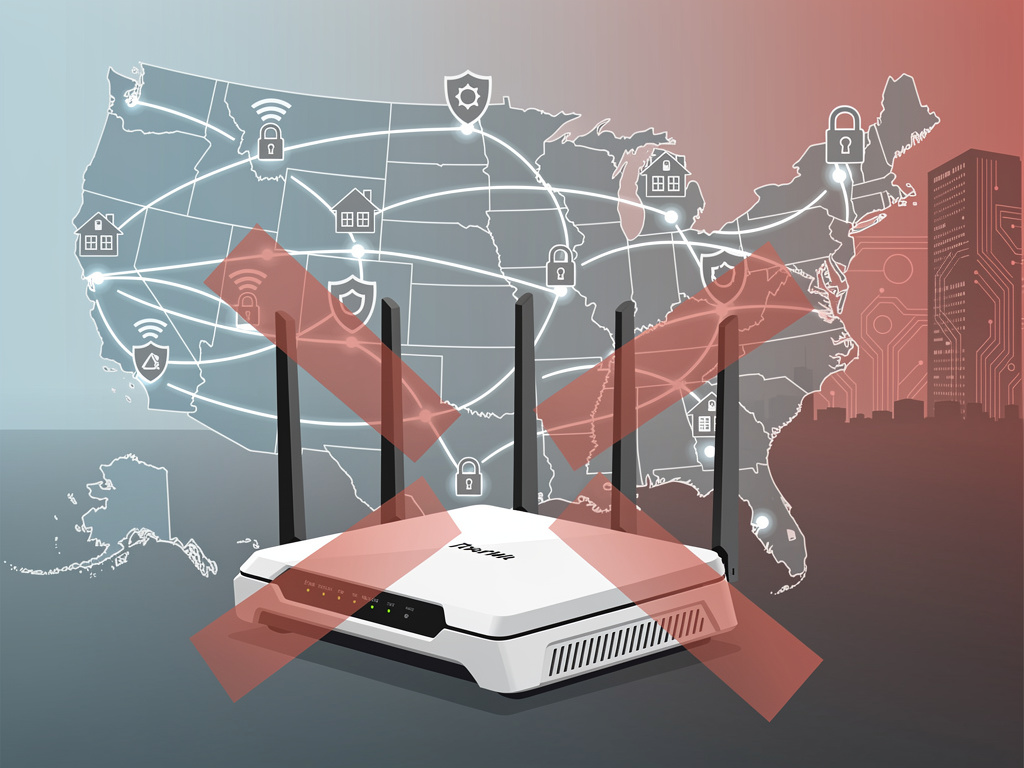
The federal government is preparing to effectively ban the most popular home and small-business router brand in the United States. TP-Link, a Chinese-founded company whose devices sit in an estimated 65% of American homes and small offices, is squarely in Washington’s crosshairs — and the consequences could ripple through every corner of the consumer networking market.
The story has been building for more than a year. But recent legislative and executive actions have accelerated the timeline dramatically, turning what once seemed like a remote policy discussion into an imminent commercial reality that will affect millions of American consumers, the retailers who sell networking equipment, and the internet service providers who distribute routers to their subscribers.
As TidBITS reported, citing extensive coverage from The Verge, the U.S. government’s campaign against TP-Link routers has coalesced around national security concerns — specifically, allegations that the devices could be exploited by Chinese state-sponsored hackers or that the company’s ties to Beijing make its hardware an unacceptable risk in American infrastructure. The move follows a pattern Washington has established with Huawei’s telecom equipment and, more recently, with TikTok’s social media platform: identify a widely used Chinese technology product, build a bipartisan case that it poses a security threat, then move to restrict or eliminate it from the U.S. market.
TP-Link’s dominance is staggering. The company didn’t achieve its market position through enterprise sales or government contracts. It did it the old-fashioned way — by being cheap. TP-Link routers have for years been the default budget option at Best Buy, Amazon, Walmart, and virtually every other electronics retailer. When an ISP needs an inexpensive router to ship to a new broadband subscriber, TP-Link is frequently the vendor of choice. The brand’s footprint extends into mesh networking systems, range extenders, smart home devices, and network switches. Ripping it out of the American market is no small undertaking.
The security concerns are not fabricated from thin air. In late 2023, the Cybersecurity and Infrastructure Security Agency (CISA) and the FBI issued joint advisories warning that a Chinese state-linked hacking group known as Volt Typhoon had compromised hundreds of small office and home office routers — many of them TP-Link devices — to build a botnet capable of launching attacks against U.S. critical infrastructure. The routers were exploited not because of deliberate backdoors but because of unpatched vulnerabilities, poor default security configurations, and firmware that wasn’t being updated by consumers who had no idea their router even had firmware.
That distinction matters. A lot.
Critics of the ban argue that the vulnerabilities found in TP-Link hardware are not fundamentally different from those found in routers made by Netgear, Asus, D-Link, or any number of other manufacturers. Router security across the entire consumer market is, to put it bluntly, terrible. Default passwords go unchanged. Firmware updates go uninstalled. Management interfaces sit exposed to the public internet. The question, then, is whether TP-Link is being singled out because its products are genuinely more dangerous — or because it’s a Chinese company operating at a moment of intense geopolitical rivalry.
Washington’s answer is effectively: both. Lawmakers from both parties have argued that even if TP-Link’s current vulnerabilities are comparable to competitors’, the company’s legal obligations under Chinese law — which can compel technology firms to cooperate with state intelligence services — create a unique and ongoing risk. The concern isn’t just about today’s firmware bugs. It’s about what Beijing could demand tomorrow.
The legislative vehicle for the ban has taken several forms. The ROUTERS Act, introduced in Congress, directed the Commerce Department to study the national security risks posed by routers and modems manufactured by companies with ties to foreign adversaries. That study has since been completed, and its classified findings reportedly supported aggressive action. Separately, the Commerce Department has been using its authority under Executive Order 13873 — the same order used to target Huawei and TikTok — to investigate TP-Link’s operations and supply chain.
And the Commerce Department isn’t working alone. The Department of Defense has reportedly removed TP-Link equipment from its procurement lists. The General Services Administration has flagged the brand for federal purchasing restrictions. Multiple members of the House Select Committee on the Chinese Communist Party have publicly called for an outright sales ban.
TP-Link, for its part, has attempted to distance itself from Beijing. The company restructured its corporate organization in 2024, establishing a new U.S.-based headquarters in Irvine, California, and claiming that its American operations are independent of its Chinese parent. The company has also pointed to its participation in industry security initiatives and its cooperation with U.S. authorities as evidence of good faith. But these moves have done little to quiet the drumbeat in Washington, where skepticism toward Chinese corporate restructurings runs deep — particularly after similar maneuvers by TikTok’s parent company ByteDance failed to satisfy regulators.
The practical implications of a ban are enormous. Consider the scale. TP-Link sells millions of routers annually in the United States. Amazon alone lists hundreds of TP-Link products, many of which carry “Amazon’s Choice” or “Best Seller” designations. A ban wouldn’t just affect new sales — it would raise questions about the tens of millions of TP-Link devices already installed in American homes and businesses. Would existing owners be required to replace their equipment? Would ISPs that distributed TP-Link routers to subscribers be forced to conduct mass hardware swaps? The logistical and financial costs could be substantial.
Then there’s the price question. TP-Link’s budget positioning means that its removal from the market would disproportionately affect cost-conscious consumers — precisely the people who can least afford to spend $150 or $200 on a premium router from a domestic or allied-nation manufacturer. The average TP-Link router sells for significantly less than comparable models from Netgear or Asus. Eliminating the cheapest option from the market doesn’t just reduce competition. It raises the floor on what Americans pay for basic internet connectivity hardware.
Retailers are watching nervously. Best Buy, which devotes significant shelf space to TP-Link products, would need to rapidly identify and stock alternative brands. Amazon’s marketplace, where third-party sellers move enormous volumes of TP-Link gear, would face enforcement challenges — particularly around used and refurbished equipment. Walmart, Target, and Costco would all need to adjust their networking aisles.
ISPs face perhaps the most complex challenge. Many regional broadband providers and even some national carriers use TP-Link’s commercial-grade access points and routers in their managed service offerings. Switching vendors requires not just new hardware procurement but new management software integration, technician retraining, and subscriber communication campaigns. For small ISPs operating on thin margins, the transition costs could be painful.
The ban also raises questions about the broader trajectory of U.S.-China technology decoupling. TP-Link is not Huawei. It doesn’t build 5G base stations or core telecom switching equipment. It makes consumer routers — the kind of commodity hardware that most people never think about. If Washington is willing to ban the country’s most popular home router on national security grounds, what’s next? Chinese-made Wi-Fi chips? Smart home cameras? The components inside devices made by ostensibly American brands?
That slippery slope argument hasn’t gained much traction on Capitol Hill, where the bipartisan consensus on confronting Chinese technology influence remains strong. But it resonates in the business community, where companies with complex global supply chains worry about the expanding definition of what constitutes a national security risk.
Some security researchers have proposed a middle path: rather than banning TP-Link outright, require the company to meet stringent security certification standards, submit to regular third-party audits, and store all firmware update infrastructure on U.S. soil under U.S. legal jurisdiction. This approach would address the legitimate security concerns without the market disruption of a full ban. But it has found few champions in Congress, where the political incentives favor decisive action over nuanced regulatory frameworks.
The timing of the ban effort also intersects with the Federal Communications Commission’s Cyber Trust Mark program, a voluntary labeling initiative designed to help consumers identify routers and IoT devices that meet baseline security standards. The program, which began rolling out in late 2025, was supposed to be the government’s primary tool for improving consumer router security. A TP-Link ban would represent a far more aggressive intervention — one that goes beyond setting standards to picking winners and losers in the market.
For the average American household, the most immediate impact may be confusion. Most people don’t know what brand of router they own. They don’t know who manufactured the white box their ISP sent them. They don’t update their firmware. And they certainly don’t follow congressional hearings about foreign adversary supply chain risks. When and if a ban takes effect, millions of consumers will need clear, practical guidance about whether their existing equipment is affected and what they should do about it.
That guidance hasn’t materialized yet. And given the government’s track record on consumer technology communication — recall the chaotic rollout of the original Huawei restrictions — there’s reason to doubt it will come smoothly.
What is clear is that the TP-Link situation represents the most significant consumer-facing action in the broader U.S. campaign to reduce dependence on Chinese technology. Huawei’s ban affected telecom carriers and enterprise networks. The TikTok restrictions targeted a single app. A TP-Link ban would reach into the homes of tens of millions of ordinary Americans and ask them to swap out a piece of hardware they probably didn’t know could be a security risk.
The networking industry is already positioning for the aftermath. Netgear has reportedly ramped up production capacity. Asus has expanded its North American distribution partnerships. Smaller brands like TP-Link competitor Mercusys — which, ironically, is also owned by TP-Link’s parent company — could face collateral restrictions. And American startups in the mesh networking space, like eero (owned by Amazon) and Plume, see an opportunity to capture market share that was previously locked up by TP-Link’s price advantage.
But opportunity and readiness are different things. The consumer router market cannot absorb the sudden removal of its largest player without disruption. Supply chains need time to scale. Retailers need time to adjust. Consumers need time to understand what’s happening and why. A poorly executed ban could leave millions of Americans scrambling for basic networking equipment — or, worse, continuing to use TP-Link devices that are no longer receiving security updates because the company has been forced to exit the market.
Washington seems determined to act. The question now is not whether TP-Link will face restrictions in the United States, but how broad those restrictions will be, how quickly they’ll take effect, and whether the government has a credible plan for managing the transition. On that last point, the evidence so far is not encouraging.
The routers in American homes have become the latest front in a geopolitical contest that shows no signs of cooling. For TP-Link, the fight is existential. For consumers, it’s a looming inconvenience that could become an expensive one. And for policymakers, it’s a test of whether national security imperatives can be pursued without inflicting unnecessary collateral damage on the very public they’re meant to protect.


 WebProNews is an iEntry Publication