
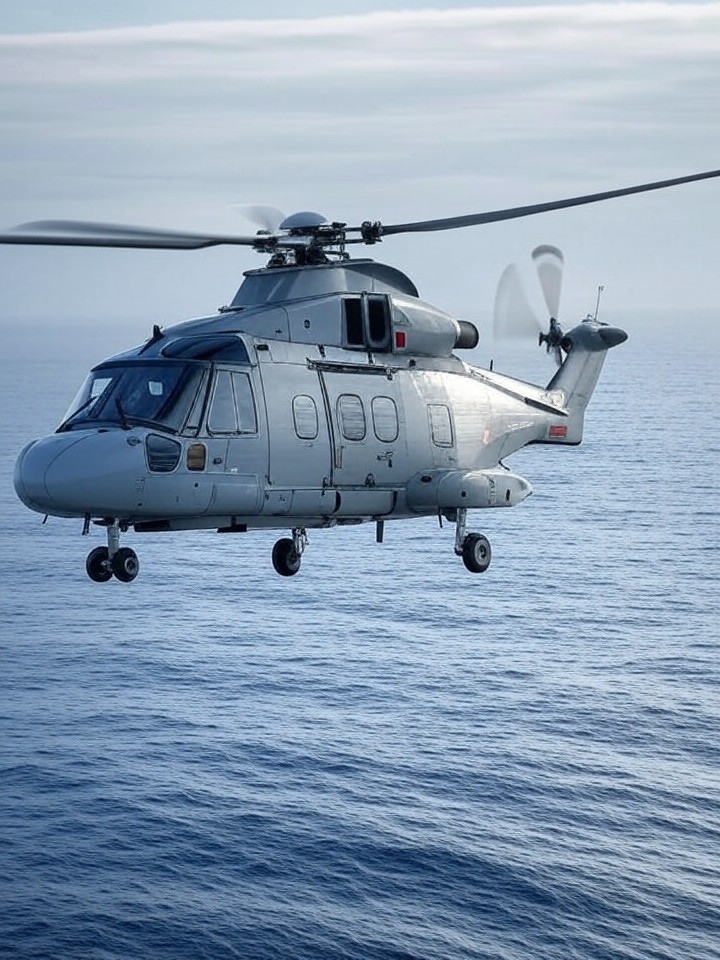
Proteus Awakens: Britain’s Bold Bet on Pilotless Skies Over the Atlantic
The British Royal Navy has ushered in a new era of maritime aviation with the maiden flight of its Leonardo Proteus uncrewed helicopter, a development that signals profound shifts in naval warfare strategies. Announced just days ago, this achievement marks the culmination of years of investment and innovation aimed at countering escalating threats in the North Atlantic. As tensions simmer with adversaries like Russia, the Proteus represents not just a technological feat but a strategic pivot toward integrating autonomous systems into frontline operations.
Developed under a £60 million contract with Italian aerospace giant Leonardo, the Proteus is described as the UK’s first truly autonomous full-size helicopter. Its first flight occurred on January 16, 2026, lifting off from Predannack Airfield in Cornwall, a site pivotal for testing uncrewed systems. Engineers and navy representatives witnessed the event, which followed rigorous ground trials at Leonardo’s Yeovil facility. This helicopter isn’t a mere drone; it’s a robust platform capable of carrying over a tonne of payload, designed to operate alongside crewed aircraft in what the navy envisions as a “hybrid air wing.”
The significance of this milestone extends beyond the flight itself. Proteus is engineered for high-risk missions, including submarine tracking, surveillance, and potentially anti-submarine warfare—critical in an era where underwater threats from nations like Russia pose increasing risks to NATO allies. Recent reports highlight how the system aligns with the UK’s “Atlantic Bastion” strategy, bolstering defenses in the volatile North Atlantic region.
From Concept to Reality: The Development Journey
The roots of Proteus trace back to 2022, when the Royal Navy inked the deal with Leonardo to create a demonstrator that could redefine aerial operations at sea. Posts on social media platform X from defense analysts and official navy accounts have chronicled the progress, noting assembly milestones at Yeovil as early as 2025. By late that year, ground running trials tested engines, sensors, and systems, paving the way for the historic flight.
Leonardo, leveraging its expertise in helicopter design, has equipped Proteus with advanced autonomy features, allowing it to execute missions with minimal human intervention. Ground-based operators supervise rather than pilot the aircraft, a setup that reduces risks to personnel while extending operational endurance. According to details shared in various defense publications, the helicopter’s modular payload pod enables versatility, from intelligence gathering to logistics support.
Industry insiders point out that this development addresses longstanding gaps in naval capabilities. Traditional helicopters like the Wildcat or Merlin are crewed and thus limited by human factors such as fatigue. Proteus, by contrast, promises persistent presence over contested waters, a boon for monitoring submarine activities amid reports of heightened Russian naval maneuvers.
Technological Edge: Autonomy and Integration
At the heart of Proteus is its autonomous flight system, which executed the maiden flight routine without direct human input, as reported by sources including the official Royal Navy website. This level of independence is achieved through sophisticated AI-driven controls and sensor suites, enabling real-time decision-making in dynamic environments. The helicopter’s design supports integration with existing naval assets, potentially operating from aircraft carriers or smaller vessels like offshore patrol vehicles.
Defense experts on X have buzzed about its potential in anti-submarine warfare (ASW), where it could deploy sonobuoys or torpedoes autonomously. One post from a military innovation account emphasized its role in enhancing ISTAR (intelligence, surveillance, target acquisition, and reconnaissance) capabilities, making it ideal for smaller ships that lack the space for larger crewed helicopters.
Moreover, the system’s heavy-lift capacity—over one tonne—opens doors to resupply missions in hostile areas, reducing the need for vulnerable manned flights. This aligns with broader trends in military technology, where uncrewed systems are increasingly seen as force multipliers, allowing human operators to focus on strategic oversight rather than tactical execution.
Strategic Implications Amid Global Tensions
The timing of Proteus’s debut is no coincidence, coming amid rising geopolitical frictions in the North Atlantic. The Telegraph reported that the helicopter is specifically designed to track Russian submarines, a response to increased underwater incursions that threaten transatlantic security. NATO allies have expressed concerns over Moscow’s submarine fleet, which has grown more assertive in recent years, prompting the UK to fortify its maritime defenses.
In this context, Proteus serves as a deterrent and a surveillance tool, capable of patrolling vast ocean expanses without the logistical burdens of crewed missions. Reuters noted in its coverage that the system addresses “high-risk missions amid rising North Atlantic tensions,” underscoring its role in maintaining naval superiority. By deploying such technology, the Royal Navy can extend its reach, providing persistent monitoring that complements satellite and sonar networks.
Furthermore, the integration of uncrewed systems like Proteus into the fleet could reshape force structures. Analysts suggest it might lead to a reevaluation of crewed aircraft roles, potentially freeing up resources for more complex operations. This hybrid approach, blending manned and unmanned elements, could become a model for other navies grappling with similar threats.
Challenges and Hurdles in Deployment
Despite the excitement, deploying Proteus isn’t without obstacles. Regulatory hurdles for autonomous systems in military aviation remain significant, requiring certifications that ensure safety and reliability in contested environments. Cybersecurity is another concern; uncrewed platforms are vulnerable to hacking or electronic warfare, which could compromise missions.
Logistical integration poses additional challenges. While Proteus is designed for naval operations, adapting it to ship-based launches and recoveries demands further testing. Ground trials have been successful, but sea trials will be crucial to validate its performance in real-world conditions, such as rough seas or electromagnetic interference.
Cost is also a factor. The initial £60 million investment is substantial, and scaling production could strain defense budgets already stretched by other priorities like carrier strike groups. However, proponents argue that the long-term savings from reduced personnel risks and extended operational lifespans justify the expense.
Innovation Ecosystem: Partnerships and Future Prospects
Leonardo’s collaboration with the Royal Navy exemplifies a successful public-private partnership in defense innovation. The Yeovil site, known as the “Home of British Helicopters,” has been instrumental in bringing Proteus to life, drawing on decades of expertise from projects like the Wildcat. Business Insider highlighted the announcement of the first flight, quoting navy officials on its autonomous capabilities.
Looking ahead, the demonstrator phase could evolve into full production if trials prove successful. X posts from aviation enthusiasts speculate on expansions, such as arming Proteus for anti-ship warfare or adapting it for search-and-rescue roles. The Royal Navy’s vision of a “hybrid air wing” suggests a future where uncrewed helicopters like this one operate seamlessly with piloted aircraft, enhancing overall fleet effectiveness.
International interest is piqued as well. Allies in NATO might seek similar technologies, potentially leading to joint developments or exports. Leonardo, with its global footprint, could market variants to other navies, amplifying the UK’s influence in defense exports.
Economic and Industrial Ripples
The Proteus project has broader economic implications for the UK. Manufacturing at Yeovil supports hundreds of jobs in aerospace engineering, fostering skills in AI, robotics, and systems integration. This aligns with government efforts to bolster the defense industrial base, especially post-Brexit, by investing in high-tech sectors.
Critics, however, question whether such expenditures divert funds from other pressing needs, like social services or climate initiatives. Yet, advocates counter that technological advancements in defense often spill over into civilian applications, such as autonomous drones for disaster response or commercial logistics.
As testing progresses, the navy plans to conduct more advanced flights, incorporating simulated combat scenarios. Success here could position the UK as a leader in uncrewed maritime aviation, setting benchmarks for reliability and autonomy.
Voices from the Field: Expert Perspectives
Defense commentators have weighed in enthusiastically. One X post from a naval lookout account praised the modular mission bay for its versatility in roles like airborne surveillance and control or logistics. Another from an industry insider highlighted its potential to equip offshore patrol vessels with serious capabilities, extending the reach of smaller fleets.
Royal Navy officials, in statements to outlets like Reuters, emphasize the strategic edge it provides against evolving threats. “This is about unlocking the potential of uncrewed systems,” one representative noted, echoing sentiments from the official navy news release.
Skeptics, however, urge caution. While the first flight is historic, full operational capability might take years, requiring iterative improvements based on data from ongoing trials.
The Road Ahead: Evolving Naval Warfare
As Proteus continues its test program, the Royal Navy is poised to integrate more autonomous elements into its operations. Future developments might include swarming capabilities, where multiple uncrewed helicopters coordinate for complex missions, overwhelming adversaries with sheer numbers and persistence.
This shift reflects a global trend toward unmanned systems in warfare, from drones in Ukraine to autonomous vessels in the Pacific. For Britain, mastering this domain ensures relevance in coalition operations and deters potential aggressors.
Ultimately, Proteus embodies the fusion of innovation and necessity, a testament to how technology can redefine traditional domains like naval aviation. As it soars into the future, it carries the promise of safer, more effective maritime defense for the UK and its allies.


 WebProNews is an iEntry Publication