
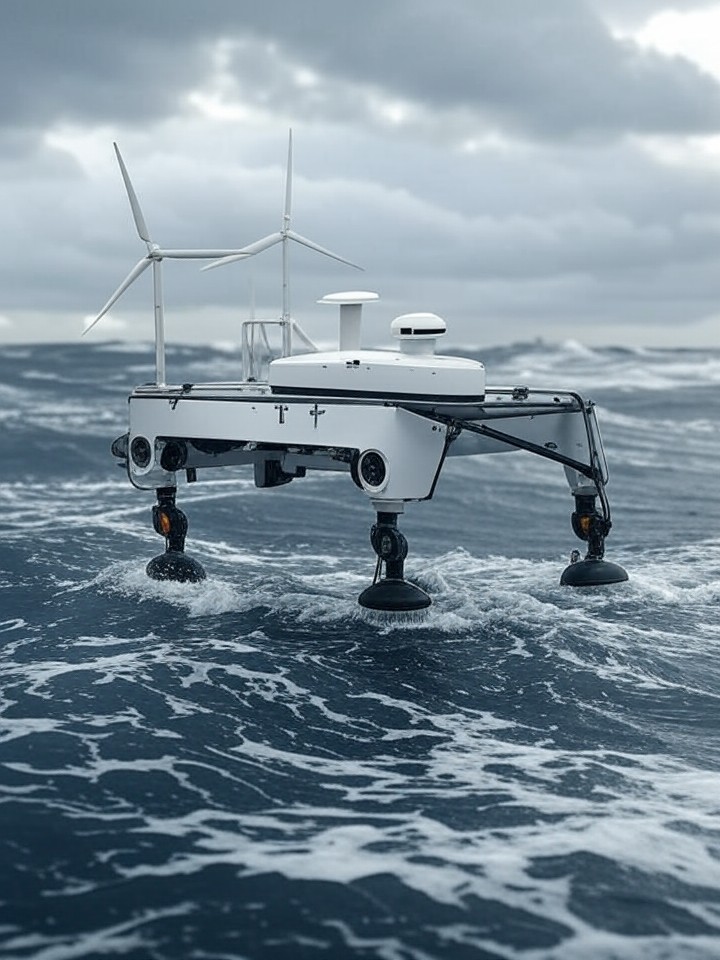
Braving the Abyss: Osheon’s Robotic Sentinel in the Heart of Hurricane Fury
In the relentless churn of a Category 5 hurricane, where winds howl at over 157 miles per hour and waves tower like skyscrapers, human presence is not just impractical—it’s impossible. Yet, in a groundbreaking feat of engineering, a diminutive ocean robot developed by UK startup Osheon has pierced this veil of chaos, becoming the first uncrewed surface vehicle to gather real-time data from within such a monstrous storm. This achievement, detailed in a recent report from the National Oceanic and Atmospheric Administration’s Atlantic Oceanographic and Meteorological Laboratory (AOML), marks a pivotal moment in marine technology and climate research. The robot, a wind-powered marvel no larger than a surfboard, transmitted crucial measurements of wind speeds, wave heights, and ocean temperatures directly from the hurricane’s core, offering scientists unprecedented insights into storm dynamics.
Osheon’s innovation stems from a blend of advanced robotics and sustainable energy principles. Founded in the UK, the company specializes in autonomous marine vehicles designed for harsh environments. Their flagship robot, equipped with sensors for atmospheric and oceanic data, relies on wind propulsion to navigate treacherous waters without the need for fuel or human intervention. According to coverage in The Engineer, this device successfully endured the brutal conditions of a 2025 Atlantic hurricane, relaying data that could refine forecasting models and enhance disaster preparedness. The implications extend beyond immediate weather prediction, touching on broader climate patterns influenced by warming oceans.
The 2025 Atlantic hurricane season was nothing short of historic, with multiple storms escalating to Category 5 status, fueled by unusually warm ocean waters. Reports from ScienceDaily highlight how deep ocean hot spots are supercharging these tempests, making them more frequent and intense. Osheon’s robot ventured into this maelstrom during one such event, capturing metrics that manned missions or traditional buoys could never achieve due to safety constraints. This data collection is vital for understanding rapid intensification processes, where hurricanes can surge from mild disturbances to catastrophic forces in mere hours.
The Engineering Marvel Behind the Mission
At the heart of Osheon’s robot is a robust design that prioritizes durability and autonomy. Constructed from lightweight, corrosion-resistant materials, the vehicle features solar panels for auxiliary power and a sail-like mechanism that harnesses wind energy for propulsion. This setup allows it to maintain position even in gale-force winds, a feat that traditional drones or buoys often fail to accomplish. As noted in an article from Interesting Engineering, the robot’s small size—comparable to a kayak—enables it to ride out massive waves without capsizing, while onboard AI processes data in real-time, deciding what to transmit back to base stations.
Deployment strategies for such robots involve strategic positioning ahead of storm paths, often launched from ships or coastal stations. In the case of the 2025 mission, collaboration with NOAA facilitated the robot’s placement in the projected eye wall of the hurricane. The data harvested included barometric pressure drops, sea surface salinity changes, and turbulence metrics, all of which contribute to more accurate storm track predictions. Industry experts point out that this technology reduces the risks associated with hurricane hunter aircraft, which, while effective, expose crews to extreme dangers.
Beyond data collection, Osheon’s robot incorporates machine learning algorithms to adapt to changing conditions. For instance, it can alter its course to avoid debris or optimize sensor readings based on environmental cues. This adaptive intelligence is a step forward from earlier uncrewed systems, which were often passive drifters. Posts on X from marine tech enthusiasts, including accounts like Open Ocean Robotics, underscore the excitement around such resilient designs, with recent demonstrations showing robots recovering from flips in high winds without human aid.
Insights from the Storm’s Core
The information gleaned from inside the Category 5 hurricane has already begun to reshape scientific understanding. For example, the robot recorded wave heights exceeding 50 feet, providing empirical evidence of ocean-atmosphere interactions that fuel storm growth. This aligns with findings from NOAA/AOML, where researchers analyzed the data to improve models of hurricane intensification. Such models are crucial for coastal communities, where even slight improvements in forecast accuracy can save lives and billions in damages.
Moreover, the robot’s success highlights the role of uncrewed vehicles in filling data gaps in remote ocean areas. Traditional satellite imagery, while valuable, lacks the granularity of on-site measurements, especially under thick cloud cover. Osheon’s device bridges this divide, offering high-resolution data that can be integrated into global climate databases. A retrospective on the 2025 season from Yale Climate Connections notes that three storms reached Category 5, emphasizing the urgency for advanced monitoring tools like this.
Collaboration between startups like Osheon and governmental bodies such as NOAA exemplifies a growing trend in public-private partnerships for environmental tech. These alliances accelerate innovation, pooling resources for deployments that might otherwise be cost-prohibitive. Recent news from the web, including updates on resilient infrastructure like the new Category 5 hurricane shelter in the Bahamas reported by Jamaica Observer, shows how such data informs not just science but also policy and infrastructure planning.
Challenges and Future Horizons
Despite its triumphs, deploying robots in extreme weather isn’t without hurdles. Signal interference from heavy rain and electromagnetic disturbances can disrupt communications, requiring redundant systems and satellite backups. Osheon’s team addressed this through encrypted, low-bandwidth transmissions that prioritize essential data packets. Engineering challenges also include biofouling—marine growth on sensors—that can degrade performance over extended missions, though antifouling coatings have mitigated this in recent iterations.
Looking ahead, scalability is key. Osheon plans to deploy fleets of these robots across hurricane-prone regions, creating a network for continuous monitoring. This vision aligns with discussions in Met Office blogs, which explore how autonomous ocean vehicles could revolutionize climate data collection. By covering vast swaths of the ocean, these fleets could provide early warnings for emerging storms, potentially integrating with AI-driven predictive analytics.
Ethical considerations also come into play, particularly regarding data privacy and environmental impact. While the robots are eco-friendly, minimizing carbon footprints compared to crewed vessels, ensuring that collected data is shared openly for global benefit is paramount. Industry insiders advocate for standardized protocols to prevent proprietary silos, fostering collaborative research that advances collective knowledge on climate change.
Broader Implications for Climate Tech
The success of Osheon’s robot extends to other sectors, inspiring applications in oil spill monitoring, fisheries management, and even search-and-rescue operations. In the wake of increasing extreme weather events, as evidenced by the 2025 season’s record-breakers, such technologies are indispensable. X posts from innovators like Vince Waelti highlight ongoing missions to capture storm datasets, reflecting a community eager for high-resolution insights.
Furthermore, this breakthrough underscores the potential of robotics in hazardous environments beyond oceans, from wildfires to arctic explorations. By reducing human risk, these machines enable bolder scientific pursuits. NOAA’s innovations report from AOML details how such research during the 2025 season pushed boundaries, with Osheon’s contribution standing out as a milestone.
Investment in this field is surging, with venture capital flowing into marine robotics startups. Osheon’s achievement, as covered in various tech outlets, positions it as a leader, potentially attracting partnerships for global deployments. The data from these missions could inform international climate agreements, providing evidence-based strategies to combat warming oceans and intensified storms.
Evolving the Fight Against Nature’s Giants
As climate change amplifies hurricane strength, tools like Osheon’s robot become frontline defenders. The device’s ability to operate autonomously in conditions that would destroy conventional equipment sets a new standard. Future enhancements might include deeper submersion capabilities or integrated drone swarms for multi-dimensional data capture.
Training programs for operators and data analysts are emerging, ensuring that the human element complements robotic efficiency. Universities and research institutions are incorporating these technologies into curricula, preparing the next generation for a world where machines tackle the untamable.
Ultimately, Osheon’s pioneering mission not only collected vital data but also ignited a wave of innovation in ocean robotics. By venturing where humans cannot, it paves the way for safer, more informed responses to the growing threat of supercharged storms, blending cutting-edge tech with the unyielding pursuit of knowledge.


 WebProNews is an iEntry Publication