
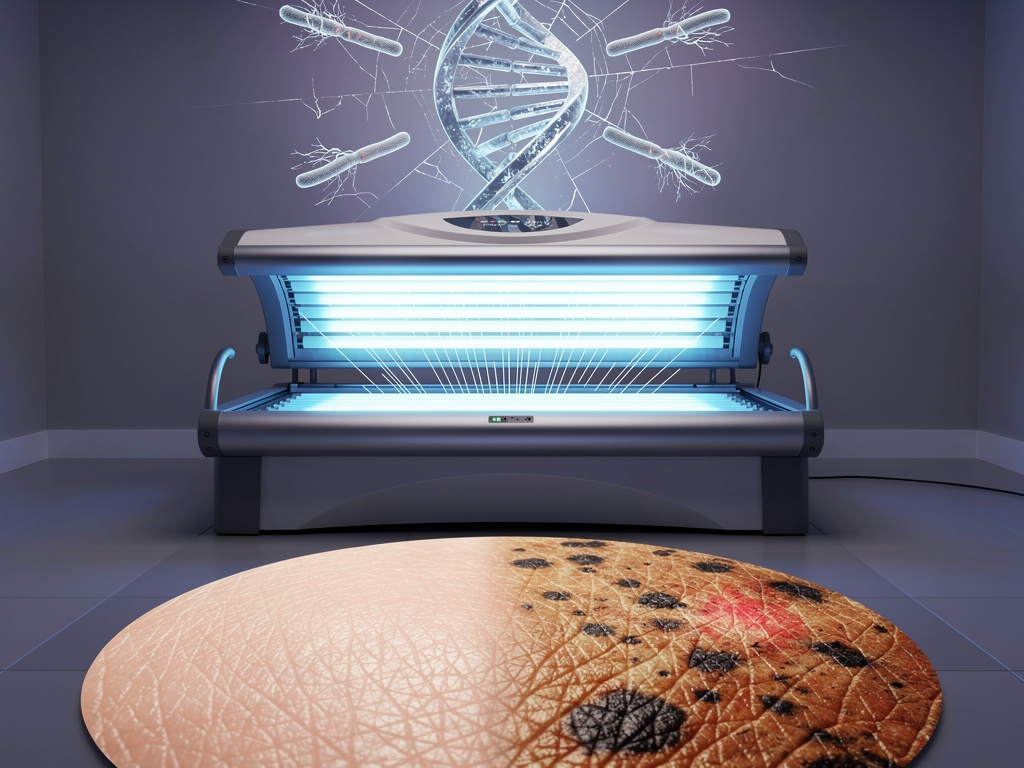
The Genetic Shadows of Indoor Glow: How Tanning Beds Fast-Track Skin to Premature Senescence
In the quest for a sun-kissed complexion without the sun, millions turn to indoor tanning beds, oblivious to the profound damage lurking beneath the surface. A groundbreaking study from the University of California, San Francisco (UCSF) has unveiled alarming evidence that these artificial UV sources accelerate skin aging at the genetic level, making youthful skin resemble that of someone decades older. Published in December 2025, the research delves into the molecular mayhem caused by tanning beds, revealing mutations that not only hasten aging but also sow the seeds for deadly skin cancers like melanoma.
The study, led by dermatologists and geneticists at UCSF and Northwestern University, analyzed skin samples from young adults who frequently used tanning beds. By employing advanced single-cell genomic sequencing, researchers discovered that these individuals exhibited a mutation burden in their skin cells comparable to non-tanners in their 70s or 80s. This genetic overload includes alterations in key genes that regulate cell growth and repair, effectively turning back the clock on skin health in the wrong direction.
What makes this finding particularly stark is the comparison to natural sun exposure. While sunlight can cause similar damage over time, indoor tanning appears to amplify it, delivering concentrated UV radiation that penetrates deeper and more uniformly across the skin. Participants in their 20s and 30s showed accelerated telomere shortening—a hallmark of cellular aging—and increased oxidative stress markers, all pointing to a biological age far exceeding their chronological years.
Unmasking the Molecular Mechanisms
At the heart of the UCSF investigation is the revelation of specific DNA mutations triggered by indoor UV exposure. The study, detailed in UC San Francisco’s news release, highlights how tanning beds induce widespread genomic instability. Unlike sporadic sun exposure, which might affect only sun-exposed areas, indoor tanning blankets the entire body in UVA and UVB rays, leading to mutations even in typically protected regions.
Collaborating scientists from Northwestern examined over 10,000 skin cells from tanners and non-tanners, finding that tanners had up to three times more mutations in genes like TP53 and BRAF, which are notorious for driving melanoma. This isn’t just theoretical; the research links these genetic changes directly to heightened cancer risk, with indoor tanners facing nearly triple the odds of developing melanoma compared to those who avoid artificial UV.
Public health experts have long warned about tanning beds, but this study provides the first granular look at how they reprogram skin at the epigenetic level. Epigenetic modifications, such as DNA methylation patterns, were found to mimic those seen in elderly skin, effectively silencing genes that protect against aging and promoting those that accelerate it. As one researcher noted, it’s like forcing skin cells into early retirement, where they lose functionality and become prone to malignant transformation.
Broader Health Implications and Industry Pushback
The implications extend beyond cosmetics. Accelerated genetic aging in the skin could signal systemic effects, as UV radiation has been linked to immune suppression and even internal organ stress. Drawing from related research, a report in SciTechDaily emphasizes that these mutations plant “the earliest seeds of cancer years before symptoms emerge,” underscoring the latent danger for young users who might not see consequences until middle age.
Industry insiders in the tanning sector have historically downplayed risks, citing studies that suggest moderate tanning offers vitamin D benefits or mood enhancements. However, the UCSF data counters this narrative, showing that any purported benefits are dwarfed by the genetic toll. Regulatory bodies like the FDA have classified tanning beds as moderate-risk devices since 2014, but calls for stricter bans, especially for minors, are gaining traction based on this new evidence.
Social media platforms, particularly X (formerly Twitter), buzz with reactions to the study. Posts from health influencers and fact-checkers highlight the tripled melanoma risk, with one viral thread noting that indoor tanning’s cancer link surpasses that of smoking for lung cancer in sheer case numbers. These online discussions amplify the urgency, as Gen Z’s rising interest in tanning—fueled by social media trends—clashes with the stark genetic realities uncovered.
Personal Stories and Survivor Insights
To humanize the data, the UCSF team incorporated narratives from melanoma survivors who traced their diagnoses back to teenage tanning habits. One such account, shared in ScienceDaily, describes a young woman who developed melanoma on her back—a area rarely sun-exposed but routinely hit by tanning bed rays. Her story illustrates how mutations spread broadly, affecting even “unusual places” as noted in an NPR health segment.
These personal vignettes reveal a pattern: many users start young, enticed by peer pressure or beauty standards, only to face lifelong consequences. Dermatologists involved in the study stress that prevention is key, advocating for education campaigns that explain genetic risks in accessible terms. “It’s not just wrinkles; it’s rewriting your DNA,” one expert quipped, emphasizing the irreversible nature of these changes.
Comparatively, natural aging involves gradual accumulation of mutations from environmental factors, but indoor tanning compresses this timeline dramatically. The research quantifies this by measuring mutational signatures unique to UV exposure, finding them in abundance among tanners. This has prompted comparisons to other accelerated aging phenomena, like those seen in progeria syndromes, though on a less severe scale.
Scientific Methodology and Peer Validation
Delving deeper into the methodology, the study utilized cutting-edge techniques like single-nucleus RNA sequencing to profile individual cells, revealing heterogeneity in mutation loads. Published in Science Advances, the peer-reviewed paper details how researchers controlled for variables such as age, sex, and sun exposure history, ensuring the findings isolate tanning bed effects.
Validation came from independent analyses, including a cross-reference with data from the Cancer Genome Atlas, which confirmed the melanoma-linked mutations. Critics might argue sample size limitations— the study involved about 50 participants—but the depth of genomic data per subject provides robust statistical power. Future studies, as hinted in the paper, aim to track long-term outcomes in larger cohorts.
Industry responses vary; some tanning salon chains are pivoting to spray tans or LED therapies, marketing them as safer alternatives. However, experts warn that any UV-based tanning carries risks, urging a shift toward sunless options backed by science.
Policy Shifts and Global Perspectives
On the policy front, the World Health Organization has long equated tanning beds with carcinogens like tobacco, a stance reinforced by this research. In the U.S., states like California ban minors from tanning salons, but enforcement remains spotty. The UCSF findings are fueling pushes for federal regulations, potentially mirroring Australia’s outright ban on commercial tanning beds since 2015.
Globally, perspectives differ. In Europe, where tanning culture is prevalent, similar studies from institutions like the Karolinska Institute echo the genetic aging concerns. A post on X from a European health account lamented the “genetic time bomb” for young tanners, garnering thousands of shares and sparking debates on beauty standards versus health.
Economically, the tanning industry, valued at billions, faces headwinds. Salons report declining visits among informed demographics, with a shift toward wellness-focused beauty. Investors are eyeing startups developing UV-free tanning technologies, signaling a market evolution driven by scientific revelations.
Educational Outreach and Prevention Strategies
Education emerges as a critical tool. Dermatological societies are integrating the UCSF data into curricula, teaching medical students about genetic dermatology. Public campaigns, inspired by anti-smoking efforts, use vivid imagery of mutated DNA to deter usage. Schools and colleges, where tanning often peaks, are prime targets for interventions.
Prevention strategies also include technological innovations, like apps that simulate aging effects from tanning or wearable UV monitors. One such app, referenced in a News-Medical.net article, uses AI to predict personal risk based on tanning history, empowering users with data-driven insights.
For insiders in pharmaceuticals and cosmetics, this opens avenues for anti-aging products targeting UV-induced mutations. Companies are researching topical agents that repair DNA or boost cellular resilience, potentially revolutionizing skincare in light of these findings.
Future Research Directions and Ethical Considerations
Looking ahead, researchers plan to explore intergenerational effects—could parental tanning influence offspring’s genetic predispositions? Ethical questions arise too: should genetic testing for tanning-related mutations become standard in dermatology? Balancing privacy with preventive care will be key.
The study also prompts reflection on societal beauty norms. Why do we valorize tanned skin despite the risks? Cultural anthropologists point to historical associations with leisure and health, now contradicted by science. Shifting paradigms toward embracing natural skin tones could mitigate the tanning trend.
Ultimately, the UCSF research serves as a wake-up call, bridging genetics, dermatology, and public health. By illuminating the hidden genetic shadows of indoor tanning, it equips insiders with knowledge to advocate for change, fostering a future where beauty doesn’t come at the cost of accelerated senescence.


 WebProNews is an iEntry Publication