
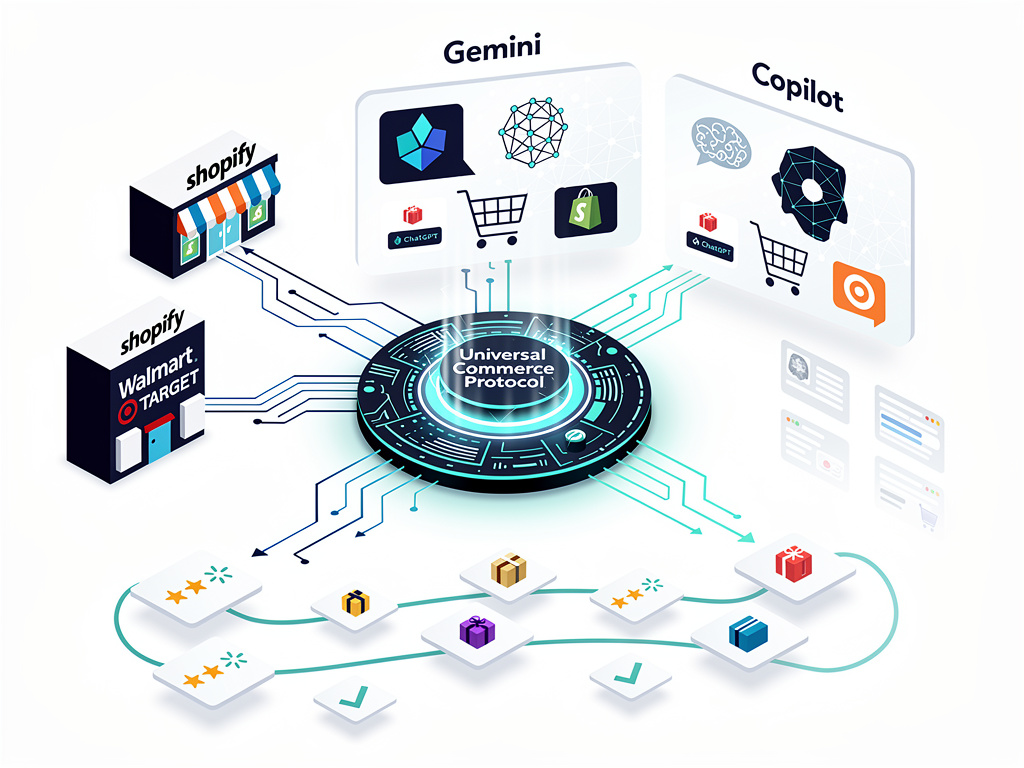
Shopify Inc. and Alphabet Inc.’s Google unveiled the Universal Commerce Protocol late last year at the National Retail Federation conference, thrusting open-source infrastructure into the heart of AI-driven buying. Co-developed with heavyweights like Walmart, Target, Etsy and Wayfair, and endorsed by over 20 partners including Adyen, American Express, Mastercard, Stripe and Visa, UCP establishes a shared dialect for AI agents to navigate product discovery, checkout and post-purchase support without bespoke integrations for every retailer or platform.
Harley Finkelstein, Shopify’s president, described the protocol in a recent interview as a "universal language… open sourced so that all merchants can speak directly to every single one of the agents." He emphasized its role in enabling complex transactions beyond simple one-offs, such as subscriptions, bundling and delivery preferences like avoiding shipments on specific days. "If it’s furniture, for example, please don’t ship it to me on Thursday. I’m not home Thursday. Send it Friday," Finkelstein explained, highlighting how UCP matches agentic experiences to traditional online stores.
UCP arrives amid surging AI shopping traffic—Shopify reported a sevenfold increase in AI-driven visits and an 11-fold jump in related orders during 2025. The protocol powers native checkouts in Google’s AI Mode within Search, the Gemini app, Microsoft Copilot and ChatGPT, positioning Shopify as the connective tissue for agentic channels.
Merit Over Marketing Dollars
Finkelstein envisions UCP fostering "merit-based shopping," where products surface based on contextual fit rather than ad budgets or search rankings. "You can’t really game the system in that way. You actually have to be, from a context perspective, the right product for the right consumer," he told Search Engine Journal. This diminishes traditional SEO’s grip, as discovery hinges on user history and preferences encoded in agent interactions.
Brands like Gymshark can now bundle items seamlessly in chats, while lesser-known players such as True Classic Tees gain visibility for queries like "black t-shirt" that once favored giants. "It probably should not show me a generic pair of boots," Finkelstein noted, pointing to how prior research personalizes outputs and levels the field for niche offerings.
Analysts project agentic shoppers could claim 10% to 20% of U.S. e-commerce—$190 billion to $385 billion—by 2030, per Morgan Stanley estimates cited in BetaKit. UCP’s open design counters walled gardens, with Shopify CEO Tobi Lütke calling it a shift where "serendipity is where the best of commerce happens."
Technical Backbone of Agentic Flows
At its core, UCP employs layered protocols akin to TCP/IP, separating discovery, negotiation and execution. Merchants publish JSON profiles at /.well-known/ucp detailing capabilities—from discounts and loyalty to fulfillment rules—allowing agents to query intersections dynamically. "UCP defines the discovery and negotiation mechanisms between agent and merchant," per Shopify Engineering.
Integrations flex across REST APIs, Model Context Protocol (MCP), Agent2Agent (A2A) or Agent Payments Protocol (AP2), with tokenized payments ensuring security. When agents hit limits—like custom engraving—UCP triggers seamless handoffs to merchant UIs. Google’s Ashish Gupta, VP/GM of Merchant Shopping, praised it as "the framework" for ecosystem-wide language, as quoted on Shopify’s blog.
Shopify’s open-source UCP Proxy on GitHub extends this to non-native platforms like WooCommerce or Wix, translating backends into UCP compliance. "Your store stays the system-of-work & truth, the proxy translates," noted Shopify’s Ilya Grigorik on X.
Opening Doors to Non-Shopify Brands
Shopify’s Agentic Plan lets any enterprise syndicate products into its catalog for AI discovery, sans full migration. "We’re actually bringing agentic commerce to every brand, whether or not they’re on Shopify," Finkelstein said. This inclusivity ensures agents access comprehensive inventories, vital for viability.
Initial rollouts hit U.S. retailers via Google Pay, with PayPal slated soon; merchants retain record status and customer data. Early pilots in Gemini and Search AI Mode demonstrate carts building mid-conversation, escalating only as needed.
Vanessa Lee, Shopify VP of product, underscored UCP’s robustness: "We have taken everything we’ve seen over the decades to make UCP a robust commerce standard that can scale."
Industry Endorsements and Early Momentum
Co-developers Target and Walmart signal broad buy-in, while payments giants back tokenized flows. Google’s Developers Blog details SDKs and samples for quick onboarding, including Python servers for business APIs.
On X, Lütke announced UCP live status: "Agents can handle everything from discovery to fulfillment, and support things like discounts, subscriptions, and loyalty programs." Finkelstein echoed: "Brands win on merit. Customers get a personal shopper in their pocket."
Google Developers Blog invites community contributions, positioning UCP as evolving open-source. Shopify’s admin centralizes controls for AI channels, tracking performance sans per-platform tweaks.
Challenges and Competitive Pressures
Adoption hinges on data quality; Finkelstein predicts merchandising roles evolving to curate UCP feeds. "There’s going to be people… thinking a lot about consistent updates to UCP, consistent updates to the catalog," he forecasted.
Amazon’s absence looms large—its $70 billion ad machine thrives on clicks UCP could erode. Forbes warned: "This is the end of search-based shopping as we know it," framing UCP as rails for AI-native transactions.
Friction persists in global scaling, regulatory hurdles and agent maturity. Yet, with NRF buzz and integrations accelerating, UCP cements Shopify-Google as frontrunners in rearchitecting $17.5 trillion global e-commerce for autonomous buyers.
Merchant Strategies in the Agentic Shift
Retailers must prioritize structured catalogs and capability profiles. Google’s Merchant Center adds AI-optimized attributes for conversational discovery, while Direct Offers pilot personalized deals in AI Mode.
Finkelstein anticipates gradual uptake: "I think it’ll likely be something that like most people use some of the time." Success demands techno-optimism, as experiences refine rapidly.
As Google’s blog frames it, UCP builds an "open, collaborative" path where retailers thrive amid AI ubiquity.


 WebProNews is an iEntry Publication