
Stroke remains the leading cause of long-term disability among adults. Most patients never regain full function. Physical rehabilitation helps, yet its benefits stay modest. Intensity demands prove too much for many. No approved medicines exist to boost the recovery process itself.
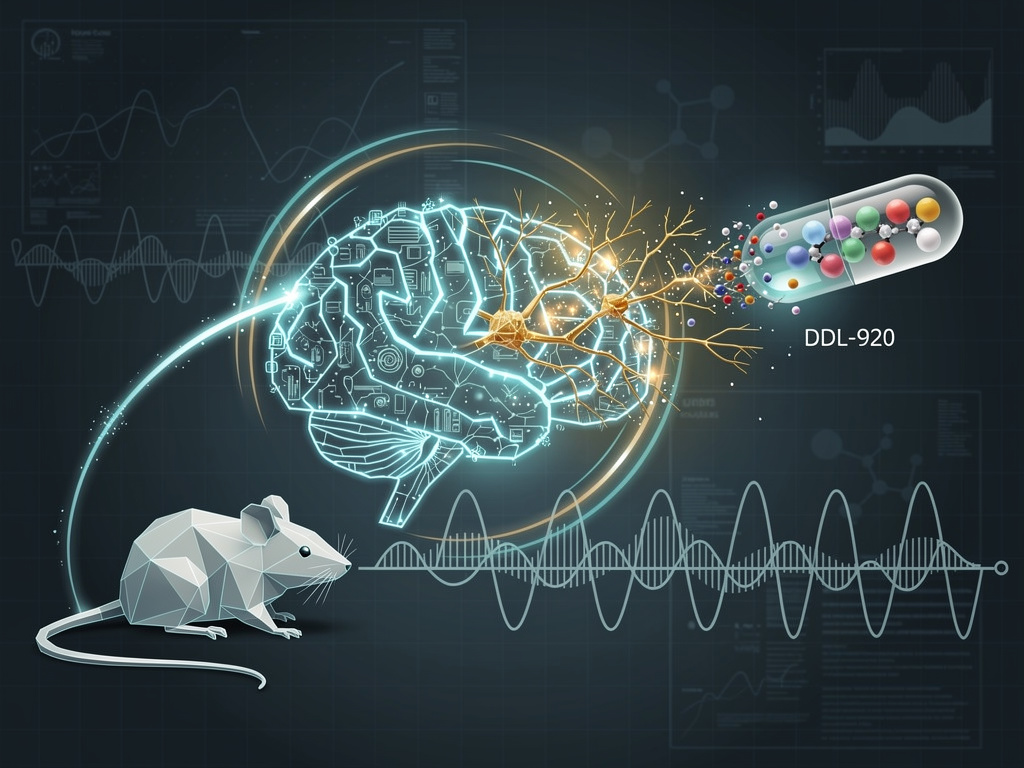
That picture may shift. Researchers at UCLA have identified a compound that, in laboratory mice, matches the gains from physical therapy. The drug, DDL-920, targets specific brain cells and rhythms lost after stroke. Results appeared in Nature Communications.
Dr. S. Thomas Carmichael leads the effort. He chairs UCLA’s neurology department. “The goal is to have a medicine that stroke patients can take that produces the effects of rehabilitation,” he said, according to the UCLA Health release. Carmichael points to a stubborn gap. Rehabilitation relies on physical medicine practiced for decades. Other fields rely on targeted drugs. Cardiology, infectious disease, cancer. Stroke recovery lagged behind.
His team started by asking a basic question. How does rehabilitation actually change the brain? They studied both mice and human patients. The work revealed damage far from the initial stroke site. Connections break. Networks fall silent. Movement, gait, coordination suffer.
One cell type stood out. Parvalbumin neurons. These cells help generate gamma oscillations, brain waves that coordinate activity across regions. Stroke knocks those oscillations offline. Successful rehabilitation restores them. In mice it also rebuilds the lost connections on those parvalbumin cells. The pattern held in people too.
So the scientists hunted for a way to flip the switch chemically. They screened candidates designed to excite parvalbumin neurons and bring gamma rhythms back. Two looked promising. One delivered. DDL-920, created in the lab of co-author Varghese John, produced clear recovery of movement control. The treated mice performed nearly as well as those that underwent physical rehab.
The finding lands at a moment when stroke treatment still centers on acute intervention. Clot-busting drugs. Mechanical removal. Rehabilitation follows, but outcomes vary. A pill that mimics therapy’s biological effects could change the equation. Patients who cannot endure hours of intense exercise might still gain ground. Those in remote areas or with limited access could benefit.
Yet caution dominates the conversation. The work sits in mice. Safety and dosing questions remain open. Human trials sit years away. “Further studies are needed to understand the safety and efficacy of DDL-920 before it could be considered for human trials,” the UCLA team noted in its March 2025 announcement.
Other efforts have chased similar goals. In November 2025, the same UCLA group published on tonic inhibition, a chemical brake that stays engaged too long after stroke and blocks repair. Blocking it at the right time improved outcomes in lab models, according to a UCLA Health report. Timing matters. Treat too early and cells die. Wait and recovery improves.
Elsewhere, researchers test different molecules. UConn’s program received fresh NIH funding in late 2024 to push a neuroprotective compound toward clinical testing. A Chinese phase 3 trial reported in February 2026 that loberamisal, given within 48 hours, lifted the share of patients with excellent 90-day outcomes from 56 percent to 69 percent. Those results, presented at the American Stroke Association’s International Stroke Conference, focus on neuroprotection rather than late-stage repair.
DDL-920 takes a distinct path. It does not shrink the stroke itself. It repairs the downstream circuitry. The approach rests on years of circuit-level neuroscience. Carmichael’s lab has mapped how distant brain regions lose synchrony. Gamma restoration appears to re-link them.
Experts outside the project see promise mixed with realism. The mouse model captures key features of human stroke yet cannot replicate every variable. Age, comorbidities, stroke size and location all influence recovery. Whether DDL-920 scales to that complexity stays unknown. Still, the biological target looks solid. Gamma oscillations matter for cognition and motor control well beyond stroke. Any compound that safely restores them could find broader uses.
Pharmaceutical interest will likely follow. Companies have watched the stroke recovery space for years without a clear winner. A well-validated molecular target could open doors. John’s medicinal chemistry background gives the program an edge. DDL-920 emerged from deliberate design rather than repurposing.
For now the focus stays on the next experiments. Toxicology. Dose ranging. Longer-term behavioral studies. Only then will regulators consider an investigational new drug application. Carmichael has spent his career bridging bench and bedside. He knows the distance.
Patients, however, hear headlines and ask when they can try the pill. UCLA has fielded inquiries. No trials exist. The university directs people to clinicaltrials.gov for other studies. The message is clear. Science moves deliberately.
Even so, the paper marks a shift. For the first time, a single molecule reproduced the full biological signature of rehabilitation in a living model. The brain, long viewed as stubbornly resistant to repair after stroke, showed new plasticity when the right switch was thrown.
Parvalbumin cells. Gamma waves. Distant connections restored. The vocabulary sounds technical. The implication does not. A future where stroke survivors swallow a tablet and regain control of hand or leg function no longer feels like pure speculation. It feels like data.
That data must now survive the long march from mouse to man. Many compounds fail along the way. Yet the foundation looks stronger than before. Carmichael’s team has named the circuit, measured its failure, and found a drug that fixes it. The rest is execution.
And execution in drug development is never quick. But the direction is set. Molecular medicine has finally reached the rehabilitation ward.


 WebProNews is an iEntry Publication