
Uber’s Dallas Robotaxi Gambit: Accelerating the Autonomous Ride-Hailing Frontier
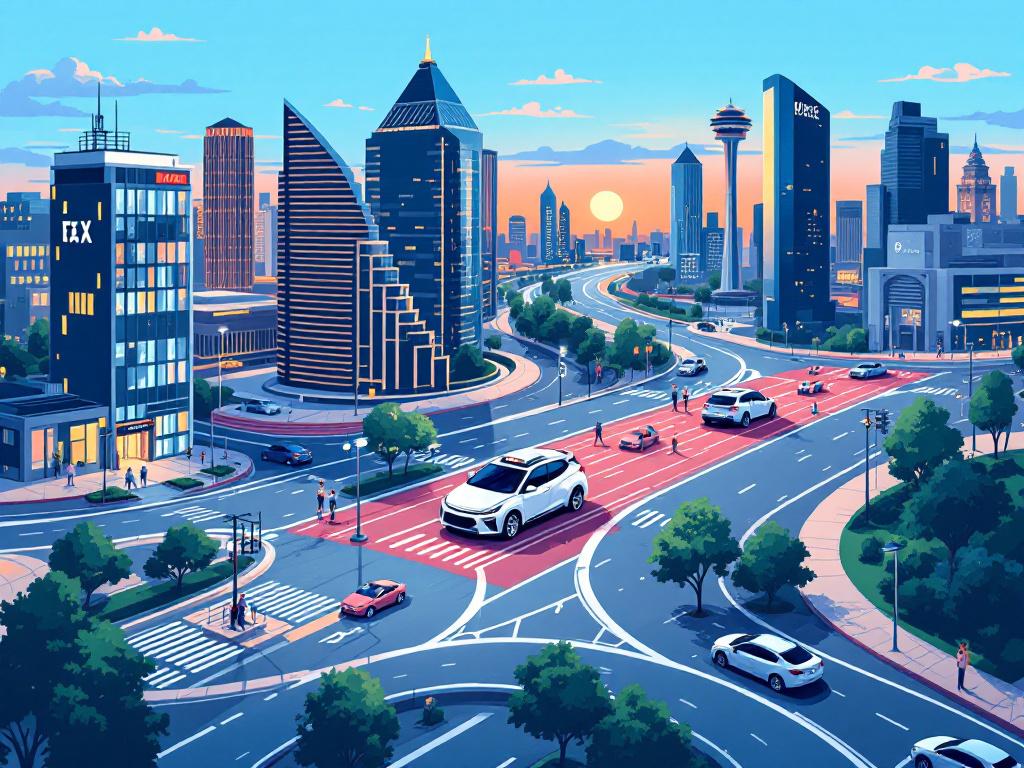
In the heart of Texas, where sprawling highways meet urban innovation, Uber Technologies Inc. has taken a bold step forward in the autonomous vehicle arena. On December 3, 2025, the ride-hailing behemoth officially launched its robotaxi service in Dallas, partnering with startup Avride to deploy self-driving vehicles across a select swath of the city. This move marks Uber’s latest expansion in a fiercely competitive field, where companies are vying to redefine urban transportation through cutting-edge technology. Riders requesting an UberX, Uber Comfort, or Uber Comfort Electric might now find themselves matched with an all-electric Hyundai Ioniq 5 robotaxi, at no extra cost, provided they opt in.
The service kicks off in a 9-square-mile zone encompassing Downtown Dallas, Uptown, Turtle Creek, and Deep Ellum, with plans for future growth. According to details from Uber’s investor relations page, users receive a notification upon matching and can choose to switch to a human-driven ride if preferred. Once aboard, the experience mirrors the familiar Uber app, but with autonomous twists: riders unlock the vehicle via the app, and a safety operator sits in the driver’s seat during this initial phase to oversee operations and intervene if necessary. This phased approach underscores Uber’s strategy to build trust and gather data before fully unmanned deployments.
Avride, the technology partner, brings its expertise in autonomous systems to the table. The startup’s vehicles are equipped with advanced sensors, lidars, and AI-driven navigation, designed to handle the complexities of Dallas’s bustling streets. This partnership is part of Uber’s broader push into autonomy, following similar rollouts in other cities. As reported in a Business Insider article, the launch intensifies the robotaxi race, pitting Uber against rivals like Waymo and Cruise, who have faced their own regulatory and technical hurdles.
Partnerships Powering the Push
Uber’s foray into Dallas isn’t an isolated event but a piece of a larger mosaic of collaborations. Earlier in 2025, Uber teamed up with WeRide to introduce fully driverless robotaxis in Abu Dhabi, marking the Middle East’s first such commercial operation outside the U.S. That initiative, backed by Abu Dhabi’s Integrated Transport Centre, began with routes on Yas Island and represents a milestone in global smart mobility. Drawing from Uber’s press release on the matter, this expansion highlights the company’s ambition to scale autonomous services internationally, leveraging local partnerships to navigate diverse regulatory environments.
Domestically, Uber has been aggressive. In Austin and Atlanta, riders can hail Waymo vehicles through the Uber app, a integration that blends Uber’s vast user base with Waymo’s proven autonomous tech. Posts on X from Uber’s official account emphasize these developments, noting early access programs in Atlanta where select users experienced fully autonomous rides ahead of wider launches. Such moves are strategic, allowing Uber to test and refine its platform without bearing the full cost of developing the hardware from scratch.
The Dallas rollout with Avride builds on a partnership announced earlier in the year. In September 2025, Uber revealed testing of co-branded vehicles in Dallas, as shared in an X post, signaling the city’s role as a key testing ground. This collaboration extends to fleet management, with Avride handling the autonomous tech while Uber manages the ride-matching and user interface. Analysts see this as a cost-effective model for Uber, which has historically invested heavily in its own self-driving unit before pivoting to partnerships after setbacks, including a fatal accident in 2018 that led to a temporary halt in testing.
Technological Underpinnings and Challenges
At the core of these robotaxis are sophisticated systems that promise safer, more efficient travel. The Hyundai Ioniq 5 models used in Dallas are fully electric, aligning with Uber’s sustainability goals. Equipped with Avride’s autonomy stack, they can navigate traffic, obey signals, and respond to pedestrians with a level of precision that human drivers might envy. However, the presence of safety operators in the initial phase acknowledges ongoing challenges in achieving full autonomy, particularly in unpredictable urban settings like Dallas’s mix of highways and dense neighborhoods.
Regulatory scrutiny remains a significant factor. The National Highway Traffic Safety Administration and local authorities have been monitoring autonomous vehicle deployments closely, especially after incidents involving competitors. For instance, Cruise faced a suspension in California following safety concerns, which has made the industry more cautious. Uber’s approach in Dallas, starting with supervised autonomy, aims to mitigate risks while collecting real-world data to improve algorithms.
Moreover, public perception plays a crucial role. A Dallas News report details how riders might be matched with these vehicles starting Wednesday, emphasizing the opt-in nature to ease adoption. Early feedback from similar programs, as gleaned from X discussions, shows a mix of excitement and skepticism, with users praising the novelty but questioning reliability in bad weather or heavy traffic.
Market Implications and Competitive Dynamics
The robotaxi sector is heating up, with Uber positioning itself as a platform aggregator rather than a sole proprietor of tech. This strategy allows it to partner with multiple providers—Avride in Dallas, Waymo in Austin and Atlanta, WeRide in Abu Dhabi—creating a diversified network that could dominate the market. A Bloomberg analysis highlights this as Uber’s latest U.S. expansion, following announcements of a massive fleet deal with Nuro and Lucid Motors for 20,000-plus vehicles starting in 2026, focused initially on the San Francisco Bay Area.
Competitors aren’t standing still. Waymo, a unit of Alphabet Inc., has expanded its own services, while Tesla Inc. continues to tease its Cybercab ambitions. Uber’s edge lies in its existing app ecosystem, which boasts millions of users accustomed to seamless ride-hailing. By integrating robotaxis without additional fees, Uber lowers barriers to entry, potentially accelerating mass adoption. Financially, this could boost Uber’s margins, as autonomous vehicles eliminate driver costs, a major expense in the ride-hailing business.
However, scaling presents hurdles. Infrastructure needs, such as charging stations and maintenance hubs, must keep pace. In Dallas, the limited 9-square-mile area allows for controlled growth, but expansion will require proving safety and efficiency. Insights from a Uber investor release outline plans to broaden the operating territory, contingent on performance metrics and regulatory approvals.
Economic and Societal Ripples
Beyond technology, Uber’s Dallas launch has broader implications for the local economy. The service could create jobs in vehicle operations, data analysis, and tech support, even as it disrupts traditional driving roles. Dallas, with its growing tech scene, stands to benefit from this influx of innovation, potentially attracting more talent and investment. As noted in a Mashable piece, the initial rollout includes a human in the driver’s seat, which softens the transition for both riders and the workforce.
On a societal level, autonomous vehicles promise to reduce accidents caused by human error, lower emissions through electric fleets, and improve accessibility for those unable to drive. Yet, equity concerns arise: will these services reach underserved areas, or remain confined to affluent zones like Uptown? Uber’s history of dynamic pricing and surge fees could exacerbate divides if not managed carefully.
Looking ahead, the data harvested from Dallas rides will inform future iterations. Uber’s X posts reveal ongoing developments, such as the Nuro-Lucis partnership for a bespoke robotaxi launching in 2026, which could incorporate lessons from current deployments. This iterative process is key to refining AI models for edge cases, from construction zones to inclement weather.
Global Ambitions and Future Trajectories
Uber’s autonomous efforts extend beyond U.S. borders. The Abu Dhabi launch with WeRide, as detailed in another Uber press release, positions the company in emerging markets where regulatory frameworks are evolving rapidly. This global footprint diversifies risk and opens new revenue streams, crucial as domestic competition intensifies.
Industry insiders speculate that successful Dallas operations could accelerate Uber’s timeline for unsupervised autonomy. Partnerships like the one with Hyundai for air taxis, referenced in older X posts from Uber, hint at multimodal futures where ground and aerial transport integrate. While air taxis remain nascent, they represent the long-term vision of seamless, on-demand mobility.
Challenges persist, including cybersecurity threats and ethical AI dilemmas. Ensuring data privacy in an era of constant vehicle surveillance is paramount. Moreover, as robotaxis proliferate, cities like Dallas may need to update infrastructure, from smart traffic signals to dedicated lanes.
Investor Perspectives and Strategic Outlook
From an investment standpoint, Uber’s stock has reacted positively to these announcements. A Simply Wall St analysis questions whether the Dallas and Abu Dhabi expansions alter Uber’s bull case, noting the potential for higher profitability through autonomy. By offloading tech development to partners, Uber focuses on its core strength: connecting riders and vehicles.
Critics argue that true scalability requires overcoming public trust barriers. High-profile incidents in the past have set back the industry, but Uber’s cautious, partnership-driven model may mitigate this. Feedback from X users, including Uber’s own posts engaging with the community, suggests growing enthusiasm, with calls for features like an “Uber Wrapped” summarizing ride data.
Ultimately, Dallas serves as a litmus test for Uber’s autonomous aspirations. Success here could catalyze widespread adoption, transforming how we move in cities. As the company iterates and expands, the fusion of technology, policy, and user experience will determine if robotaxis become the norm or remain a futuristic novelty. With each mile driven autonomously, Uber edges closer to a world where the driver’s seat is empty, and the ride is redefined.


 WebProNews is an iEntry Publication