
Asia’s Autonomous Horizon: Uber’s Bold Bet on Robotaxis and Japan’s Taxi Revolution
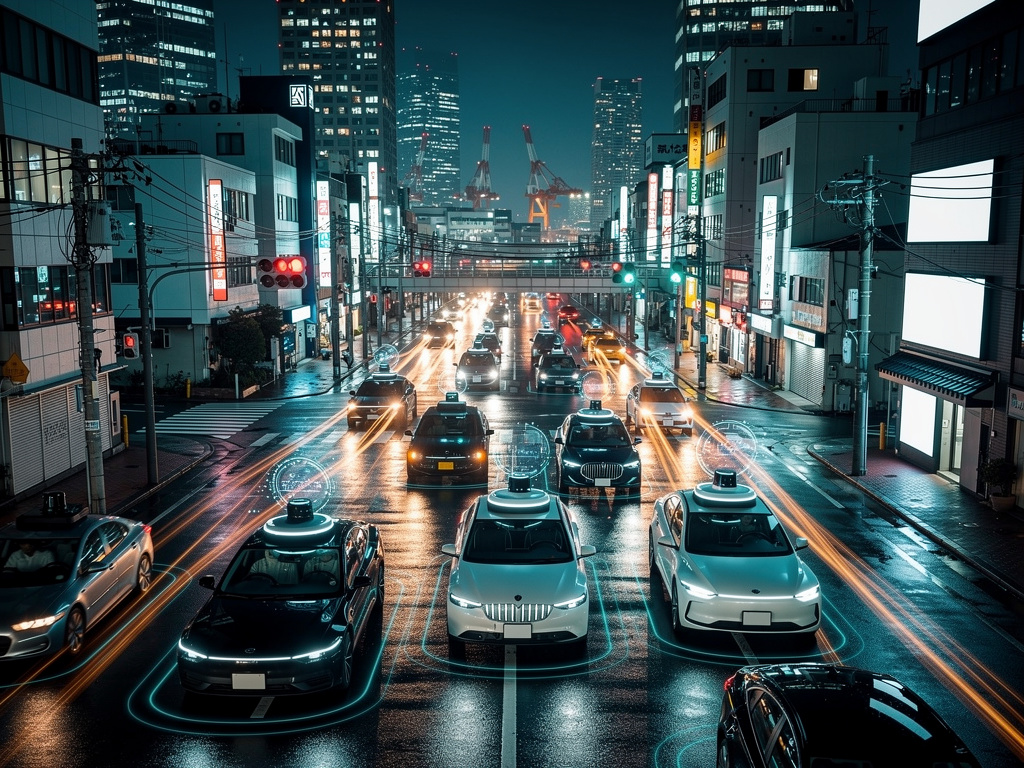
In the rapidly evolving world of autonomous vehicles, Uber Technologies Inc. is positioning itself as a frontrunner, with its chief executive forecasting a monumental shift driven by Asian markets. Dara Khosrowshahi, Uber’s CEO, recently highlighted the potential of robotaxis as a “trillion-dollar-plus” opportunity, emphasizing Asia’s role in spearheading this expansion. This optimism stems from the region’s dense urban centers, burgeoning demand for efficient mobility, and progressive regulatory environments that could accelerate the adoption of driverless technology.
Khosrowshahi’s vision was detailed in a recent interview where he pointed to Asia’s unique advantages, including high population densities and a readiness to embrace innovative transport solutions. He specifically noted Japan’s significance, describing it as having “the single largest taxi market in the world.” This assessment aligns with Uber’s strategic moves to deepen its footprint in the country, where traditional taxi services dominate but face pressures from labor shortages and aging demographics.
Uber’s ambitions extend beyond mere rhetoric. The company anticipates offering robotaxi services in more than 10 markets by the end of 2026, a timeline that underscores its aggressive push into autonomous driving. This expansion is not just about scaling operations but also about partnering with local players to navigate complex regulatory and cultural hurdles.
Strategic Investments and Market Penetration
To capitalize on Japan’s vast taxi ecosystem, Uber has announced plans to invest over $2 billion in the country over the next five years. This substantial commitment, as reported by MarketScreener, aims to enhance ride-hailing and delivery services while integrating advanced AI technologies. Such investments are crucial in a market where Uber has historically lagged behind local competitors like JapanTaxi, but the influx of capital could shift the dynamics.
Recent integrations, such as linking Uber Eats with Rakuten’s ecosystem, exemplify this strategy. Users can now earn Rakuten points on orders, creating a seamless experience that boosts user retention and spending. Posts on X highlight this move as a lockdown of Japan’s $5.1 billion delivery sector, with Uber holding a 57% market share in certain segments. This partnership not only strengthens Uber’s position but also paves the way for robotaxi integrations, where autonomous vehicles could handle last-mile deliveries efficiently.
Beyond Japan, Uber’s Asian strategy includes markets like South Korea and the United Arab Emirates, where it has already launched driverless services. In Abu Dhabi, Uber rolled out fully autonomous robotaxis in November 2025, marking its fourth market for such offerings, according to CNBC. This expansion reflects a broader trend where autonomous driving is gaining traction in the Middle East and Asia, often led by Chinese players who have a head start over U.S. counterparts.
Technological Backbone and Partnerships
At the heart of Uber’s robotaxi push is its collaboration with innovative automakers. A notable partnership is with Lucid Motors, selecting the Lucid Gravity SUV as its next-generation robotaxi vehicle. This choice, detailed in reports from InsideEVs, is driven by the vehicle’s advanced electric architecture and spacious design, ideal for urban ridesharing. Lucid’s CFO explained that the SUV’s efficiency and range make it a perfect fit for high-utilization services in dense cities.
Uber’s CEO has been vocal about regulatory discussions, as seen in a Bloomberg interview where he discussed rules for autonomous rides. Khosrowshahi stated that ongoing dialogues with regulators are key to rolling out services in over 10 markets by 2026. This proactive stance is essential in Asia, where varying regulations pose both challenges and opportunities. For instance, in Japan, the government is increasingly open to AI-driven solutions amid labor shortages projected to reach 3.84 million by 2035, as noted in posts on X discussing Japan’s AI advantage.
The global robotaxi market is projected to surge to $450.2 billion by 2033, growing at a compound annual rate of 74.7%, according to Market.us. Uber aims to capture a significant share by leveraging its ride-hailing expertise and data trove to optimize autonomous fleets. This data-driven approach allows for predictive maintenance, route optimization, and personalized user experiences, setting Uber apart from pure-play autonomous vehicle companies.
Competitive Dynamics and Global Race
The race for robotaxi dominance is intensifying, with U.S. firms like Uber and Waymo competing against Chinese giants such as Baidu. Recent analyses from CNBC indicate that this global contest is nearing an inflection point, with executives proclaiming breakthroughs in scalability and safety. In China, companies have achieved utilization rates rivaling traditional ride-hailing, targeting fares as low as $0.20 per kilometer, which disrupts established models.
In Asia, Chinese players are expanding into Europe and the Middle East with robotaxis and robobuses, as covered in S&P Global. This head start is attributed to supportive policies and massive investments in AI infrastructure. Uber, however, counters with its established brand and partnerships, such as with Avride for autonomous delivery in South Korea and Japan, where robots are certifying for operations.
Sentiment on X reflects mixed views on Japan’s adoption. Some predict resistance from Toyota and the taxi lobby, potentially slowing robotaxi rollout, while others foresee rapid embrace of related technologies like humanoid robots for economic growth. One post envisions Japan as the world’s third-largest economy by 2030, driven by productivity gains from AI and robotics.
Regulatory Hurdles and Safety Considerations
Navigating regulations remains a pivotal challenge. In Japan, Uber is engaging with authorities to align on safety standards for autonomous vehicles. Khosrowshahi’s comments in Bloomberg emphasize these discussions, highlighting the need for clear guidelines to ensure public trust. Safety incidents in other markets have underscored the importance of robust testing and transparency.
Uber’s strategy includes phased rollouts, starting with supervised autonomy before full driverless operations. This cautious approach mitigates risks while building consumer confidence. In densely populated Asian cities, where traffic congestion is rampant, robotaxis promise reduced accidents through AI’s superior reaction times and data analytics.
Moreover, economic implications are profound. By displacing human drivers, robotaxis could lower operational costs significantly, passing savings to consumers. However, this raises questions about job displacement, particularly in Japan where the taxi industry employs thousands. Uber counters this by focusing on complementary roles, such as remote monitoring and fleet management jobs.
Economic Impacts and Future Projections
The trillion-dollar valuation Khosrowshahi assigns to robotaxis isn’t hyperbole; it’s grounded in market analyses projecting exponential growth. Asia’s dense megacities, from Tokyo to Seoul, offer ideal testing grounds for scaling these services. Uber’s integration of AI extends to predictive analytics for demand forecasting, ensuring efficient vehicle deployment.
Partnerships with local firms, like Rakuten in Japan, enhance ecosystem stickiness. As one X post notes, earning points on Uber orders creates a moat that’s hard to breach. This model could extend to robotaxis, where seamless payments and rewards encourage adoption.
Looking ahead, Uber’s expansion could reshape urban mobility. In Japan, where public transport is efficient but last-mile connectivity lags, robotaxis fill a critical gap. The company’s $2 billion investment signals long-term commitment, potentially leading to hybrid models where human-driven and autonomous services coexist.
Innovation Ecosystem and Broader Implications
Japan’s robotics prowess, often highlighted in discussions on X, positions it as a hub for innovation. Companies like Yaskawa are integrating NVIDIA technologies for advanced automation, as per posts detailing Japan’s robot revolution. Uber could tap into this by collaborating on hardware enhancements for its robotaxi fleet.
Globally, the push for autonomous driving intersects with sustainability goals. Electric robotaxis like the Lucid Gravity reduce emissions, aligning with Asia’s green initiatives. In markets like Thailand and South Korea, where Tesla’s robotaxi app is available, competition will spur further advancements.
Ultimately, Uber’s bet on Asia, particularly Japan, hinges on blending technology with local needs. As Khosrowshahi envisions, this region could propel the industry to new heights, transforming how billions move in the coming decade. With investments flowing and partnerships solidifying, the stage is set for a mobility revolution that redefines urban life.


 WebProNews is an iEntry Publication