
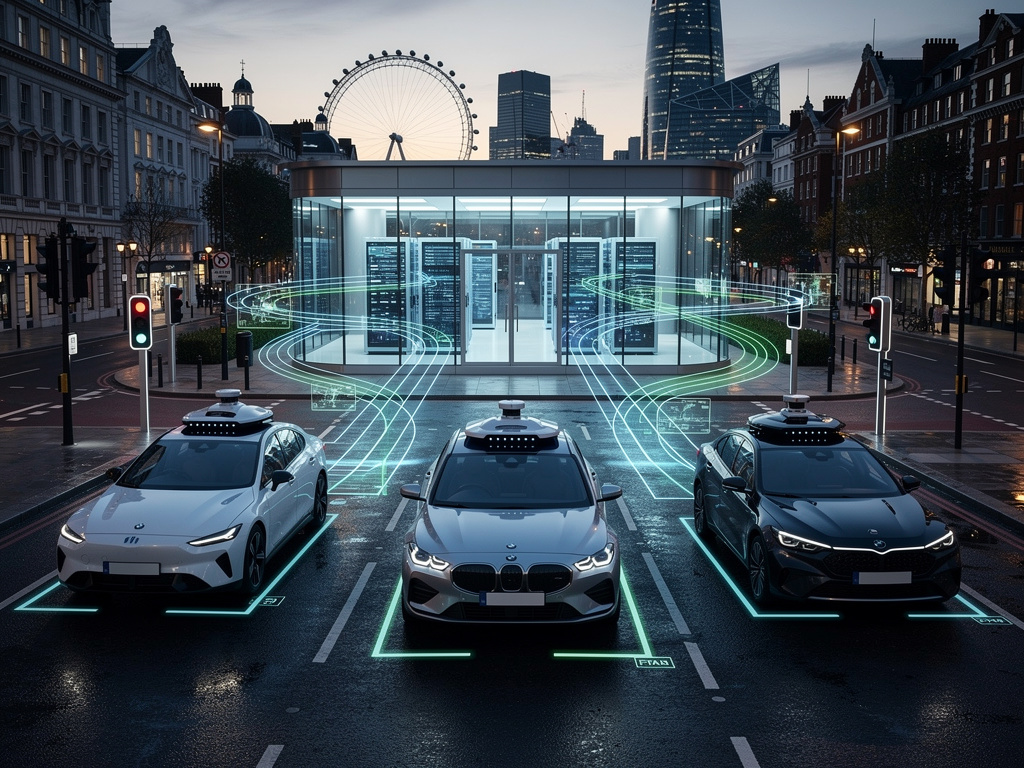
London’s Robotaxi Rendezvous: Baidu’s Bold Entry Challenges Waymo’s Lead
In a move that signals accelerating competition in the autonomous vehicle sector, Uber and Lyft have announced partnerships with Chinese tech giant Baidu to test robotaxis on London’s bustling streets starting next year. This development positions the UK capital as a key battleground for self-driving technology, where American and Chinese innovators will vie for dominance in urban mobility. According to details revealed in a recent report, the trials are set to commence in 2026, building on the momentum established by Alphabet’s Waymo, which has already begun its own testing in the city.
The partnerships underscore a strategic shift for ride-hailing giants Uber and Lyft, who are increasingly turning to external autonomous tech providers rather than developing in-house solutions. Baidu’s Apollo Go platform, already operational in several Chinese cities, will power the vehicles used in these tests. This collaboration not only expands Baidu’s international footprint but also highlights London’s growing role as Europe’s premier hub for commercializing driverless taxis, as noted in a Reuters article detailing the announcement.
Industry observers point out that this initiative comes at a time when regulatory environments in Europe are becoming more receptive to autonomous vehicles. The UK’s Automated Vehicles Act, passed earlier this year, provides a framework for such deployments, ensuring safety protocols and liability standards are met. Uber plans to kick off its testing in the first half of 2026, while Lyft aims to follow suit pending regulatory approvals, according to insights from PCMag.
Waymo’s Head Start and the Competitive Edge
Waymo, a subsidiary of Alphabet, has been at the forefront of this wave, having launched its driverless ride-hailing service in London as part of its European expansion. Posts on X from users like Sawyer Merritt and unusual_whales highlight Waymo’s plans to test a small fleet with safety drivers across a 100-square-mile area, marking its second international market after Tokyo. This early mover advantage allows Waymo to gather crucial data on navigating London’s complex road network, including its roundabouts, narrow lanes, and heavy pedestrian traffic.
In contrast, Baidu’s entry through Uber and Lyft introduces a fresh dynamic. Baidu’s technology, honed in dense urban environments like Beijing and Wuhan, could offer unique adaptations for London’s challenges. A CNBC report emphasizes how Baidu’s partnerships aim to bring autonomous vehicles to the UK capital, with testing slated for next year. This move is seen as a direct challenge to Waymo, potentially accelerating innovation through rivalry.
Beyond the tech itself, these deployments raise questions about integration with existing transport systems. London’s black cabs and extensive public transit network could either complement or clash with robotaxis. Industry insiders suggest that successful trials might lead to hybrid models where autonomous vehicles handle off-peak or suburban routes, leaving high-demand areas to human drivers initially.
Technological Underpinnings and Safety Considerations
At the core of Baidu’s Apollo Go system is a sophisticated array of sensors, AI algorithms, and machine learning models designed for real-time decision-making. Unlike some competitors that rely heavily on lidar and radar, Baidu incorporates a mix of cameras and mapping technologies, similar to approaches praised in X posts about Waymo’s end-to-end AI driving without traditional sensors. This could prove advantageous in London’s variable weather, where fog and rain often test sensor reliability.
Safety remains paramount, with all initial tests including human safety operators to intervene if needed. The Reuters coverage notes that robotaxis are expected to be a safer mode of transport, potentially reducing operational costs and human error. However, past incidents in other markets, such as Waymo’s recalls in the US, underscore the need for rigorous testing protocols in new environments.
Regulatory bodies like the UK’s Department for Transport will oversee these trials, mandating data sharing on performance metrics. This transparency is crucial for building public trust, especially in a city where skepticism about driverless cars runs high due to concerns over job displacement for traditional taxi drivers.
Economic Implications for Ride-Hailing Giants
For Uber and Lyft, partnering with Baidu represents a cost-effective path to autonomy, avoiding the billions spent on internal R&D. A Cryptopolitan piece details how this alliance challenges Waymo’s market position in Britain, with Baidu’s Apollo Go set for a 2026 launch. By leveraging Baidu’s tech, Uber and Lyft can focus on their strengths in app interfaces and customer experience, potentially capturing a larger share of the growing autonomous mobility market.
The economic ripple effects extend to job markets and urban planning. In London, where transport contributes significantly to the economy, robotaxis could optimize traffic flow and reduce congestion. Yet, unions representing drivers have voiced concerns, as seen in various X discussions, fearing widespread unemployment if full deployment occurs.
Moreover, this international collaboration highlights geopolitical nuances. Baidu, a Chinese firm, entering the UK market via American companies like Uber and Lyft, navigates tensions in global tech relations. Analysts suggest this could foster cross-border innovation while raising data privacy issues under frameworks like GDPR.
Global Expansions and Market Dynamics
Looking broader, the robotaxi sector is witnessing rapid growth worldwide. A CNBC overview from last week notes that 2025 saw Waymo expanding fastest, with Zoox debuting public rides and Tesla introducing supervised autonomous services. London’s trials position it alongside cities like San Francisco and Phoenix as testbeds for scaling these technologies.
Baidu’s push into Europe via the UK could pave the way for further expansions, challenging established players. X posts from users like Evan discuss the US-China robotaxi race, predicting direct competition in markets like London starting in 2026. This rivalry might drive down costs and improve services for consumers.
Consumer adoption will be key. Early adopters in London may embrace the novelty, but widespread acceptance depends on reliability and affordability. Pricing models for robotaxis could undercut traditional rides, making them accessible for daily commutes.
Challenges Ahead in Urban Integration
Despite the optimism, hurdles remain. London’s infrastructure, with its historic architecture and mixed-use zones, poses unique navigation challenges. Baidu’s system must adapt to unpredictable elements like cyclists and double-decker buses, as highlighted in The Guardian’s coverage of Chinese robotaxis arriving in London through Lyft and Uber tie-ups.
Public perception and ethical considerations also loom large. Debates on AI decision-making in emergencies, such as the trolley problem, continue to fuel discussions. Ensuring equitable access, particularly in underserved areas, will be vital to avoid exacerbating urban divides.
Furthermore, environmental impacts are under scrutiny. Electric robotaxis could contribute to sustainability goals, aligning with London’s ultra-low emission zones. However, the energy demands of data centers supporting AI could offset some benefits, prompting calls for green tech integrations.
Innovation Ecosystems and Future Prospects
The convergence of players like Baidu, Uber, Lyft, and Waymo fosters an ecosystem ripe for breakthroughs. Collaborations might extend to shared data pools for better AI training, accelerating progress. Insights from X, including posts by TechCrunch and Alpha App, reflect excitement around these developments, with stock rises for involved companies signaling investor confidence.
As testing progresses, metrics like miles driven without incidents will gauge success. London’s role as a gateway could influence EU-wide regulations, potentially standardizing autonomous vehicle standards across the continent.
Ultimately, these trials represent a pivotal step toward redefining urban transport. By blending cutting-edge tech with practical applications, they promise a future where mobility is seamless, safe, and efficient, transforming how cities like London move.
Strategic Alliances Shaping Autonomy
Delving deeper into the partnerships, Baidu’s expertise in scaling robotaxis in China provides a blueprint for London. With over 6 million rides in Wuhan alone, as per various reports, this experience could expedite deployment timelines. Uber’s confirmation of H1 2026 testing, echoed in X posts by CHItrader, underscores the urgency to match Waymo’s pace.
Lyft’s involvement adds another layer, potentially differentiating services through app features tailored to UK users. This multi-player approach diversifies options, benefiting consumers with choices in autonomous rides.
Investor reactions have been positive, with stock bumps for Baidu and Uber noted in sources like GuruFocus. Such financial backing ensures sustained investment in R&D, crucial for overcoming technical barriers.
Regulatory Frameworks and Public Engagement
The UK’s progressive stance on autonomy, through acts enabling commercial operations, sets a model for others. Regulators will monitor trials closely, requiring detailed incident reporting. This oversight, as discussed in Reuters’ factbox on global deployments, aims to balance innovation with safety.
Engaging the public through demonstrations and feedback sessions could mitigate resistance. Educational campaigns on benefits like reduced accidents—potentially by 90% according to some studies—might sway opinions.
In the long term, successful integration could inspire similar initiatives in other European cities, creating a network of autonomous hubs. London’s experiment, therefore, holds implications far beyond its borders, shaping the global trajectory of driverless technology.


 WebProNews is an iEntry Publication