
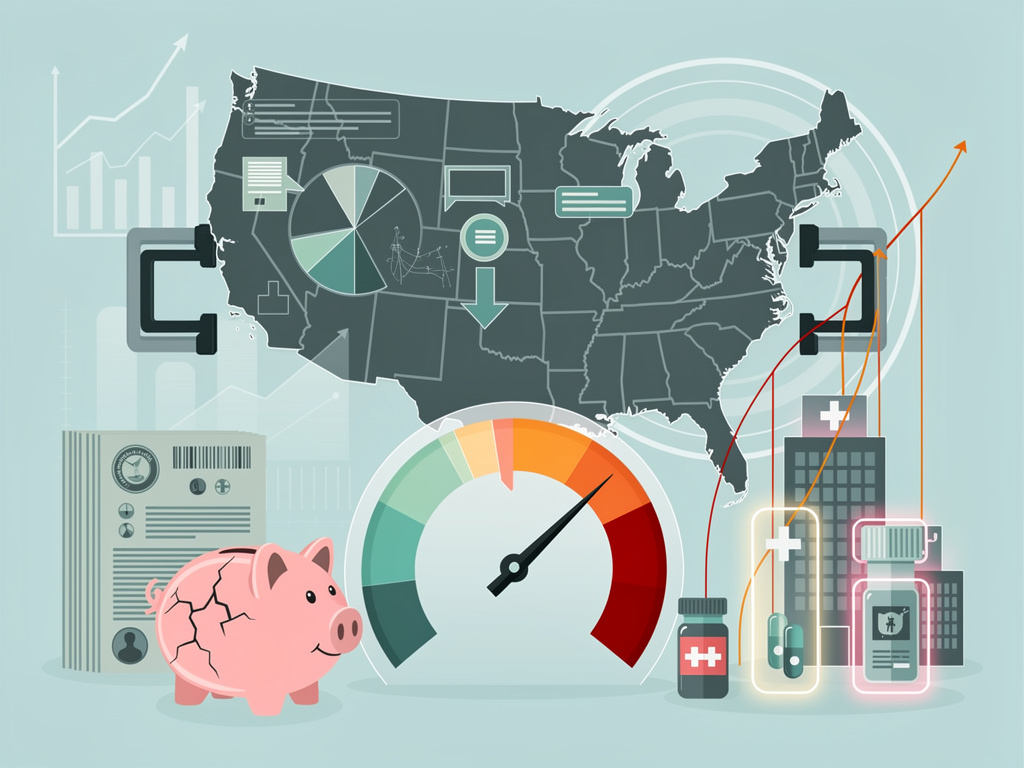
Fewer than half of American adults can reliably pay for the care they need. That stark reality emerged from fresh data released this week. The share considered “cost secure” dropped to 49% in 2025. It marks the lowest point since the West Health-Gallup Healthcare Affordability Index began tracking in 2021.
The decline isn’t marginal. An additional 2.8 million people slipped out of the cost-secure category in a single year. They can no longer consistently afford quality healthcare or the prescriptions that come with it. And the worry runs deeper. More than 40% of adults now express high concern about meeting next year’s medical expenses. That’s an all-time high.
Fortune captured the human toll through personal accounts. Inger Perez, 59, of Encino, Texas, described her anxiety over upcoming blood work and potential treatment. “I literally was crying last night because I’m nervous about what I’m going to find out and how much care that is and how much money that is,” she said. “I’m terrified that I’ll start a plan of treatment but won’t be able to afford to keep up with it.”
Similar stories repeat across income brackets. Twannetta Weaver delayed her college graduation after medical bills from a back injury piled up. Xavier Chapa watched his family’s budget shrink after fighting his wife’s insurance denial. “It makes you feel powerless as a consumer,” Weaver told reporters. These aren’t isolated cases. Three-quarters of adults now view healthcare costs as a major or minor financial burden.
The numbers come from a Gallup Panel survey of 5,660 adults conducted between October and December 2025. Respondents answered detailed questions about their ability to access and pay for care. Analysts placed them into three groups. Forty-nine percent qualified as cost secure. Forty-one percent were cost insecure, lacking access or unable to pay for either care or medicine recently. Ten percent fell into the desperate category. They struggled with both.
Trends show a reversal from earlier gains. Cost security peaked at 61% in 2022. It has slid steadily since. Young adults aged 18 to 29 recorded the sharpest fall. Only 32% remain cost secure. That’s down 17 points from 2021 and seven points in the past year alone. Older adults on Medicare saw their security rate drop from 73% to 61% over the same period. Even they aren’t insulated.
Gender differences widened too. Forty-two percent of women qualified as cost secure in 2025. Fifty-seven percent of men did. The 15-point gap stands as the largest on record. Racial disparities grew as well. Just 38% of Black adults and 32% of Hispanic adults meet the cost-secure threshold. White adults sit at 55%. Those gaps have expanded since the index launched.
Income fails to shield many families. One in three households earning between $120,000 and $180,000 lack cost security. Even among those above $180,000, one in five face the same pressure. Middle-class squeeze meets high prices. The result leaves broad segments of society exposed.
National spending data paint a parallel picture. Healthcare expenditures reached $5.3 trillion in 2024. That figure reflected a 7.2% jump from the year before. It outpaced overall inflation by more than double. Hospital prices climbed 3.4%. That was the fastest increase since 2007. Prescription drug spending rose nearly 8%. These pressures feed directly into household budgets.
Policy decisions amplified the strain. Enhanced premium tax credits under the Affordable Care Act expired at the end of 2025. KFF surveys show half of returning marketplace enrollees reported their costs as “a lot higher.” Many expect to cut basic household expenses to keep coverage. Medicaid adjustments in several states added further disruption.
Recent analyses confirm the pattern. A March 2026 Peterson-KFF Health System Tracker report outlined eight trends shaping costs this year. Premiums rose across commercial and individual markets. Prescription drug spending, especially on GLP-1 medications and specialty therapies, accelerated. Consolidation among providers continued to influence prices. Peterson-KFF Health System Tracker noted that healthcare now ranks as the top household expense worry for many Americans. It outpaces food, rent, and utilities in public concern.
State-level efforts offer mixed signals. California’s Office of Health Care Affordability set a statewide spending target starting at 3.5% growth in 2025. It phases down to 3% by 2029. The goal ties healthcare inflation to median household income growth. Enforcement begins gradually. Yet national momentum points upward. Employer-sponsored family premiums in California alone jumped from roughly $22,800 in 2022 to more than $28,400 in 2025.
Consequences extend beyond budgets. One in six adults delayed or skipped medical care due to cost in early 2025, according to tracking from the Peterson-KFF partnership. Shares who skipped prescriptions or mental health services hovered near 7% and 6% respectively. Those figures have edged higher in recent years for mental health. Chronic conditions compound the problem. Only about one-third of adults with COPD or compromised immune systems count as cost secure. Similar rates appear among those reporting anxiety or depression.
Tim Lash, president of the West Health Policy Center, sounded an urgent note. “The fact that fewer than half of Americans can reliably afford healthcare should alarm every person, policymaker and healthcare leader in the country,” he said in the organization’s release. “Millions of Americans are being priced out of healthcare because costs are rising faster than their ability to pay.”
Joe Daly, global managing partner at Gallup, framed the shift as long-term. “The new findings point to a sustained shift in how Americans perceive the affordability of healthcare,” he observed. “Since 2021, the share of Americans who say healthcare is affordable has declined steadily, suggesting this is part of a longer-term pattern rather than a one-time drop since last year.”
Broader reports reinforce the warning. An April 2026 American Heart Association presidential advisory described affordability as having reached crisis levels. National spending approaches levels that could consume 20% of gross domestic product within a decade. The advisory called for coordinated action across providers, payers, and government. It emphasized minimizing cost-sharing for high-value services and addressing social factors that drive unequal access.
Yet solutions remain elusive. High drug prices, administrative complexity, and provider consolidation resist quick fixes. Tariff policies and supply-chain pressures added upward force on equipment and medication costs in 2025. Hospitals reported double-digit increases in some drug and supply categories. Malpractice and billing disputes added billions in overhead passed along to patients.
Public sentiment shows little patience. Bipartisan worry appears in state surveys. In Washington, 68% of respondents reported at least one affordability burden in the past year. Seventy-nine percent expressed concern about future costs. Similar patterns surface in California and elsewhere. As midterm elections approach, healthcare ranks high on voter priority lists. KFF tracking finds that lowering costs motivates more voters than many other health-related issues.
The data leave little room for complacency. Cost security fell across nearly every measured group. Access barriers grew. Financial stress permeates daily life for more than half of adults. And the trajectory suggests further erosion without intervention. Policymakers, insurers, and providers now confront a system where even upper-middle-income families ration care. The question is whether the alarm will translate into concrete changes before more Americans find themselves unable to afford the care they require.


 WebProNews is an iEntry Publication