
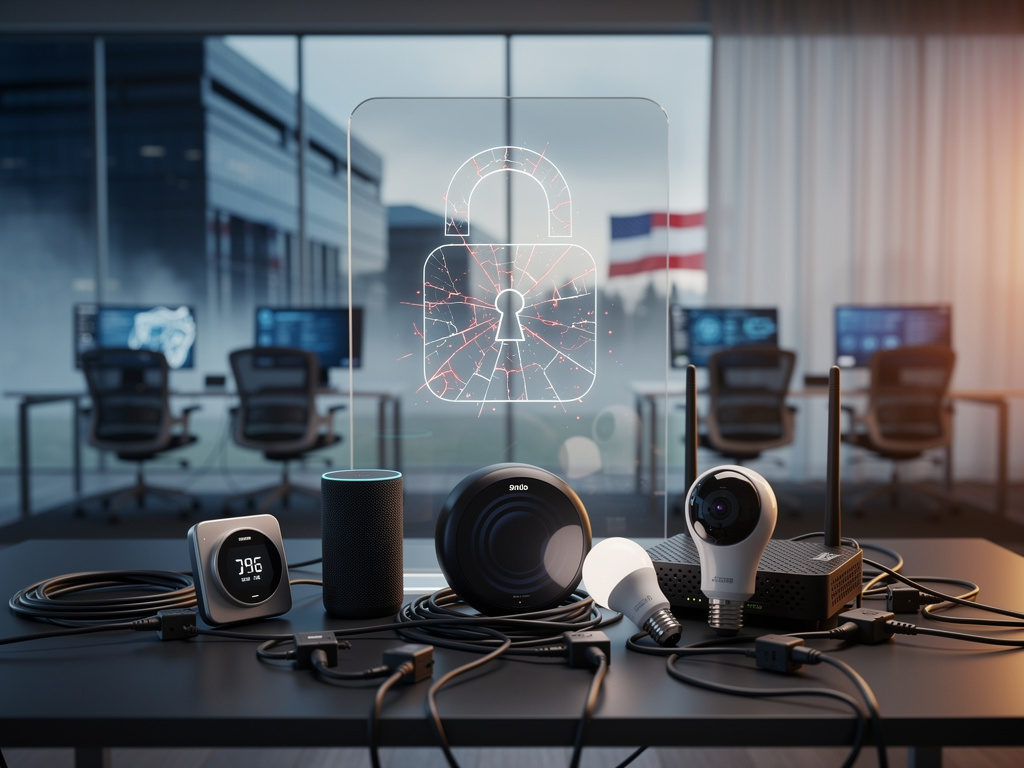
The Fading Shield: How the Cyber Trust Mark’s Collapse Exposes Gaps in IoT Security
In the realm of connected devices, where smart thermostats and security cameras promise convenience, the specter of cyberattacks looms large. The U.S. Cyber Trust Mark program, unveiled with much fanfare by the Biden administration, aimed to address this vulnerability by certifying IoT products that meet rigorous cybersecurity standards. Modeled after energy-efficiency labels, it was designed to empower consumers with clear indicators of device security, potentially transforming how Americans select their home tech.
But recent developments have cast a shadow over this initiative. According to a report from The Verge, the program’s lead administrator has withdrawn following an FCC investigation, plunging the effort into uncertainty. This withdrawal comes at a critical juncture, as the program was poised to roll out certifications for wireless consumer IoT devices, including everything from baby monitors to smart locks.
The investigation, details of which remain sparse, appears to stem from concerns about the administrator’s practices, halting progress just as manufacturers were gearing up for compliance. Industry insiders whisper that internal FCC scrutiny uncovered procedural irregularities, though official statements have been guarded. This setback not only delays the program’s launch but also raises questions about the federal government’s ability to enforce cybersecurity norms in a rapidly evolving tech sector.
The Origins and Ambitions of a National Security Label
Launched in March 2024 after unanimous FCC approval, the Cyber Trust Mark sought to bridge a glaring gap in consumer protection. As outlined in a Federal Communications Commission overview, the program would affix a recognizable logo to devices that pass independent testing, assuring buyers of features like automatic security updates and strong encryption.
UL Solutions, a prominent testing firm, was initially named the lead administrator in late 2024, as reported by CEPRO. Their role involved overseeing certification labs and ensuring adherence to standards derived from NIST guidelines. This structure was intended to foster trust, much like the Energy Star program has for appliances.
Yet, the path to implementation was fraught with challenges. Manufacturers faced the burden of redesigning products to meet criteria such as multi-factor authentication and vulnerability disclosure policies. A Finite State analysis from early 2025 highlighted the program’s focus on baseline protections, but critics argued it might not go far enough against sophisticated threats.
Investigation and Withdrawal: A Timeline of Turmoil
The trouble began surfacing in September 2025, when Cybersecurity Dive reported that an FCC probe into UL Solutions had stalled the program’s advancement. Sources indicated concerns over potential conflicts of interest or lapses in administrative protocols, though no formal charges were leveled.
By December, the situation escalated. The lead administrator’s exit, confirmed in real-time updates from web searches, left a void in leadership. Posts on X, formerly Twitter, reflected industry frustration, with users lamenting the potential scrapping of a vital security tool amid rising IoT hacks.
This isn’t isolated; similar programs have faltered before. The Biden-era initiative now faces the incoming Trump administration’s FCC, which may prioritize deregulation over expansive federal oversight. As Pillsbury Law noted in their 2025 overview, the mark was meant for voluntary adoption, but its momentum hinged on strong administrative backing.
Implications for Manufacturers and Consumers
For device makers, the uncertainty is palpable. Companies like Amazon and Google had expressed interest in certifying products, viewing the mark as a competitive edge. Without a lead administrator, testing labs are in limbo, delaying market entries and potentially increasing costs.
Consumers, meanwhile, remain exposed. A 2025 TechTarget feature explained how the program would highlight secure options, helping avoid devices prone to botnet recruitment or data breaches. In its absence, buyers must navigate a murky field of claims, relying on third-party reviews rather than standardized assurance.
Broader economic ripples could follow. The IoT market, projected to exceed $1 trillion by 2030, depends on consumer confidence. A faltering Trust Mark might deter investment in secure designs, perpetuating vulnerabilities that cybercriminals exploit.
Expert Perspectives on Regulatory Hurdles
Industry voices are divided on the fallout. Some, like those in a Communications of the ACM piece from March 2025, praised the program’s intent to set IoT security benchmarks. Yet, the administrative snag underscores bureaucratic pitfalls in tech regulation.
Analysts point to parallels with other federal efforts, such as CISA’s ransomware warning program, which lost a key employee as per a recent Cybersecurity Dive article. These incidents highlight retention challenges in government cybersecurity roles amid political shifts.
Furthermore, global comparisons reveal alternatives. Europe’s CE marking and Singapore’s Cybersecurity Labelling Scheme have gained traction, offering models the U.S. might emulate if the Trust Mark revives. Insiders suggest the FCC could appoint a new administrator swiftly, but skepticism abounds given the investigative overhang.
The Political Context and Future Prospects
The timing aligns with a transitional administration. President-elect Trump’s team has signaled a lighter regulatory touch, potentially viewing the Trust Mark as overreach. This contrasts with the Biden White House’s push, detailed in a January 2025 announcement, to combat IoT threats through voluntary standards.
Recent news searches confirm ongoing FCC deliberations, with no immediate replacement announced. X posts from tech influencers express concern that without federal impetus, private sector initiatives might fill the void, albeit unevenly.
Looking ahead, revival efforts could involve streamlining criteria or partnering with industry consortia. A TechTarget tip sheet from September 2025 outlined six key standards, including access controls and software updates, which could form the basis for a rebooted program.
Lessons from Past IoT Security Failures
Historical breaches underscore the stakes. The 2016 Mirai botnet, which hijacked unsecured cameras and routers, disrupted internet services nationwide. Such events galvanized support for the Trust Mark, as consumers demanded better protections.
Manufacturers have invested in compliance, with some piloting internal audits. However, the withdrawal disrupts this momentum, potentially leading to a patchwork of state-level regulations if federal action stalls.
Experts advocate for resilience over prevention alone. A December 2025 ISMG editors’ reflection emphasized shifting to adaptive strategies amid AI-driven threats, suggesting the Trust Mark’s framework could evolve accordingly.
Stakeholder Reactions and Calls for Action
Reactions from stakeholders vary. Consumer advocacy groups decry the delay, arguing it leaves vulnerable populations at risk. Tech firms, per X sentiment, urge swift resolution to maintain innovation pace.
In academia, discussions highlight the need for interdisciplinary approaches, blending policy with engineering. The program’s potential to influence supply chains globally adds another layer, as U.S. standards could pressure international manufacturers.
Ultimately, the episode reveals tensions between ambition and execution in cybersecurity policy. As threats multiply, the imperative for robust IoT safeguards grows, pressing regulators to navigate these challenges effectively.
Toward a Resilient IoT Ecosystem
Rebuilding trust will require transparency. The FCC must disclose investigation findings to restore confidence, perhaps through public hearings.
Innovation in certification could help. Blockchain-based verification or AI-assisted audits might modernize the process, drawing from emerging tech trends.
For insiders, this serves as a case study in regulatory fragility. Balancing oversight with agility is key to safeguarding the connected future, ensuring that programs like the Cyber Trust Mark don’t fade into irrelevance.
The saga of the Cyber Trust Mark illustrates broader struggles in governing digital frontiers. As devices proliferate, the need for reliable security markers persists, urging stakeholders to forge ahead despite setbacks. Whether through revival or reinvention, the pursuit of a safer IoT world continues, demanding vigilance from all quarters.


 WebProNews is an iEntry Publication