
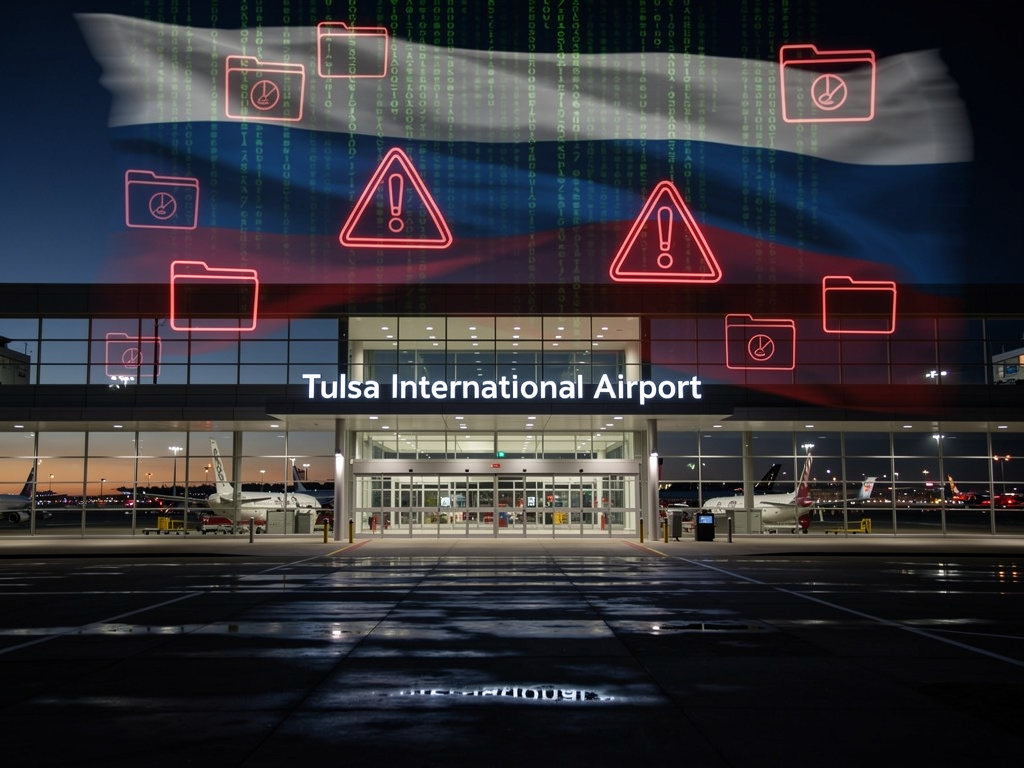
A sophisticated cyberattack on Tulsa International Airport has thrust the vulnerabilities of American transportation infrastructure back into the national spotlight, as a Russian-linked ransomware group claimed responsibility for breaching the facility’s systems and dumping sensitive operational data online. The incident, which unfolded in late 2024, represents yet another alarming escalation in the ongoing digital warfare targeting critical U.S. infrastructure, raising urgent questions about the adequacy of cybersecurity measures at regional airports across the country.
According to TechRadar, the attack was allegedly perpetrated by a Russian ransomware collective that released what they claim are private files stolen from Tulsa International Airport’s network as proof of their successful infiltration. The leaked materials reportedly include internal communications, operational documents, and potentially sensitive information about airport security protocols—a treasure trove of intelligence that could prove valuable to adversaries seeking to understand the inner workings of American aviation facilities.
The Tulsa Airport Authority has acknowledged the cybersecurity incident but has been circumspect about the full extent of the breach, maintaining that flight operations have continued without disruption. However, cybersecurity experts warn that the public release of stolen data represents a dangerous new phase in ransomware operations, where threat actors are increasingly willing to expose sensitive information even when ransom demands remain unmet, potentially as a means of pressuring future victims or demonstrating their capabilities to prospective clients in the cybercrime underground.
The Anatomy of Modern Ransomware Operations Against Transportation Hubs
The attack on Tulsa International Airport follows a disturbing pattern of ransomware groups specifically targeting transportation infrastructure across the United States. Unlike traditional cybercriminal operations that focused primarily on financial institutions or healthcare providers, today’s sophisticated threat actors have recognized that airports, seaports, and transit systems represent high-value targets with unique vulnerabilities. These facilities operate under constant pressure to maintain uninterrupted service, making them potentially more willing to pay ransoms to avoid operational disruptions that could cascade across regional and national transportation networks.
Transportation infrastructure presents an especially attractive target for several reasons. First, these facilities typically operate with a complex web of interconnected systems—from passenger check-in kiosks and baggage handling systems to air traffic control communications and security surveillance networks. This complexity creates multiple potential entry points for attackers and makes comprehensive security monitoring significantly more challenging. Second, many regional airports operate with limited IT budgets and staff, often relying on legacy systems that may lack modern security features or receive infrequent updates.
Russian Cyber Threat Groups and Their Evolving Tactics
The attribution to a Russian-linked ransomware group aligns with broader intelligence assessments about the origins of most sophisticated ransomware operations. While definitive attribution in cyberspace remains notoriously difficult, cybersecurity researchers have documented extensive connections between ransomware collectives and Russia-based operators, many of whom appear to operate with at least tacit approval from Russian authorities as long as they avoid targeting Russian interests.
These groups have demonstrated remarkable adaptability and sophistication in their operations. Modern ransomware attacks typically involve multiple stages: initial reconnaissance to identify vulnerabilities, lateral movement within networks to locate valuable data, exfiltration of sensitive information before encryption, and finally the deployment of ransomware to lock systems and demand payment. The decision to publicly release stolen data when ransom demands go unmet—a tactic known as “double extortion”—has become increasingly common, adding reputational damage and regulatory compliance concerns to the already significant operational disruptions caused by encrypted systems.
Critical Infrastructure Under Siege: A National Security Imperative
The Tulsa incident is far from isolated. American critical infrastructure has faced an unrelenting barrage of cyberattacks in recent years, with transportation systems emerging as particularly vulnerable targets. The Colonial Pipeline ransomware attack in 2021 disrupted fuel supplies across the Eastern seaboard, while numerous other incidents have targeted water treatment facilities, electrical grids, and healthcare systems. Each successful attack not only causes immediate operational and financial damage but also provides valuable intelligence to adversaries about American vulnerabilities and response capabilities.
Federal authorities have responded with increased urgency to the growing threat. The Cybersecurity and Infrastructure Security Agency (CISA) has issued numerous directives and guidance documents aimed at hardening critical infrastructure against cyberattacks, while the Transportation Security Administration has implemented new cybersecurity requirements for pipeline operators and other transportation sector entities. However, enforcement remains inconsistent, particularly for smaller regional facilities that may lack the resources or expertise to implement comprehensive cybersecurity programs.
The Economic and Operational Calculus of Ransomware Payments
Organizations facing ransomware attacks confront an agonizing decision: whether to pay the ransom and potentially fund future criminal operations, or refuse payment and face extended operational disruptions and permanent data loss. Federal authorities, including the FBI, consistently advise against paying ransoms, arguing that payments incentivize future attacks and provide no guarantee that systems will be restored or that stolen data won’t be released or sold anyway.
Yet the economic realities often push organizations toward payment. The costs of extended downtime, data recovery efforts, regulatory penalties, and reputational damage can far exceed ransom demands, which typically range from hundreds of thousands to millions of dollars depending on the target’s size and perceived ability to pay. Insurance companies have further complicated the calculus by offering cyber insurance policies that may cover ransom payments, though insurers have recently begun tightening coverage terms and increasing premiums as claim frequency has soared.
Technical Vulnerabilities in Regional Airport Infrastructure
Regional airports like Tulsa International face unique cybersecurity challenges that distinguish them from their larger counterparts. While major international hubs typically employ dedicated cybersecurity teams and invest heavily in advanced security technologies, smaller facilities often operate with minimal IT staff who must balance security responsibilities with numerous other operational demands. Budget constraints further limit their ability to implement comprehensive security measures or engage specialized cybersecurity consultants.
The technical infrastructure at many regional airports reflects decades of incremental upgrades and additions, resulting in heterogeneous environments where modern cloud-based systems coexist with legacy applications running on outdated operating systems. This technological patchwork creates security gaps that sophisticated attackers can exploit. Additionally, airports must maintain connectivity with numerous external partners—airlines, federal agencies, contractors, and vendors—each representing a potential vector for network infiltration if proper security controls aren’t maintained across all connection points.
Regulatory Response and Future Prevention Strategies
The frequency and severity of attacks against critical infrastructure have prompted calls for more stringent federal cybersecurity mandates. Some cybersecurity experts advocate for mandatory security standards similar to those imposed on the financial sector, with regular audits and significant penalties for non-compliance. Others argue that overly prescriptive regulations could stifle innovation and impose unrealistic burdens on smaller operators, advocating instead for increased federal funding to help critical infrastructure operators improve their security posture.
The Biden administration has taken steps to address these concerns through executive orders and proposed regulations, but implementation has proven challenging amid concerns about federal overreach and the practical difficulties of enforcing security standards across thousands of diverse facilities. Meanwhile, state governments have begun implementing their own cybersecurity requirements, creating a patchwork of regulations that organizations operating across multiple jurisdictions must navigate.
International Cooperation and the Challenge of Cross-Border Cybercrime
Effectively combating ransomware operations requires international cooperation, yet geopolitical tensions have complicated efforts to establish meaningful collaboration on cybercrime enforcement. Russia has consistently refused to extradite cybercriminals wanted by Western authorities, and in some cases has appeared to actively shield ransomware operators from prosecution as long as they avoid targeting Russian interests. This safe haven dynamic has allowed ransomware operations to flourish, with operators brazenly advertising their services on Russian-language forums and conducting business with minimal fear of legal consequences.
Some progress has been achieved through multilateral initiatives and information sharing arrangements among allied nations, but the fundamental challenge remains: as long as major powers provide safe havens for cybercriminals, the ransomware threat will continue to grow. The Tulsa Airport incident serves as yet another reminder that critical infrastructure protection requires not just technical solutions and regulatory frameworks, but also diplomatic efforts to establish international norms and enforcement mechanisms for combating cybercrime.
Looking Ahead: Building Resilience in an Age of Persistent Threats
The attack on Tulsa International Airport should serve as a wake-up call for transportation infrastructure operators nationwide. As ransomware groups grow increasingly sophisticated and brazen in their operations, no facility can afford to assume it’s too small or insignificant to warrant attention from threat actors. Building cyber resilience requires a comprehensive approach encompassing technical controls, employee training, incident response planning, and regular testing of security measures through exercises and simulations.
For regional airports and other critical infrastructure operators with limited resources, partnerships and information sharing become especially crucial. Industry associations, federal agencies, and cybersecurity vendors have developed numerous resources and programs designed to help smaller organizations improve their security posture without massive capital investments. The key is recognizing that cybersecurity cannot be treated as an afterthought or a purely technical problem, but rather as a fundamental operational imperative that requires sustained leadership attention and resource allocation. The question is no longer whether critical infrastructure will face cyberattacks, but whether organizations will be prepared to detect, respond to, and recover from them when they inevitably occur.


 WebProNews is an iEntry Publication