
Taiwan Semiconductor Manufacturing Co. stands at the center of the artificial intelligence surge. Its factories produce the processors that train and run the largest models. Demand outstrips supply. And the gap shows few signs of closing soon.
Advanced nodes below 7 nanometers now account for the majority of TSMC’s wafer revenue. High-performance computing tied to AI makes up a growing slice of its business. In recent quarters that portion climbed past 50 percent in some reports, with AI-specific work driving much of the acceleration. Yahoo Finance noted the company’s 2025 revenue hit $122.42 billion, up 35.9 percent, while earnings per share jumped 51.3 percent to $10.65. Projections for 2026 point to roughly 30 percent sales growth or higher.
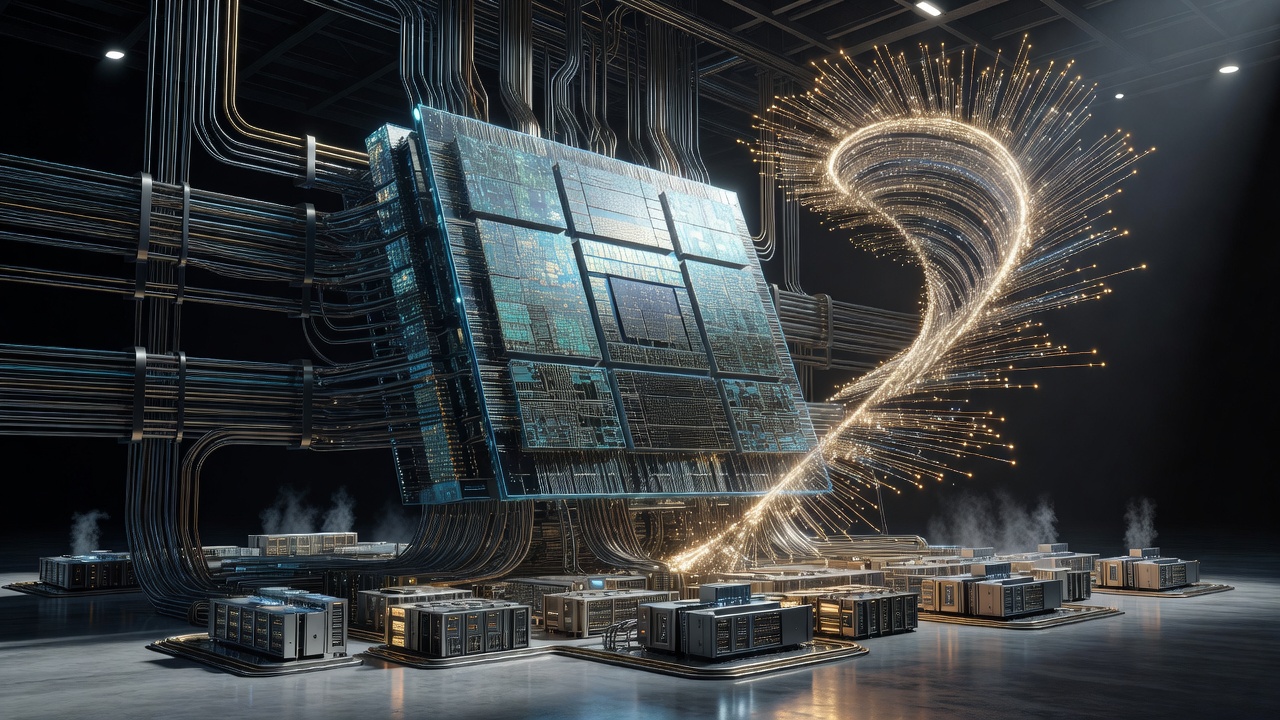
But raw wafer output tells only part of the story. The real constraint sits further down the line. Advanced packaging has emerged as the choke point. TSMC’s CoWoS technology stacks multiple dies and high-bandwidth memory onto a single package. Nvidia’s latest chips rely on it heavily. So do designs from AMD, Broadcom and the big cloud operators.
Production of these packages runs 30 percent short of demand, according to estimates cited by The New York Times. By 2029, TSMC predicts a 48-fold increase in computing transistors per package compared with 2024 levels. The numbers sound staggering. They also underline how packaging, not just transistor shrinks, now dictates performance gains.
TSMC CEO C.C. Wei struck an optimistic yet cautious tone at the company’s June shareholder meeting. “Customer demand is so high, and we can only support so much,” he said. “We are already working very hard” to avoid becoming a bottleneck. Wei added that customers remain “very positive” on the AI outlook across consumer, enterprise and sovereign applications. He even expressed envy for memory makers’ margins but ruled out abrupt price spikes. “I would ‘like’ to do that,” he remarked, according to Reuters.
Steady increases are already underway. Reports indicate TSMC plans 3 percent to 10 percent hikes on advanced nodes in 2026, with some talk of 15 percent on 3-nanometer wafers in the second half. Gross margins hovered near 66 percent in the first quarter. Pricing power looks real.
Capacity expansion moves at full throttle. The company set capital spending between $52 billion and $56 billion for 2026, with the bulk aimed at leading-edge processes and packaging. Goldman Sachs raised its forecasts after TSMC’s momentum exceeded expectations. The bank now sees revenue climbing 39 percent in 2026, 32 percent in 2027 and 28 percent in 2028, with gross margins holding above 66 percent. CoWoS capacity could reach 1.275 million wafers in 2026 before jumping to 2.73 million the following year. Those figures come from analyst notes shared on X in recent days.
Yet bottlenecks persist. High-bandwidth memory supply from partners like SK Hynix remains tight. CoWoS capacity stays booked years out. TSMC’s push into 2-nanometer production adds another layer of complexity. Initial output at that node could run 45 percent higher than the 3-nanometer ramp, analysts project. Sub-5-nanometer technologies are expected to represent 82 percent of wafer revenue by 2028.
Geographic diversification adds cost and delay. TSMC invests $165 billion in Arizona fabs. But CEO Wei noted it will take a “very long time” to satisfy U.S. demand from American soil. Permits, skilled labor and ecosystem gaps slow progress. The first advanced packaging capability there won’t arrive until 2028 or 2029. The New York Times highlighted how the cancellation of a $1.1 billion U.S. research center has left the country more dependent on Taiwanese packaging than before.
Competitors circle but face tall barriers. Intel pushes its own EMIB and Foveros technologies. Samsung works to regain ground in foundry. Neither matches TSMC’s scale or yield at the leading edge. MediaTek recently hired a former TSMC packaging executive to accelerate its efforts, Reuters reported. Still, TSMC holds more than 90 percent of advanced packaging market share in some estimates.
Energy constraints now shape design choices too. Surging power demands from AI training clusters force a rethink. Transistor density improvements remain vital. Yet advanced packaging, chip stacking and even photonics gain importance for efficiency. A TSMC executive told Reuters that electricity use has become the primary limit rather than raw compute power alone.
Investors cheer the results. TSMC’s stock responded positively to raised guidance in April. Bloomberg noted the company lifted its 2026 revenue growth forecast above 30 percent, signaling confidence that AI orders would hold firm despite global tensions. Bloomberg reported the update came after a strong profit beat.
Not everyone buys the perpetual boom narrative. Some analysts warn of cyclical risks and full valuations. One Seeking Alpha contributor argued the AI boom may moderate, though near-term fundamentals look solid. Most forecasts still point upward. The global semiconductor market could reach $1.5 trillion by 2030, TSMC itself projected in May, with AI as the main driver.
Advanced packaging capacity growth runs at more than 80 percent compound annual rate from 2022 through 2027. That pace reflects the shift from single chips to complex, multi-die systems. Nvidia’s Rubin platform, for example, combines two large AI dies with eight stacks of high-bandwidth memory using CoWoS. The resulting package contains hundreds of billions of transistors.
TSMC’s credit profile benefits directly. S&P Global revised its outlook on the company’s long-term issuer rating, citing strengthened barriers to entry and sustained AI leadership. The Yahoo Finance article covering the revision underscored how scale and technology leadership reinforce TSMC’s position.
Challenges remain. Talent shortages in Arizona. Rising component costs. Geopolitical risks surrounding Taiwan. Wei acknowledged these pressures but pointed to Taiwan’s enduring advantages in talent, research and production base. Employee bonuses rose more than 30 percent annually in recent years. He expects another jump in 2026.
The foundry leader shows no slowdown. Its 2-nanometer technology enters volume production on an accelerated schedule. A16 and other variants follow. Packaging capacity ramps aggressively in Taiwan, with limited near-term relief from overseas sites.
So the AI chip shortage stretches on. Not months. Years, according to TSMC’s own assessment. Customers accept higher prices because alternatives don’t exist at the required volume or performance. And the packages that turn silicon into functional AI accelerators stay in short supply.
That dynamic cements TSMC’s role. It doesn’t design the chips. It makes the ones that matter most. And right now, almost no one else can.


 WebProNews is an iEntry Publication