
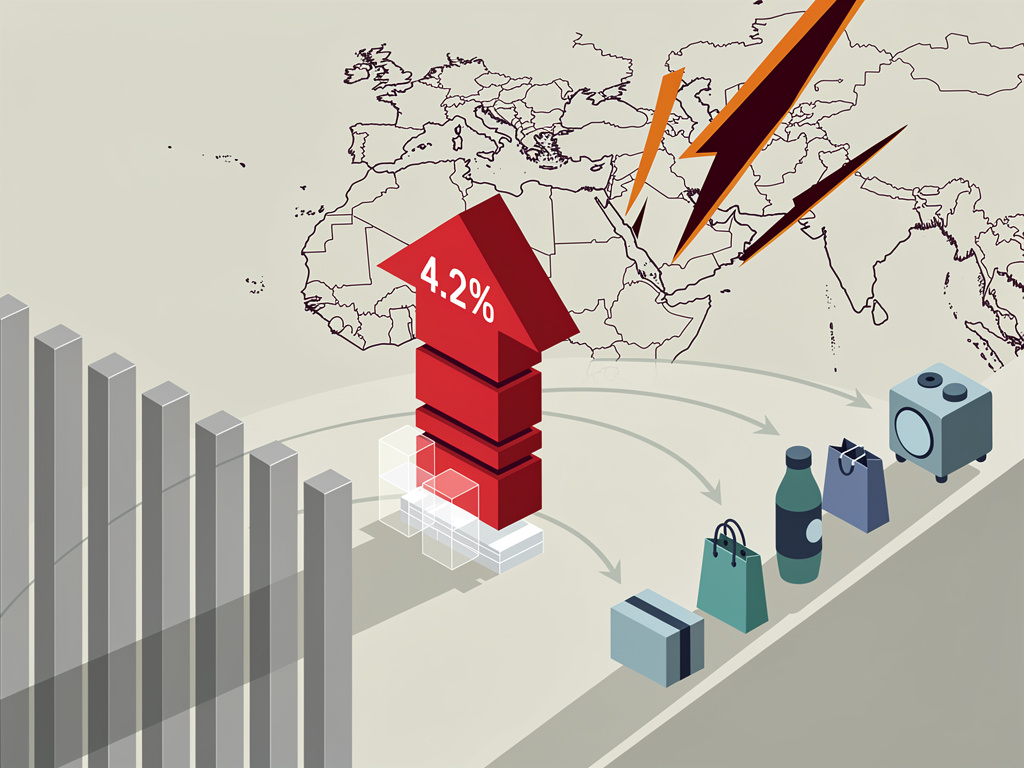
President Donald Trump now says he loves the inflation numbers. The latest reading hit 4.2 percent. That’s the highest in three years. He points to the war with Iran as the culprit. Once it ends, he insists, energy prices will tumble and relief will follow.
But the data tells a more complicated story. Federal Reserve researchers trace much of the pressure directly to tariffs imposed throughout 2025. Those levies, some of the highest in decades, have passed costs straight to consumers. Short sentences. Direct hits. No ambiguity in the numbers.
Trump’s position has shifted over time. During the 2024 campaign he dismissed warnings that broad tariffs would lift prices. Yahoo Finance captured his evolving stance in real time. He argued foreign countries would bear the burden. American buyers would see little change. Yet recent studies show otherwise.
Economists at the Federal Reserve Bank of Dallas examined the pass-through effect. They found near-complete transmission. Tariffs raised core goods prices by 3.1 percent through early 2026. Without them, core inflation would sit at 2.3 percent instead of 3.2 percent. Fortune reported the findings in May. The researchers called it full pass-through. Businesses no longer absorb the duties. They charge customers more.
And the Tax Foundation tallied the household cost. New tariffs add roughly $700 per family in 2026. Earlier rounds in 2025 hit closer to $1,000. The group notes little improvement in the trade deficit despite the policy. Tax Foundation analysis underscores the persistent gap between rhetoric and outcome.
But the administration pushes back. Treasury Secretary Scott Bessent told Congress tariffs do not cause inflation. He cited San Francisco Fed data spanning 150 years. Bessent once warned clients they were inflationary. Now he corrects the record. Reuters covered the hearing.
Reality on the ground looks different. Coffee prices climbed after tariffs hit source countries. Steel and lumber costs rose too, feeding housing inflation. Lawmakers pressed Bessent on those examples. He stuck to the macro view.
Fed Chair Jerome Powell has been blunt. Tariffs explain most of the overshoot above the 2 percent target. He described the impact as largely one-time. Still, the price level stays elevated. Reuters quoted Powell directly after a policy meeting.
The Yale Budget Lab tracked cumulative effects. Tariffs generated $214.7 billion in extra customs revenue above recent averages. They also lifted personal consumption prices. Pass-through reached 86 percent for core goods. Yale Budget Lab updated its models in April.
Trump’s first term offered a preview. Tariffs on China produced mixed results. Some manufacturing returned. Costs rose in affected sectors. Retaliation hurt farmers. This time the scale is larger. Average effective tariff rate reached 11.1 percent by spring 2026.
Uncertainty compounds the pressure. Companies delay investments. They hesitate to hire or expand. The Belfer Center at Harvard examined why the 2025 economy avoided deeper damage. Limited retaliation helped. Yet effects appear delayed into 2026. Belfer Center analysis questions whether economists misjudged the timing.
Recent X discussions reflect public frustration. Users link tariffs and the Iran conflict to higher costs. One post called the combination “ripping us a brand new” problem. Others blame the policies for preventing inflation from falling to pre-pandemic levels. Those sentiments echo in polling on affordability.
Wall Street remains skeptical. The Motley Fool noted investor unease despite Trump’s positive spin on the data. He called the 4.2 percent reading “great” because it ties to energy shocks from the conflict. Once resolved, he predicts rapid improvement. AOL carried the full remarks.
Critics see a pattern. Trump once refused to guarantee tariffs would not raise prices. Now he frames higher readings as temporary and even welcome. The Washington Post connected tariffs, energy costs from the war, and AI-driven demand as joint forces pushing prices. Washington Post examined the interplay ahead of midterms.
Evidence Mounts on Consumer Impact
Fed studies show tariffs drove all excess core goods inflation relative to pre-pandemic trends. A Capitol Dispatch summary of the research put the overall price increase at 0.8 percent. That figure represents the full contribution in certain categories. Capitol Dispatch highlighted how the policy blocked inflation from returning to 2 percent or lower.
Households feel it in daily purchases. Appliances, vehicles, building materials. Each carries a tariff premium. Economists once projected bigger immediate shocks. The absence of a sharp recession in 2025 led some to declare victory. Data rolling in during 2026 paints a slower bleed.
Vox calculated the counterfactual. Absent tariffs and the conflict, inflation might sit more than a full point lower. GDP growth would run higher. Vox laid out the alternate path in late May.
Trump maintains the strategy forces trading partners to negotiate better deals. Revenue flows to the Treasury. Some industries gain protection. Yet the broad-based nature of the tariffs spreads costs across the entire economy. No sector escapes entirely.
So the debate continues. One side sees necessary correction in global trade. The other sees a tax that lands heaviest on American families. Federal Reserve models lean toward the latter. Realized tariff rates ended 2025 near 9.4 percent. Higher than any recent decade.
Businesses adapted at first. They drew down inventories. They accepted thinner margins. Those buffers fade. Price adjustments accelerate. The Dallas Fed paper warned of exactly this dynamic. Full pass-through arrives once earlier cushions disappear.
Trump’s Oval Office comments dismissed the latest CPI print. He loves it, he said, because the war explains the spike. End the conflict. Watch prices fall. Observers note inflation was already climbing from tariff effects before the latest escalation in the Middle East.
The gap between administration claims and independent analysis has widened. Treasury cites long-run historical data showing no inflation link. Fed researchers publish real-time evidence of direct effects. Both cannot hold perfectly. The resolution will shape policy debates for years.
Consumers wait in the middle. Higher grocery bills. Elevated car prices. Costlier homes. They hear promises of future relief. They pay more today. The numbers keep coming. Tariffs add. War adds. Demand adds. The sum produces 4.2 percent. And Trump says he loves it.


 WebProNews is an iEntry Publication