
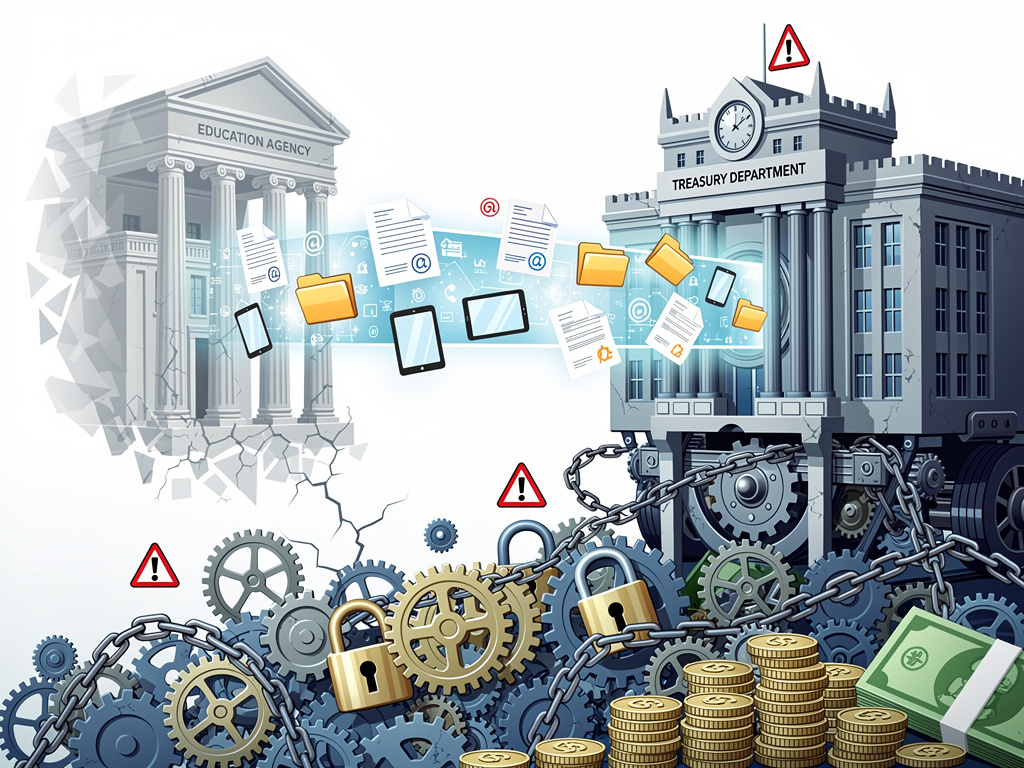
Private debt collectors once pushed out of federal student loan work are poised for a comeback. The Trump administration’s decision to hand defaulted loans to the Treasury Department brings them back into the picture. But borrowers already struggling could face more aggressive tactics and fresh confusion.
The move forms part of a larger plan to dismantle the Education Department. On March 19, 2026, the departments of Education and Treasury announced an interagency agreement. Treasury would assume operational responsibility for collecting on defaulted federal student loans. It would enlist private default resolution agencies to help borrowers rehabilitate loans or return to good standing. Education Department press release.
Secretary of Education Linda McMahon framed the change as essential. She said the partnership marks “an intentional and historic step toward breaking up the Federal education bureaucracy and dramatically improving the administration of Federal student aid programs.” Treasury Secretary Scott Bessent added that his department possesses “the unique experience, the operational capability, and the financial expertise to bring long overdue financial discipline to the program and be better stewards of taxpayer dollars.”
Yet critics see risks. The federal student loan portfolio stands at roughly $1.7 trillion. Less than 40 percent of borrowers make regular payments. About 25 percent sit in default. More than 8.8 million Americans already defaulted before recent disruptions. A pilot program that gave Treasury collection duties for several thousand borrowers produced only eight successful rehabilitations.
Private Agencies Return Despite Past Penalties
The Education Department ended contracts with private collection agencies in 2021. It cited widespread complaints about abusive practices. Now those same firms could regain a role. A June 6 report from Business Insider highlights that companies penalized for misleading borrowers may soon contact millions again.
The Consumer Financial Protection Bureau sued Pioneer Credit Recovery in 2017 for deceptive practices. The firm allegedly steered borrowers into forbearance instead of rehabilitation. A court later ordered Pioneer to pay $100 million. Transworld Systems faced a $2.5 million fine in 2024 for filing lawsuits without proper documentation. Bonnie Latreille, a former official in the Education Department’s Federal Student Aid office, offered a blunt assessment. “No reasonable person would expect that these companies are going to be doing what they’re supposed to be doing and going to be effectuating borrowers’ rights.”
But. The administration argues Treasury’s existing relationships with collection firms for other federal debts make it better equipped. Officials plan to start small. A Politico report from April 16, 2026, revealed the first wave would target about 500,000 defaulted borrowers beginning in July. Letters and calls would resume after a pause on involuntary collections announced in January. Some federal workers worried the timeline felt rushed. One anonymous source told Politico the agencies should begin with a few hundred cases rather than open the floodgates.
And the complications multiply. Borrowers must now deal with multiple agencies. Colleen Campbell, a former Federal Student Aid executive, noted the added layers. “It just gets a little bit more complicated when there are more entities and agencies involved in what happens with the borrower.” Sara Partridge of the Center for American Progress questioned whether Treasury holds the right background. She saw no evidence it possesses the necessary expertise for student aid intricacies.
Democrats in Congress pushed back hard. Senators Elizabeth Warren, Bernie Sanders, Ron Wyden, Patty Murray and Tammy Baldwin sent a letter on April 2, 2026. They called the transfer an “illegal scheme” that threatens to trap borrowers in chaos. “This latest illegal scheme from the Trump Administration threatens to trap student loan borrowers, students, and families in chaos and bureaucracy, all while American taxpayers are left to foot the bill for Treasury to administer programs that ED can and should administer itself,” the senators wrote. Warren Senate press release.
The lawmakers argued Congress never authorized the shift. They pointed to recent legislation that reaffirmed the Education Department’s role. Previous interagency agreements already produced over $1 million in extra costs and delays. A Government Accountability Office review, triggered by Sen. Warren, is now examining the legality and execution of the transfer. Recent X posts from accounts including @StrikeDebt and @ABC confirm the GAO investigation gained traction in late May 2026.
So what happens next? The agreement outlines three phases. Default collections come first. Support for non-defaulted loans follows to the extent permitted by law. Broader financial aid functions may come later. Yet details on timing, staffing and borrower communications remain sparse. The Education Department promised direct outreach to students, parents, institutions and vendors. Whether that outreach prevents widespread errors is unclear.
Collection methods themselves raise alarms. Treasury already offsets tax refunds, garnishes wages up to 15 percent and withholds Social Security payments for other debts. These tools apply to student loans too. Borrowers in default could see federal benefits seized without a court order. Rehabilitation and consolidation options exist on paper. The pilot program’s dismal eight-for-thousands success rate suggests execution may falter.
Advocacy groups such as Protect Borrowers labeled the plan “irresponsible, reckless, and bad news for our most vulnerable student loan borrowers.” They warned that millions kicked off the SAVE plan and forced into costlier repayment options already teeter on the edge. Adding aggressive collectors and bureaucratic handoffs could push more into long-term default.
Treasury officials counter that the Education Department lacked vendor infrastructure after the 2021 contract cancellations. Inbound and outbound calls to assist defaulted borrowers suffered. Bringing in experienced private agencies through Treasury addresses that gap, they say. Still, consumer advocates note that collection fees often add to borrower balances. Higher costs and repeated contacts have driven redefault rates in the past.
The debate reflects deeper tensions. President Trump’s team views the Education Department as bloated and ineffective. Shifting financial operations to Treasury aligns with returning education policy to states while centralizing money management. Opponents see an end-run around Congress that sacrifices borrower protections for speed. Legal challenges appear likely. The GAO probe could produce recommendations that slow or alter implementation.
Borrowers, meanwhile, sit in limbo. No immediate action is required for those current on payments. Defaulted borrowers should watch for notices starting this summer. Experts recommend exploring consolidation, rehabilitation or income-driven plans before aggressive collection begins. Yet with overlapping agencies and incomplete guidance, many will struggle to find clear answers.
The transfer is underway. Its success or failure will shape outcomes for millions. Taxpayers, borrowers and administrators all have stakes. How Treasury balances collection pressure with rehabilitation support will determine whether the change delivers discipline or simply new headaches.


 WebProNews is an iEntry Publication