
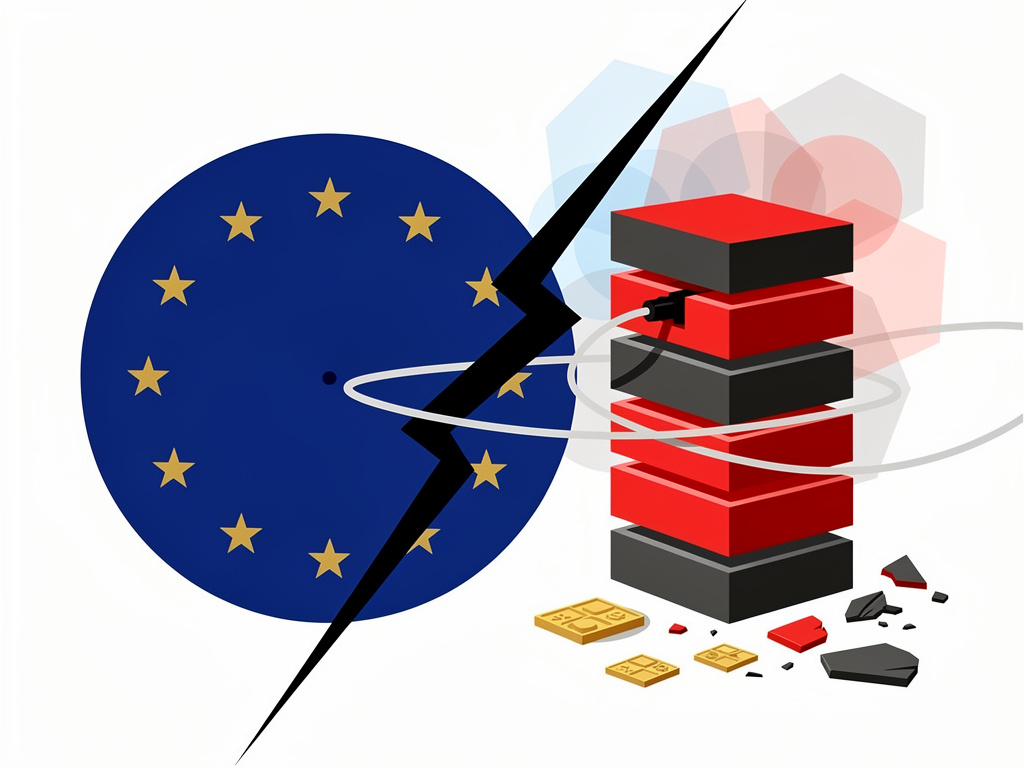
Brussels has spent years building a wall of rules around American technology giants. Fines pile up. Compliance demands multiply. Yet the dependence runs deeper than regulators admit. And now President Donald Trump’s return has turned that regulatory push into something sharper. A strategic rupture.
Over the past two years the European Commission levied more than $7 billion in penalties against Google, Meta, Apple and others. CNBC reported the clash between EU enforcers and the Trump administration grows louder with each new sanction. Trump officials see the measures as targeted punishment. European leaders call them necessary defense of competition and citizens’ rights. The gap in perception widens.
Regulatory Pressure Meets Political Reality
The Digital Markets Act and Digital Services Act once stood as proud assertions of European sovereignty. They force gatekeepers to open their platforms, curb illegal content, and accept hefty penalties for noncompliance. Yet enforcement collides with fresh political headwinds. French President Emmanuel Macron warned in February that the United States would strike back. “The U.S. will in the coming months — that’s certain — attack us over digital regulation,” he told reporters, pointing to possible tariffs tied to the DSA. The New York Times detailed those remarks and the broader anxiety inside EU capitals.
David Sacks, then a White House official, dismissed the rules on his All-In podcast. “Europe’s online services regulation has become almost like a digital speed trap to try and fine American companies,” he said. He likened the fines to tariffs and hinted at reciprocal action. The message landed. European officials now weigh enforcement vigor against the threat of trade retaliation. But Teresa Ribera, the EU’s antitrust chief, drew a firm line. She told the Financial Times the bloc must prepare to walk away from any trade deal if Washington retaliates against its digital laws. No negotiation on core rules, she insisted.
Recent fines reflect that resolve, even if amounts sometimes appear calibrated to avoid outright explosion. Apple paid €500 million and Meta €200 million under the DMA last year, according to Tech Policy Press. Google faced a €2.95 billion penalty for adtech abuses. The Commission signaled structural breakup remains an option if remedies fall short. Google offered changes. Regulators and 200 market participants will scrutinize them. Tension persists.
But here’s the complication. Europe remains hooked. U.S. firms control roughly 70 percent of the cloud market and 80 percent of enterprise software spending across the bloc. Switching costs run high. Lock-in effects prove stubborn. A 2026 survey cited by Politico found 86 percent of respondents viewed sudden U.S. restrictions on technology access as plausible. Fifty-nine percent saw them as a real risk. Trump’s rhetoric and past sanctions, such as the cutoff of Microsoft services to the International Criminal Court, supplied the evidence.
So local experiments multiply. Dutch officials in Amsterdam pursue a three-step migration away from Microsoft tools. They aim for 30 percent European cloud usage by 2030. Schleswig-Holstein in Germany replaced Microsoft Office with LibreOffice and OpenXchange, planning Linux on desktops by 2028. The move saved €15 million while costing €9 million in transition expenses. Nextcloud, a German open-source provider, reported tripling leads after Trump’s return. CEO Frank Karlitschek expects demand to keep climbing through 2026.
Alexander Scholtes, digital lead for Amsterdam, captured the daily frustration. “Right now, all the time,” he said when asked how often his teams rely on Microsoft. He added that an American company operating under U.S. law has limited options when the president calls. French MP Philippe Latombe noted Trump proved an effective salesman for digital sovereignty. “Marketers realized it sells. Trump was a great salesman for this idea.”
Dirk Schrödter, Schleswig-Holstein’s digital minister, pushed back against claims that alternatives don’t exist. “The challenge in making the switch is not that the solutions are not available, but mainly the question of political will to take responsibility.” Dutch Digital Minister Willemijn Aerdts struck a measured tone. “The U.S. is still a valued ally, but we want to be able to make choices. But the supply at the moment is not sufficient to make a free choice.”
These pockets of progress coexist with broader inertia. Cloud giants Amazon, Microsoft and Google dominate critical infrastructure. Enterprise systems run on American code. Replacing them demands billions, technical expertise and time. European alternatives often lag in scale and features. The bloc’s own “EuroStack” vision — homegrown AI, cloud, and hardware — remains more aspiration than reality, as Sherwood News reported in January.
Recent moves show cracks in the hardline stance. The Commission proposed delaying high-risk AI Act provisions until 2027 and easing data rules to cut red tape and boost competitiveness. Critics argue the changes favor Big Tech and bend to Trump-era pressure. Yet EU leaders deny capitulation. They frame adjustments as pragmatic responses to innovation needs. Still, privacy advocates worry the bloc is retreating from its role as global regulator.
Transatlantic talks carry the strain. U.S. Commerce Secretary Howard Lutnick pressed for rollback of digital rules in exchange for steel tariff relief and commitments from tech firms to build more European data centers. Ribera labeled the approach blackmail. The EU’s digital rulebook, she said, stays off the table. Meanwhile the U.S. Trade Representative signaled possible fees or restrictions on foreign services, naming Spotify among potential targets, to deter other nations from copying Brussels.
Google’s adtech case highlights the divide. The Commission eyes structural remedies. The U.S. Justice Department pursues similar breakup ideas in its own litigation, though American courts have shown skepticism. Alignment looks distant. European enforcement continues even as Washington warns of consequences.
So the breakup proceeds in fits. National and municipal projects chip away at reliance. New vendors gain traction. Yet core infrastructure stays American. Political will varies across member states. Economic pain from full separation could prove substantial. Trump’s return supplied urgency and a convenient narrative. Whether it produces lasting independence is another matter.
European governments now balance enforcement against economic self-interest. They fine U.S. platforms while courting their investment. They demand choice screens under the DMA yet watch default advantages persist in practice. Firefox reportedly gained millions of users after forced choice prompts, yet habits die hard. The data shows users stick with familiar options longer than expected.
Geopolitics adds layers. Fears of data access by U.S. intelligence, sudden service cutoffs, or policy weaponization drive the sovereignty conversation. Legal scholars point to tailored “kill switches” already used in limited cases. The theoretical risk became concrete under Trump’s first term and looks repeatable.
Brussels therefore finds itself in a familiar spot. Assertive regulator. Reluctant dependent. The Trump-fueled acceleration forces harder choices. Full decoupling carries costs few want to bear. Partial measures invite criticism of weakness. The middle path — selective migration, targeted rules, continued dialogue — prevails for now. But each new fine, each fresh threat, tests that equilibrium.
Outcomes remain uncertain. European tech champions may emerge. Cloud providers could scale. Yet the timeline stretches years. In the interim the giants adapt, contest penalties, and lobby for relief. Their market positions, though challenged, endure. The EU’s regulatory model influenced global standards once. Today it faces direct counterpressure from its closest ally.
That friction defines the current moment. Not outright divorce. Not comfortable partnership. Something messier. A contested separation playing out in courtrooms, server farms, and ministerial meetings across two continents. How far either side pushes will shape technology markets, trade flows, and digital policy for the decade ahead.


 WebProNews is an iEntry Publication