
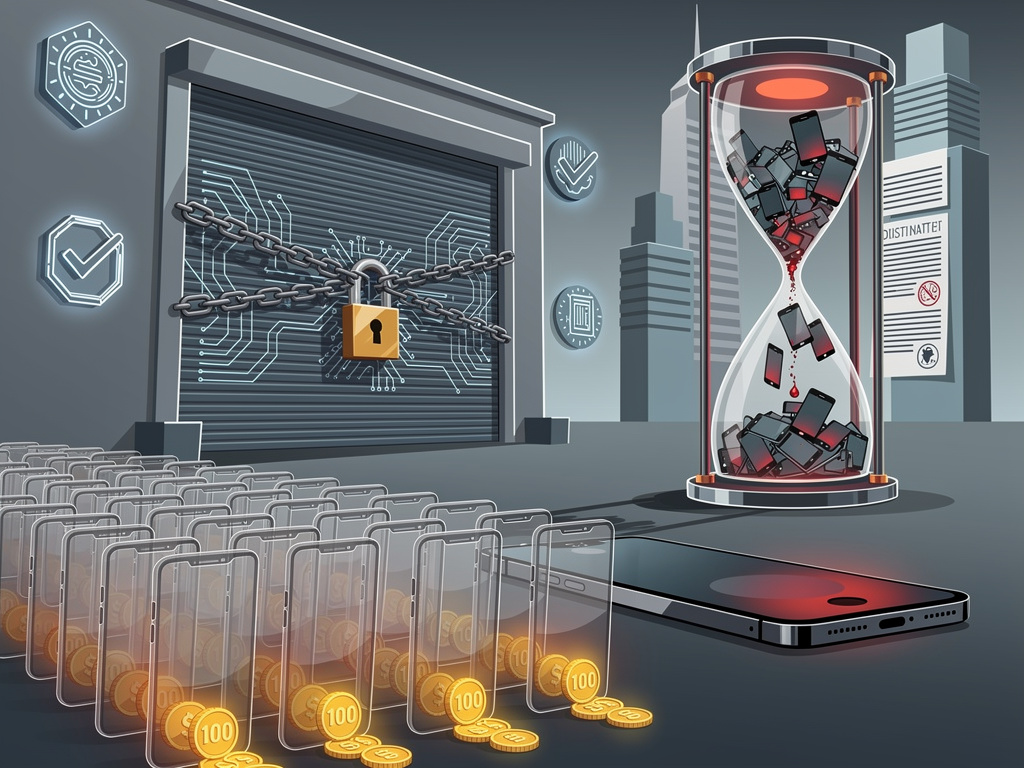
Almost a year has passed since Donald Trump Jr. and Eric Trump unveiled Trump Mobile and its flashy gold T1 smartphone. The pitch was simple. A $499 device. Made for Americans. Built with American values. Backed by a $100 deposit that would secure one of the first units. Yet here we are. In May 2026. And not a single phone has shipped.
The latest twist came quietly. On April 6 Trump Mobile revised its preorder deposit terms. The new language leaves little room for interpretation. Paying the deposit “is not a purchase, does not constitute acceptance of an order, does not create a contract for sale, does not transfer ownership or title interest, does not allocate or reserve specific inventory, and does not guarantee that a device will be produced or made available for purchase,” according to the updated policy on the company’s site. It provides only “a conditional opportunity if Trump Mobile later elects, in its sole discretion, to offer the device for sale.”
TechRadar first highlighted how these changes read like a retreat. The publication reported that all references to a release date vanished from the website. Specifications could shift at any moment. Hardware, software, colors, everything remained fluid. The update surprised almost no one who had followed the saga. But it frustrated those who had already handed over money.
Roughly 590,000 people paid that $100 deposit. The total sits around $59 million. Refunds remain possible in theory. Some customers report receiving emails that called the deposit nonrefundable, though those claims stay unverified. Trump Mobile has stayed silent on individual complaints. Repeated requests for comment from outlets including CNET have gone unanswered for months.
The story began with bold claims. In June 2025 Trump Mobile launched as a mobile virtual network operator. The T1 phone would arrive in August. It would carry a patriotic gold finish. Assembly would happen in the United States. “Proudly American” appeared everywhere in the marketing. Then reality set in. Large-scale smartphone manufacturing in America proved unrealistic. The “made in the USA” language disappeared by late June 2025.
Executives later confirmed the shift. Only final assembly would occur in Florida. Components would come from a “favored nation,” a term left vague. The company now describes the device as “designed with American values in mind” and “shaped by American innovation.” Those phrases appear on the current site. They replaced stronger promises.
Delays piled up. An initial August 2025 target slipped. The company pointed to a government shutdown at one point. By early 2026 the message changed to “later this year.” That deadline passed too. In February executives told The Verge they had skipped an entry-level model to focus on something more refined. A spring 2026 window was floated. It came and went. No phones appeared.
But signs of activity surfaced. The Verge has tracked the project closely. In January 2026 the device received FCC authorization under the model name linked to Smart Gadgets Global. Eric Thomas, a Trump Mobile executive, serves as CEO of that firm. Then came PTCRB certification in March. That step confirms basic network compatibility and paves the way for IMEI numbers. The Verge noted the certification on May 1 for a device called SGG-06 from Smart Gadgets Global. The publication called it another milestone on a slow road. Still, no launch date followed.
The design itself has evolved three times. Early renders showed a gold slab with a triangular camera array. A video call with executives in February revealed a different look. By April the website displayed yet another version. It features a 6.78-inch AMOLED display. A 120 Hz refresh rate. A Snapdragon 7-series chipset. 512 GB of storage expandable by microSD. A 5,000 mAh battery with 30W charging. Cameras include a 50-megapixel main sensor, an 8-megapixel ultrawide, a 50-megapixel 2x telephoto, and a 50-megapixel selfie camera. Fingerprint sensor. AI face unlock. Headphone jack. Android, of course.
CNET examined the latest images. The report noted the newest design differs from what executives showed The Verge. The camera bump now holds lenses in a straight row. It resembles some existing Android phones more than a unique creation. The promotional price stays listed at $499 for early buyers. Later purchasers might pay more. No one knows exactly when or if that will matter.
Critics and lawmakers have taken notice. Sen. Elizabeth Warren sent a letter to the Federal Trade Commission in January 2026. She cited the missed deadlines and deposit collection. Ethics concerns arose too. The venture ties the Trump name to a consumer product during a period of public office. Democrats and watchdogs questioned the marketing accuracy. Wikipedia’s entry on Trump Mobile, drawing from multiple reports, details the backlash. It notes technical glitches during preorders, unauthorized charges alleged by 404 Media, and poor value on renewed phones sold alongside the T1 hype.
Customer sentiment has soured. On X, posts from recent days show MAGA supporters expressing rage. One Turkish account highlighted the 590,000 deposits and zero deliveries. Others called it a scheme. A Salon article shared on the platform captured growing impatience. Even some who backed the idea now demand answers or refunds.
Trump Mobile continues to sell refurbished Samsung and Apple devices. Its wireless plans remain available. The T1 sits on the preorder page with that $100 refundable deposit. The company filed a trademark for “The 47 Plan” in April. That suggests some forward movement on the service side. Yet the phone itself feels stuck.
Industry watchers point to familiar patterns. Many crowdfunded or hyped gadgets miss dates. Few collect this volume of deposits without delivering or communicating clearly. The terms update essentially warns buyers. This is not a firm order. Production is not assured. The company holds all discretion.
So what happens next? Certifications indicate the hardware exists in some form. A real device received regulatory nods. Executives have shown prototypes, even if the public versions keep changing. But prototypes do not equal mass production. Supply chains, costs, and consumer demand all matter. A gold-finished Android phone with midrange specs faces stiff competition. Privacy and security features were touted early on. Details on those remain thin.
The silence from Trump Mobile speaks volumes. No blog posts. No fresh social updates. No executive interviews since February. Inquiries from CNET, The Verge, and others meet the same quiet response. That leaves buyers in limbo. Some hold out hope. Others have moved on. A few continue pressing for refunds.
The T1 phone was supposed to represent something bigger. Freedom. Performance. Patriotism in a device. Instead it has become a case study in unmet expectations. The updated terms make the risks explicit. Whether that protects the company or simply confirms skepticism depends on what arrives. Or what never does. For now the gold phone remains a promise on a website. And almost no one expects it to ship anytime soon.


 WebProNews is an iEntry Publication