
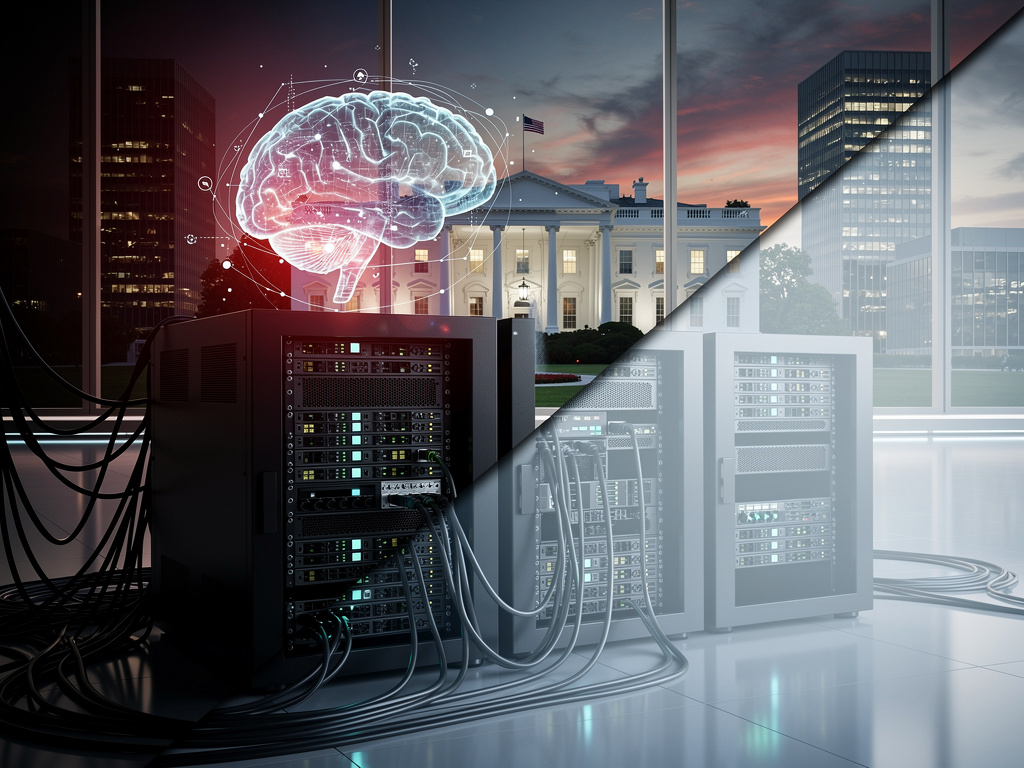
In a surprising pivot amid ongoing federal workforce upheavals, the Trump administration has unveiled the United States Tech Force, an ambitious program designed to infuse the government with top-tier technical talent. Announced on December 15, 2025, this initiative aims to recruit approximately 1,000 technologists for two-year stints starting as early as March 2026. The move comes less than a year after the administration dismantled several federal technology teams, resulting in the departure of thousands of tech workers. Drawing from partnerships with major private sector players like Microsoft, Palantir, and xAI, the program seeks to accelerate artificial intelligence adoption and modernize outdated government systems.
The Office of Personnel Management (OPM), in collaboration with the Office of Management and Budget, the General Services Administration, and the White House Office of Science and Technology Policy, is spearheading the effort. According to official statements, the Tech Force represents a critical component of President Trump’s AI Action Plan, which emphasizes securing U.S. dominance in emerging technologies. Recruits will be placed in various federal agencies, focusing on projects related to AI, cybersecurity, and infrastructure upgrades. Salaries are set to range from $130,000 to $195,000 annually, with additional benefits, making the positions competitive with private sector offers.
This recruitment drive is not without controversy. Critics point to the irony of rehiring talent after widespread layoffs earlier in the year, which targeted what the administration deemed inefficient bureaucracies. Some recruits will join on leaves of absence from their private employers, a model that has sparked ethical concerns over potential conflicts of interest. For instance, if a technologist from a company like Palantir advises on government contracts, questions arise about impartiality in procurement processes.
The Origins and Strategic Imperative
The genesis of the Tech Force can be traced to the administration’s broader vision for technological leadership. As detailed in a OPM press release, the program is framed as a response to the “paramount national challenge” of AI dominance. President Trump has repeatedly highlighted the need for the federal government to match the innovation pace of adversaries like China, where state-backed tech initiatives have surged ahead in areas such as quantum computing and machine learning.
Industry partners are integral to the rollout. Roughly 25 companies, including heavyweights like Meta, Google, Apple, Nvidia, and OpenAI, have committed to supporting the initiative. These firms will provide recruitment pipelines, advisory roles, and even temporary staff loans. For example, Apple has pledged to supply senior managers to guide federal teams, as reported by AppleInsider. This collaboration aims to bridge the gap between Silicon Valley’s agility and Washington’s often cumbersome bureaucracy.
Beyond immediate hiring, the program includes talent development components. An initial cohort of 1,000 participants will undergo specialized training in government operations, ensuring they can navigate regulatory environments while applying cutting-edge skills. The focus on two-year terms suggests a rotational model, allowing fresh talent to cycle in and maintain momentum on long-term projects like modernizing healthcare IT systems or enhancing transportation networks.
Ethical Quandaries and Conflict Risks
The leave-of-absence arrangement has drawn scrutiny from ethics watchdogs. A report from Nextgov/FCW highlights how such setups could blur lines between public service and corporate interests. Imagine a Microsoft engineer on loan influencing cloud computing contracts—might this favor their employer’s products? Federal ethics rules require disclosures, but enforcement has historically been lax, raising fears of undue influence in a sector where contracts can total billions.
Supporters argue that these partnerships are essential for attracting elite talent unwilling to abandon lucrative private careers permanently. The program’s salary range, while generous for government work, pales compared to Big Tech compensations, where AI engineers command medians of $262,000 for entry-level roles and up to $445,000 for senior positions, according to industry analyses. By allowing temporary detachments, the Tech Force lowers barriers, potentially drawing from a pool of experienced professionals who might otherwise stay in the private sphere.
Public sentiment on platforms like X reflects a mix of optimism and skepticism. Posts from tech influencers note the irony of rehiring after mass firings, with one user quipping about the administration’s “socialist” leanings in expanding government roles at high pay. Others highlight broader hiring trends, pointing to a tech industry still reeling from over 118,000 job cuts in 2025, including significant reductions at Intel and Microsoft, which could make government positions more appealing amid private sector instability.
Implementation Challenges in a Shifting Environment
Rolling out the Tech Force won’t be straightforward. Federal hiring processes are notoriously slow, often taking months due to security clearances and bureaucratic hurdles. The administration plans to streamline this through expedited pathways, but past efforts, such as those under previous tech surge initiatives, have faltered on similar obstacles. As covered in a FedScoop article, the program targets an initial rollout by early 2026, with recruits embedded in agencies like the Department of Defense and Health and Human Services.
One key challenge is diversity in recruitment. The tech field has long grappled with underrepresentation, and government roles must adhere to equal opportunity mandates. Partners like Nvidia and Google, known for their AI prowess, could help source a broader talent pool, but critics worry the program might favor candidates from elite firms, perpetuating inequalities. Additionally, the two-year limit raises questions about knowledge retention—will agencies lose expertise just as projects gain traction?
Comparisons to historical efforts abound. This initiative echoes the Obama-era U.S. Digital Service, which brought in tech experts post-Healthcare.gov debacle. However, the Tech Force is more expansive, with a explicit focus on AI and national security. A Daily Caller piece describes it as an “elite” overhaul of federal bureaucracy, aiming to dismantle inefficiencies while bolstering tech dominance.
Private Sector Incentives and Long-Term Impacts
Participating companies stand to gain from the Tech Force. Beyond goodwill, they receive recruitment opportunities for program alumni, who return with insider knowledge of government needs. This could streamline future contracts and foster innovation ecosystems. For instance, xAI’s involvement aligns with Elon Musk’s influence in the administration, potentially accelerating projects in autonomous systems or space tech.
From the government’s perspective, the influx of 1,000 technologists could transform critical sectors. In healthcare, recruits might overhaul electronic records systems plagued by outdated software. Transportation could see AI-driven optimizations in air traffic control, reducing delays and enhancing safety. The New York Times notes the program’s emphasis on supervisory roles, ensuring not just execution but strategic leadership in these areas.
Yet, fiscal conservatives question the cost. With salaries topping $195,000 and benefits, the program’s budget could exceed $200 million annually, not including training and overhead. Defenders counter that the investment pales against the economic losses from lagging tech infrastructure, estimated in trillions over decades.
Broader Implications for Tech Talent Flows
The Tech Force arrives amid turbulent times in the tech job market. X posts from career advisors underscore severe talent gaps in cybersecurity (over 3.5 million unfilled roles globally) and clean energy (projected 44 million jobs by 2030), contrasting with declines in entry-level tech positions down 20% since 2022. This program could serve as a bridge, offering stability to laid-off workers from firms like Salesforce, which replaced thousands with AI.
Internationally, the initiative positions the U.S. to compete in the global tech race. China’s aggressive recruitment of AI talent and Europe’s GDPR-driven innovations highlight the stakes. By surging expertise into government, the Tech Force might catalyze public-private synergies, much like the CHIPS Act’s push for semiconductor manufacturing, which requires tens of thousands of engineers.
Looking ahead, success hinges on measurable outcomes. Will AI adoption accelerate? Can ethical safeguards hold? As one X post from a tech analyst put it, the program addresses urgent gaps in STEM graduates, where U.S. output lags behind demand in specialized fields.
Sustaining Momentum Amid Uncertainties
To ensure longevity, the administration must address retention beyond the two-year terms. Offering pathways to permanent roles or incentives for extensions could mitigate brain drain. Partnerships with universities might build a pipeline of early-career talent, countering the preference for experienced hires noted in recent hiring data, where new grad opportunities in Big Tech dropped 25%.
Critics, including some in Congress, may push for oversight hearings to probe potential cronyism. The Business Insider outlines how recruits gain access to private sector opportunities post-service, creating a revolving door that benefits all parties but demands transparency.
Ultimately, the Tech Force embodies a bold experiment in government reinvention. If executed well, it could redefine how federal agencies harness technology, fostering resilience in an era of rapid advancement. As the first cohort assembles, the eyes of industry insiders will watch closely, gauging whether this surge truly propels America to the forefront of innovation.


 WebProNews is an iEntry Publication