
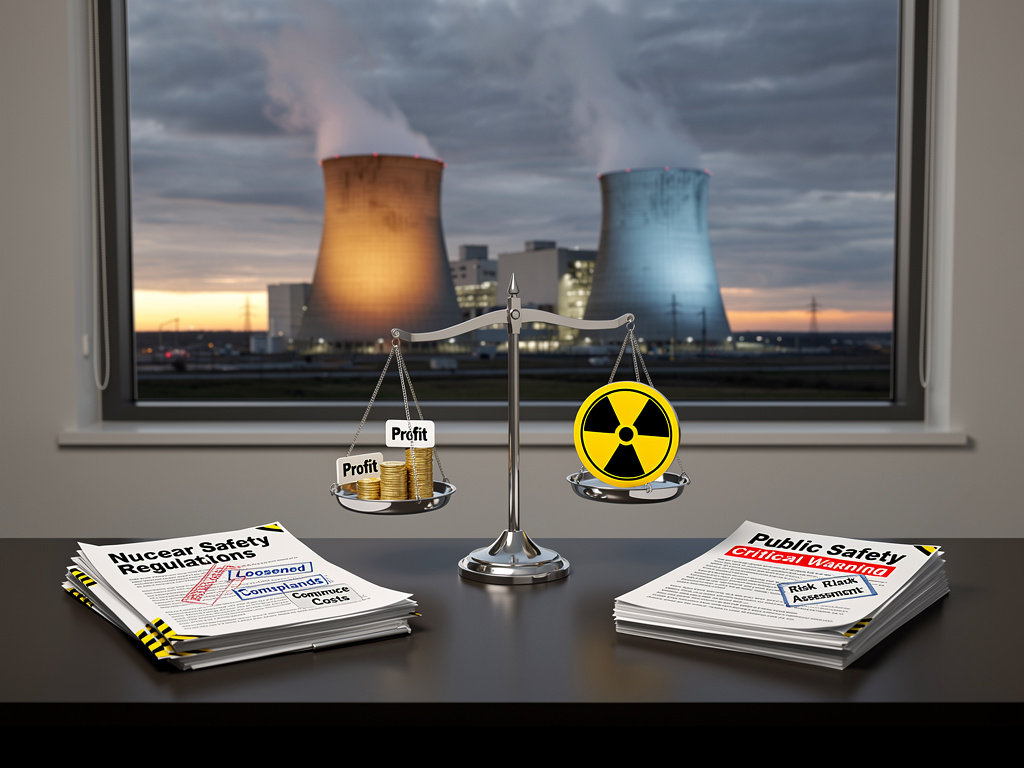
The Trump administration’s Energy Department has initiated a sweeping deregulation effort targeting nuclear safety protocols, marking one of the most significant shifts in atomic energy oversight since the establishment of the Nuclear Regulatory Commission. According to TechCrunch, the new directive loosens several key safety requirements that have governed the nuclear industry for decades, setting off intense debate among industry stakeholders, safety advocates, and energy policy experts about the appropriate balance between innovation and public protection.
The policy changes, announced in late January 2026, represent a fundamental recalibration of how the federal government approaches nuclear energy regulation. The modifications include streamlined approval processes for advanced reactor designs, reduced inspection frequencies for certain facility types, and relaxed reporting requirements for minor operational incidents. Energy Department officials argue these adjustments eliminate redundant bureaucratic hurdles while maintaining essential safety standards, positioning the United States to compete more effectively in the global nuclear energy market.
Regulatory Philosophy Shift Reflects Broader Deregulation Agenda
The nuclear safety rule changes align with the administration’s broader deregulatory philosophy, which prioritizes reducing compliance costs and accelerating project timelines across multiple sectors. Energy Secretary appointees have characterized existing nuclear regulations as products of an overly cautious era that stifled technological advancement and made American nuclear projects prohibitively expensive compared to international competitors. The department’s internal analysis suggests that streamlined regulations could reduce construction timelines for new nuclear facilities by up to 30 percent and cut overall project costs by billions of dollars.
Industry representatives have largely welcomed the regulatory relief, particularly companies developing small modular reactors and next-generation nuclear technologies. These firms have long complained that regulatory frameworks designed for large conventional reactors impose unnecessary burdens on fundamentally different designs with enhanced passive safety features. The Nuclear Energy Institute, the industry’s primary trade association, issued statements praising the administration’s recognition that modern reactor designs incorporate safety improvements that reduce the need for extensive regulatory oversight.
Safety Advocates Sound Alarm Over Reduced Oversight Mechanisms
Environmental and nuclear safety organizations have responded with sharp criticism, warning that the rule changes prioritize industry profits over public safety. The Union of Concerned Scientists released a detailed technical analysis arguing that several modified requirements served critical safety functions that cannot be adequately replaced by industry self-regulation. Former Nuclear Regulatory Commission officials have publicly questioned whether the Energy Department possesses sufficient technical expertise to make informed judgments about which safety protocols can be safely eliminated without compromising protection standards.
The controversy has reignited longstanding tensions between nuclear industry advocates who view excessive regulation as the primary obstacle to nuclear energy’s expansion and safety-focused groups who point to historical accidents as evidence that robust oversight remains essential. Critics note that the Three Mile Island, Chernobyl, and Fukushima disasters all involved combinations of equipment failures and human errors that existing safety protocols were designed to prevent or mitigate. They argue that reducing regulatory requirements increases the probability of similar incidents, regardless of improvements in reactor design.
Advanced Reactor Developers Navigate Complex Regulatory Terrain
The deregulation effort particularly impacts companies developing advanced nuclear technologies, including small modular reactors, molten salt reactors, and high-temperature gas-cooled reactors. These next-generation designs promise enhanced safety characteristics, reduced waste production, and greater operational flexibility compared to conventional light-water reactors. However, they also present novel engineering challenges and potential failure modes that existing regulatory frameworks were not specifically designed to address.
Several prominent advanced reactor developers have expressed cautious optimism about the regulatory changes while acknowledging the need to maintain public confidence in nuclear safety. Company executives recognize that any significant safety incident involving advanced reactors could devastate the entire sector’s prospects, regardless of regulatory requirements. This reality creates complex incentives where firms simultaneously welcome reduced compliance burdens while understanding that rigorous safety standards ultimately serve their long-term commercial interests by maintaining public acceptance of nuclear technology.
International Regulatory Standards Create Competitive Pressures
The administration’s decision to loosen nuclear safety requirements occurs against a backdrop of intense international competition in nuclear technology development and deployment. China has emerged as the world’s leading builder of new nuclear reactors, completing projects on accelerated timelines that American companies struggle to match. Russian state nuclear corporation Rosatom has secured reactor construction contracts in numerous countries, leveraging competitive pricing and streamlined project execution. South Korea has developed a reputation for delivering nuclear projects on schedule and within budget, contrasting sharply with recent American and European experiences.
Energy Department officials argue that regulatory modernization is essential for American nuclear companies to compete effectively in global markets. They contend that other nations have adopted more flexible regulatory approaches that enable faster project development without compromising safety outcomes. However, nuclear safety experts caution against using international competition as justification for weakening domestic safety standards, noting that different countries face varying seismic risks, population densities, and emergency response capabilities that appropriately influence regulatory requirements.
Economic Implications Extend Beyond Nuclear Sector
The nuclear deregulation initiative carries significant economic implications that extend well beyond the atomic energy industry itself. Nuclear power currently provides approximately 20 percent of American electricity generation and constitutes the largest source of carbon-free baseload power. The sector’s future trajectory will substantially influence the nation’s ability to meet climate objectives while maintaining grid reliability as coal and natural gas plants retire. Proponents argue that revitalizing nuclear energy through regulatory reform could create thousands of high-paying jobs, strengthen domestic manufacturing capabilities, and reduce dependence on imported energy technologies.
Economic analyses present conflicting projections about the deregulation’s likely impacts. Industry-funded studies suggest that streamlined regulations could unlock hundreds of billions of dollars in nuclear infrastructure investment over the next two decades, creating substantial economic multiplier effects. Conversely, independent economic researchers question whether regulatory costs truly represent the primary obstacle to nuclear expansion, noting that nuclear projects face challenges including high capital costs, long construction timelines, competition from increasingly inexpensive renewable energy, and public opposition that regulatory changes cannot address.
State-Level Responses Reveal Regulatory Fragmentation
The federal deregulation effort has prompted varied responses from state governments, which retain significant authority over energy policy and facility siting decisions. Several states with existing nuclear facilities have announced intentions to maintain or enhance state-level safety requirements, potentially creating a patchwork regulatory environment where federal and state standards diverge. California, New York, and Massachusetts have indicated they will conduct independent safety reviews of nuclear facilities regardless of federal regulatory changes, citing state constitutional obligations to protect public health and safety.
This emerging regulatory fragmentation presents operational challenges for nuclear facility operators who must navigate multiple, potentially conflicting regulatory frameworks. Industry representatives have expressed concerns that state-level requirements could negate the benefits of federal deregulation, effectively creating 50 different regulatory regimes rather than a unified national standard. Legal experts anticipate litigation over federal preemption questions, particularly regarding whether federal nuclear safety authority supersedes state regulations that impose requirements exceeding federal minimums.
Technical Workforce Implications Raise Long-Term Questions
The regulatory changes have sparked discussions about implications for the nuclear industry’s technical workforce, particularly regarding training requirements and professional qualifications. Reduced inspection frequencies and streamlined approval processes could diminish opportunities for regulatory personnel to develop and maintain technical expertise through hands-on facility oversight. Former Nuclear Regulatory Commission officials warn that regulatory capacity, once lost, proves difficult and time-consuming to rebuild, potentially leaving the government ill-equipped to respond effectively should safety concerns emerge.
Nuclear industry executives acknowledge workforce development challenges but argue that regulatory modernization will actually enhance the sector’s ability to attract talented professionals by creating opportunities to work with innovative technologies rather than maintaining aging conventional plants. They contend that overly burdensome regulations have made nuclear careers less appealing to young engineers and scientists who prefer sectors with faster innovation cycles and clearer paths to meaningful impact. The industry’s ability to recruit and retain highly skilled technical personnel will significantly influence whether deregulation achieves its stated objectives of revitalizing American nuclear energy.
Political Dynamics Shape Future Regulatory Trajectory
The nuclear deregulation initiative faces an uncertain political future that will depend substantially on upcoming election outcomes and potential shifts in congressional priorities. Democratic lawmakers have introduced legislation that would block implementation of the most controversial rule changes, arguing that Congress should explicitly authorize such significant modifications to nuclear safety protocols rather than allowing executive branch agencies to act unilaterally. However, the legislation faces long odds in a closely divided Congress where energy policy remains intensely partisan.
The political debate over nuclear regulation reflects deeper disagreements about appropriate government roles in managing technological risks and promoting economic development. Supporters view the deregulation as pragmatic recognition that America’s nuclear regulatory framework has become excessively risk-averse, imposing costs that far exceed safety benefits. Opponents characterize the changes as reckless prioritization of industry profits over public protection, warning that reduced oversight increases accident probabilities with potentially catastrophic consequences. These fundamental philosophical differences suggest that nuclear regulatory policy will remain contentious regardless of which party controls the federal government, with significant policy swings likely as political power shifts between administrations.


 WebProNews is an iEntry Publication