
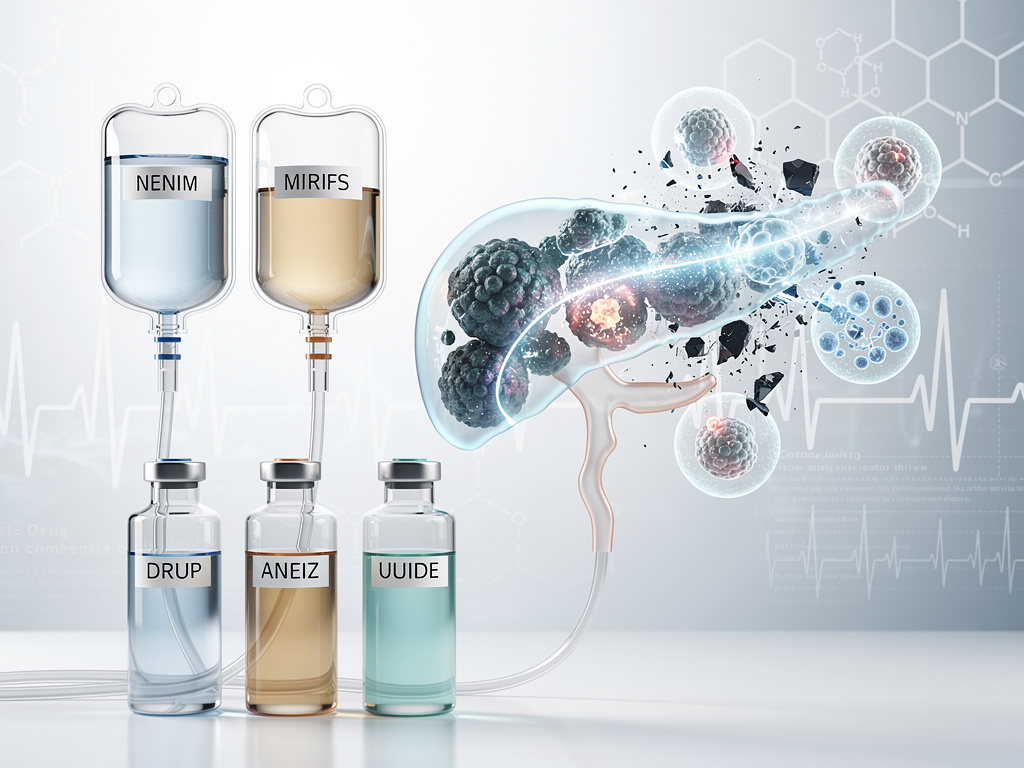
Researchers have identified a promising three-drug combination that could fundamentally alter the treatment paradigm for pancreatic cancer, one of medicine’s most intractable malignancies. The breakthrough centers on blocking a cellular mechanism that allows tumors to evade chemotherapy, potentially offering new hope for patients facing a disease with a five-year survival rate of just 12 percent.
Scientists at the Institute of Cancer Research in London, working in collaboration with The Royal Marsden NHS Foundation Trust, have discovered that combining a MEK inhibitor with standard chemotherapy and an autophagy inhibitor can prevent pancreatic cancer cells from developing resistance to treatment. The research, published in advanced scientific journals, demonstrates that pancreatic tumors employ a survival mechanism called autophagy—essentially cellular self-digestion—to withstand the toxic effects of chemotherapy drugs.
According to findings reported by Drug Target Review, the research team found that when pancreatic cancer cells are exposed to MEK inhibitors alongside chemotherapy, they activate autophagy as a defensive response. This process allows cancer cells to break down and recycle their own components, generating energy and building blocks necessary for survival under treatment stress. By adding hydroxychloroquine, an autophagy inhibitor already approved for malaria treatment, researchers were able to block this escape route and significantly enhance treatment effectiveness.
Understanding the Molecular Mechanisms Behind Treatment Failure
Pancreatic ductal adenocarcinoma, the most common form of pancreatic cancer, has long frustrated oncologists due to its remarkable ability to resist virtually all therapeutic interventions. The disease is characterized by mutations in the KRAS gene, present in approximately 90 percent of cases, which drives uncontrolled cell growth and creates multiple pathways for treatment resistance. Traditional chemotherapy regimens like FOLFIRINOX and gemcitabine-based combinations provide modest survival benefits but rarely produce durable responses.
The new research builds on previous attempts to target the KRAS pathway through MEK inhibition. MEK proteins are crucial components of the cellular signaling cascade that transmits growth signals from mutated KRAS. While MEK inhibitors showed initial promise in laboratory studies, clinical trials consistently demonstrated that pancreatic tumors quickly adapted to these drugs, rendering them ineffective as monotherapy. The current study reveals the specific mechanism behind this adaptation: stressed cancer cells ramp up autophagy to survive the dual assault of chemotherapy and targeted therapy.
Clinical Implications and Treatment Protocol Development
The triple-drug approach tested in preclinical models involves precise sequencing and dosing strategies. Researchers administered the MEK inhibitor trametinib in combination with standard chemotherapy agents, followed by hydroxychloroquine to block the autophagy response. In laboratory experiments using patient-derived tumor samples and animal models, this combination produced substantially greater tumor shrinkage and prolonged survival compared to standard chemotherapy alone or chemotherapy plus MEK inhibition without autophagy blockade.
The research team observed that blocking autophagy prevented cancer cells from generating the energy reserves needed to repair chemotherapy-induced damage and maintain basic cellular functions under stress. Tumor cells essentially became trapped in a metabolic crisis, unable to activate their primary survival mechanism. Importantly, the combination appeared to be well-tolerated in animal models, suggesting a therapeutic window that could be exploited in human patients without prohibitive toxicity.
Broader Context in Pancreatic Cancer Research
This discovery arrives at a critical juncture in pancreatic cancer research, where the field has struggled to translate molecular insights into meaningful clinical advances. Despite decades of research into the genetic drivers of pancreatic cancer and the development of numerous targeted therapies, the disease’s mortality rate has remained stubbornly high. Pancreatic cancer is projected to become the second-leading cause of cancer death in the United States by 2030, surpassing colorectal cancer, according to projections from cancer research organizations.
The challenge has been particularly acute because pancreatic tumors exist within a dense, fibrous microenvironment called the stroma, which acts as a physical barrier to drug penetration and creates a nutrient-poor, oxygen-depleted environment that actually favors cancer cell survival. This hostile milieu has made pancreatic cancer cells exceptionally adept at metabolic adaptation, including the strategic use of autophagy to scavenge nutrients and maintain viability under extreme conditions.
Autophagy as a Double-Edged Sword in Cancer Biology
Autophagy plays a complex and context-dependent role in cancer development and treatment response. In healthy cells and during early stages of cancer development, autophagy can act as a tumor suppressor by removing damaged cellular components and preventing the accumulation of toxic proteins. However, once tumors are established, cancer cells frequently hijack this process to support their survival, particularly under the stress imposed by nutrient deprivation, hypoxia, or therapeutic intervention.
The recognition that autophagy serves as an adaptive resistance mechanism has sparked interest in combining autophagy inhibitors with various cancer treatments. Hydroxychloroquine and its analog chloroquine have been the primary drugs tested in this capacity because they are already FDA-approved for other indications and have well-characterized safety profiles. These drugs work by preventing the final step of autophagy, where cellular components are degraded within specialized compartments called lysosomes. When autophagy is blocked at this stage, toxic materials accumulate within cells, leading to cellular dysfunction and death.
Challenges in Translating Laboratory Findings to Clinical Practice
While the preclinical results are encouraging, significant hurdles remain before this triple-drug combination can be validated in human patients. Hydroxychloroquine has shown mixed results in previous cancer clinical trials, partly because the doses required to effectively inhibit autophagy in tumors may be higher than those traditionally used for malaria treatment. Determining the optimal dose, schedule, and sequence of administration for all three components will require carefully designed clinical trials.
Additionally, researchers must address questions about patient selection and biomarker development. Not all pancreatic cancers may be equally dependent on autophagy for survival under treatment stress, and identifying which patients are most likely to benefit from this approach could be crucial for clinical success. The research team is working to identify molecular signatures that predict autophagy dependence, which could guide patient selection in future trials.
Potential Impact on Treatment Standards and Patient Outcomes
If clinical trials confirm the preclinical findings, this triple-drug combination could represent a significant advance in pancreatic cancer treatment. Current standard-of-care regimens extend median survival to approximately 11 months for metastatic disease, and even aggressive multi-drug chemotherapy combinations rarely produce complete responses. A treatment approach that prevents or delays the development of resistance could potentially extend survival substantially and improve quality of life by maintaining disease control for longer periods.
The research also has implications beyond pancreatic cancer. Other tumor types driven by KRAS mutations, including certain lung and colorectal cancers, have similarly struggled with resistance to MEK inhibitors. The principle of combining targeted therapy with autophagy inhibition to prevent adaptive resistance could potentially be applied to these malignancies as well, opening new avenues for therapeutic development across multiple cancer types.
Next Steps in Research and Clinical Development
The research team is now preparing to launch early-phase clinical trials to test the safety and preliminary efficacy of the triple-drug combination in patients with advanced pancreatic cancer. These trials will likely employ a dose-escalation design to identify the maximum tolerated doses of each component when used in combination. Researchers will monitor patients closely for both treatment response and potential side effects, including impacts on normal cells that may also rely on autophagy for routine maintenance functions.
Parallel laboratory studies are continuing to explore the molecular details of how pancreatic cancer cells regulate autophagy in response to treatment stress. Understanding these mechanisms at a deeper level could reveal additional therapeutic targets or strategies to enhance the effectiveness of autophagy inhibition. Scientists are particularly interested in identifying feedback loops and compensatory pathways that cancer cells might activate when autophagy is blocked, as these could represent vulnerabilities to exploit with additional targeted agents.
The convergence of insights from cancer metabolism, targeted therapy, and drug repurposing exemplified by this research represents a modern approach to cancer drug development. By understanding the specific survival strategies that cancer cells employ under treatment pressure and systematically blocking these escape routes, researchers are developing more sophisticated combination therapies designed to corner tumors and prevent resistance. For pancreatic cancer patients and their families facing limited treatment options, such approaches offer tangible hope that more effective therapies may be on the horizon.


 WebProNews is an iEntry Publication