
Travis Kalanick never really left the autonomous vehicle race. He just went quiet for a while. Now the former Uber CEO is re-emerging with a robotaxi play that puts him in direct competition with Waymo and Tesla — two companies that have spent billions trying to own the future of driverless transportation.
According to a report from Business Insider, Kalanick has been building out his autonomous vehicle ambitions through CloudKitchens — the ghost kitchen company he founded after being ousted from Uber in 2017. The company has quietly pivoted resources toward robotaxi infrastructure, positioning itself not as a self-driving technology developer but as something potentially more strategic: the logistics and real estate backbone that autonomous fleets will need to operate at scale.
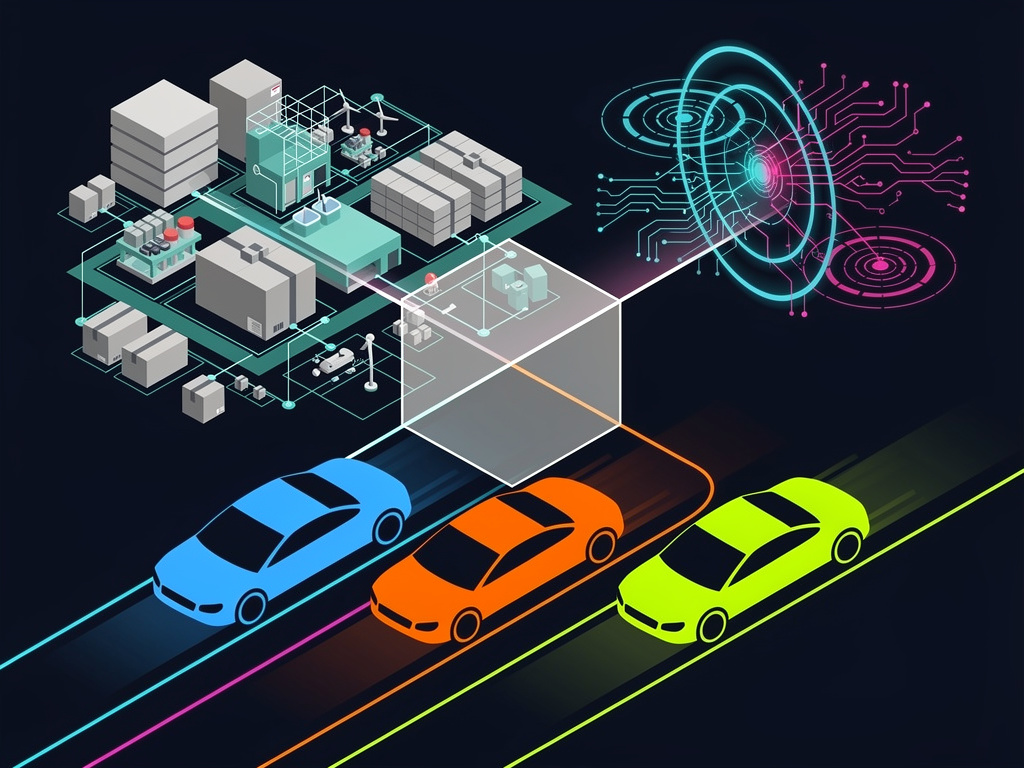
That’s a telling move. While Waymo and Tesla fight over who has the best AI stack and sensor array, Kalanick appears to be betting on the unsexy stuff — depots, charging stations, maintenance hubs, and the physical network required to keep thousands of driverless cars running in cities. It’s an approach that echoes how CloudKitchens operates in food delivery: own the infrastructure, let others handle the consumer-facing product.
The timing isn’t accidental.
Waymo, Alphabet’s autonomous driving subsidiary, has been expanding aggressively. It now operates commercial robotaxi services in San Francisco, Phoenix, Los Angeles, and Austin, with plans to enter new markets in 2025 and 2026. The company recently reported completing over 150,000 paid trips per week, according to Waymo’s own disclosures. And it secured a massive $5.6 billion funding round in late 2024 — a signal that Alphabet is willing to keep pouring capital into the venture even as profitability remains elusive.
Tesla, meanwhile, has taken a fundamentally different approach. Elon Musk has promised a camera-only, AI-driven system that would turn every Tesla into a potential robotaxi. The company launched its Tesla Robotaxi concept — internally called Cybercab — at a flashy event in late 2024. But Tesla’s Full Self-Driving software still requires human supervision in most jurisdictions, and the company has repeatedly missed its own deadlines for fully autonomous operation. Musk told investors during Tesla’s Q4 2024 earnings call that paid unsupervised rides would begin in Austin by June 2025. Whether that actually happens remains an open question.
So where does Kalanick fit?
His angle is infrastructure-as-a-service for autonomous fleets. Think of it as the picks-and-shovels play during a gold rush. Someone has to build and manage the physical locations where robotaxis get charged, cleaned, repaired, and dispatched. Kalanick’s bet is that neither Waymo nor Tesla — nor the dozens of smaller AV companies in China and elsewhere — will want to handle all of that themselves. And he has experience building exactly this kind of distributed real estate network through CloudKitchens, which operates hundreds of facilities across multiple countries.
Industry analysts see logic in the strategy but also significant risk. The robotaxi market is still nascent. Regulatory hurdles vary wildly by city and state. And the economics of autonomous ride-hailing haven’t been proven at scale — Waymo reportedly loses money on every ride, subsidized by Alphabet’s deep pockets. Building infrastructure for a market that doesn’t fully exist yet is a classic Kalanick move: aggressive, contrarian, and potentially very expensive if adoption timelines slip.
There’s also the competitive question. Waymo already operates its own depots and maintenance facilities. Tesla’s model — using privately owned vehicles — could sidestep the need for centralized infrastructure entirely. If enough Tesla owners opt into a robotaxi network, the fleet essentially maintains and charges itself at owners’ homes. That’s a radically different model, and one that would undercut the value of Kalanick’s infrastructure play.
But Kalanick has always thrived in messy, fragmented markets. Uber succeeded not because ride-hailing was a clean business, but because Kalanick was willing to fight city by city, regulator by regulator, to build something that worked at scale. The autonomous vehicle industry is shaping up to be exactly that kind of fight — sprawling, chaotic, and decided as much by operational execution as by technological superiority.
Not everyone is convinced he can pull it off a second time. His reputation took serious damage during Uber’s cultural scandals, and CloudKitchens has faced its own criticisms around workplace culture and financial transparency. Still, Kalanick retains significant personal wealth — he sold billions in Uber stock — and a network of investors who’ve backed him before.
The broader picture here matters. The robotaxi race is no longer just a technology contest. It’s becoming a full-stack competition involving AI, hardware, regulation, consumer trust, insurance, urban planning, and — yes — physical infrastructure. Whoever controls the most layers of that stack will likely capture the most value. Kalanick is making a calculated bet that the infrastructure layer is undervalued and underdeveloped.
Whether he’s right depends on how fast the market actually materializes. If fully autonomous fleets are operating in dozens of cities by 2028, the demand for third-party infrastructure could be enormous. If timelines slip — as they have repeatedly over the past decade — Kalanick could find himself sitting on expensive real estate with no tenants.
Either way, his return to the autonomous vehicle conversation adds another volatile element to an already unpredictable race. The former Uber CEO is betting that the future of transportation won’t be won by the best algorithm alone. It’ll be won by whoever builds the system around it.


 WebProNews is an iEntry Publication