
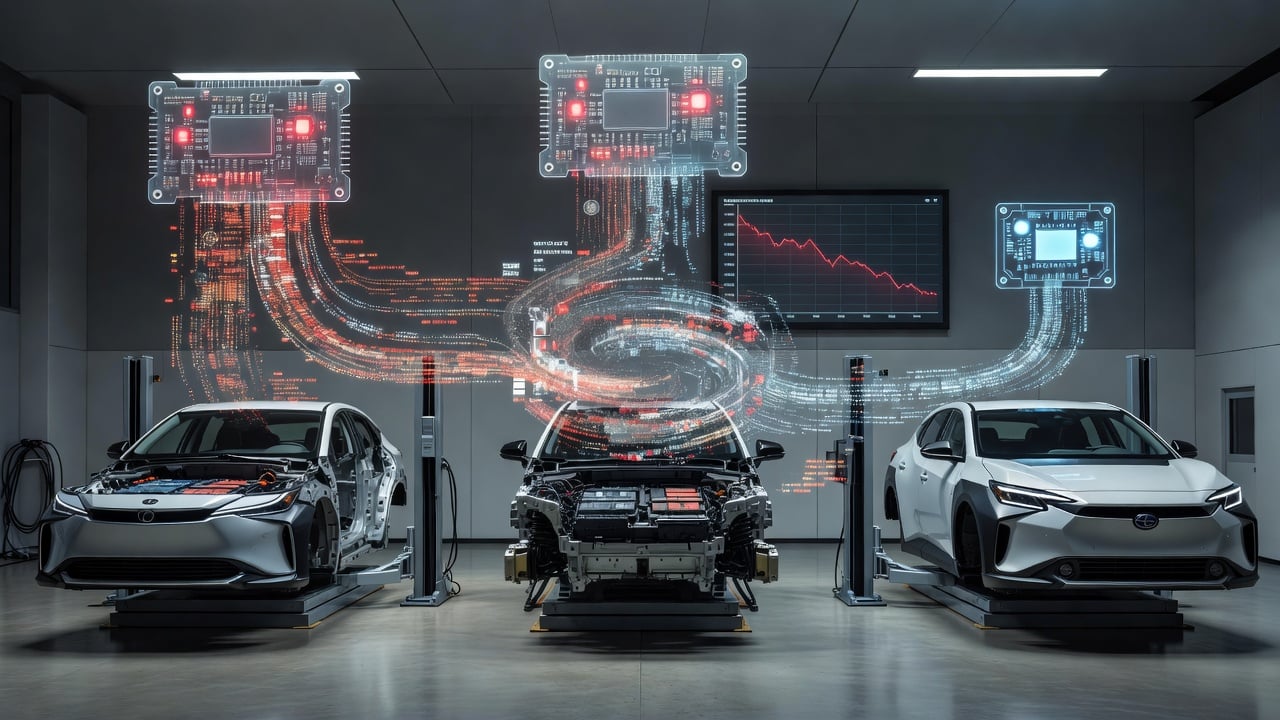
Toyota Motor Corp. announced a safety recall last week for thousands of its newest electric vehicles. The action covers certain 2026 model year bZ and Lexus RZ models sold in North America. But the scope quickly widened. Recent reports show the same battery-related software problem now affects more than 20,000 EVs across Toyota, Lexus and Subaru brands.
Approximately 16,200 vehicles in the initial U.S. filing face the issue. Toyota’s official pressroom states the electronic control unit, or ECU, for the battery that supplies electricity to the drivetrain can experience an error. This error triggers an unintended shutdown of the electric drive system. Power steering and power-assisted braking remain available. Yet loss of motive power at higher speeds raises the risk of a crash.
“The ECU for the battery supplying electricity to the drivetrain in the subject vehicles can experience an error that can cause the electric drive system to shut down,” the company explained in its June 18, 2026, filing. Short. Direct. And a reminder that even the most established automakers wrestle with code in high-voltage systems.
Owners will receive notification letters by mid-August. Dealers will perform a free software update on the battery ECU. The fix takes about 45 minutes. No hardware replacement required. Still, the episode highlights how software now sits at the heart of EV safety.
The problem doesn’t stop at Toyota’s borders. In Australia, Toyota recalled 1,101 examples of the 2025-2026 bZ4X. Drive.com.au reported the identical root cause. A software error in the high-voltage battery ECU can display an “EV System Malfunction” warning. Multiple indicator lamps illuminate. The drive system shuts down at speed. The risk statement mirrors the North American one. “This can cause a loss of motive power while driving at a higher speed, increasing the risk of a collision.”
Electrek widened the lens further. Its article published June 25, 2026, tallied 20,991 vehicles total: 11,495 Toyota bZ models, 4,757 Subaru Solterra and 4,739 Lexus RZ. All ride on the shared e-TNGA platform. Electrek noted that Toyota said 100% of the vehicles included are expected to have the defect. Other EVs from the trio escape impact because they either lack this specific battery ECU or run different software.
The company described the fault to regulators as a potentially faulty electronic control unit that could cause a loss of power, thereby increasing the likelihood of a crash. Notification letters go out August 3. Dealers handle the reflashing. NHTSA campaign number 26V393. Toyota recall numbers 26LA07 and 26TA11. Subaru’s is WRG26.
This isn’t Toyota’s first brush with EV software trouble. Last September the automaker halted sales of bZ4X, Lexus RZ and Solterra models after a separate recall tied to faulty defrosters. That one hit nearly 95,000 vehicles. A November recall swept in over a million cars and trucks, including RAV4 and EVs, for issues with the panoramic view monitor system. Software glitches keep appearing.
Industry watchers see a pattern. EVs demand flawless integration between battery management, power electronics and vehicle control software. A single ECU error can cascade into propulsion loss. Brakes and steering stay hydraulic or electrically assisted in most designs. That preserves some control. But sudden loss of acceleration or regen on the highway demands quick driver reaction.
Toyota built its reputation on reliability. Hybrid systems earned praise for decades of trouble-free operation. Pure battery EVs present new challenges. The bZ4X and its platform mates represent the company’s serious push into dedicated electric architecture. Early sales data from May 2025 showed growing but still modest volumes. Recalls at this stage test customer confidence.
Regulators in multiple markets received parallel filings. Japan saw a related action on June 19 covering 4,808 vehicles. The global nature of the e-TNGA platform means one bug can ripple across continents. Toyota acted quickly once the error surfaced in testing or field data. No crashes or injuries have been publicly linked to this specific fault so far.
Yet the episode raises broader questions for the sector. How thoroughly can manufacturers validate battery ECU code before volume production? Over-the-air updates offer one path to faster fixes, but this recall requires a dealer visit. Toyota chose not to pursue OTA for this update. Perhaps caution around battery systems or regulatory rules in certain markets played a role.
Competitors face similar pressures. Every major automaker reports occasional software recalls. The difference lies in frequency, transparency and speed of remedy. Toyota’s communication has been straightforward. Press releases list exact numbers and timelines. Customer hotlines stand ready. The company directs owners to Toyota.com/recall or NHTSA.gov.
For fleet operators and individual buyers, the practical impact remains limited. The vehicles involved are new. Many may still sit on dealer lots or in early owner hands. A 45-minute software flash restores full functionality. No parts scarcity or long waits expected. Still, the publicity stings.
EV adoption hinges on perceived dependability as much as range or price. Stories of sudden power loss, even if rare, feed skepticism. Toyota’s hybrid loyalists have long praised the brand’s conservative engineering. Transitioning them to battery EVs requires proving software can match the mechanical robustness of older powertrains.
Analysts will watch sales figures in coming months. Will this recall slow momentum for the bZ series and Lexus RZ? Early indications suggest the fix is simple. Communication has been prompt. But repeated software actions across model years could erode trust if not addressed at the design level.
Toyota isn’t alone. The entire industry grapples with the complexity of modern vehicle code. Millions of lines run everything from infotainment to propulsion. Battery ECUs occupy a particularly sensitive spot. They monitor cell voltages, temperatures, current flow and state of charge while coordinating with inverters and motors. An error here can halt everything.
Future designs may incorporate more redundancy or advanced validation techniques. Some companies already explore triple-modular redundancy in critical systems. Others invest heavily in simulation and digital twins. Toyota has signaled continued commitment to EVs despite past hesitation. This recall tests that resolve.
Owners of affected vehicles should check their VIN promptly. The process is free. The risk, while real, appears contained by the fail-safe behavior of steering and brakes. No reports of widespread failures have surfaced. But the episode serves as a data point. Software quality in EVs matters as much as battery chemistry or motor torque.
And the story continues. Additional markets may announce parallel actions. Toyota may refine its testing protocols. The industry at large gains another case study on the challenges of scaling pure electric fleets. For now, the fix is on its way. Drivers of these new EVs can expect a dealer visit later this summer. Simple enough. But a clear signal that even Toyota must keep sharpening its software game.


 WebProNews is an iEntry Publication