
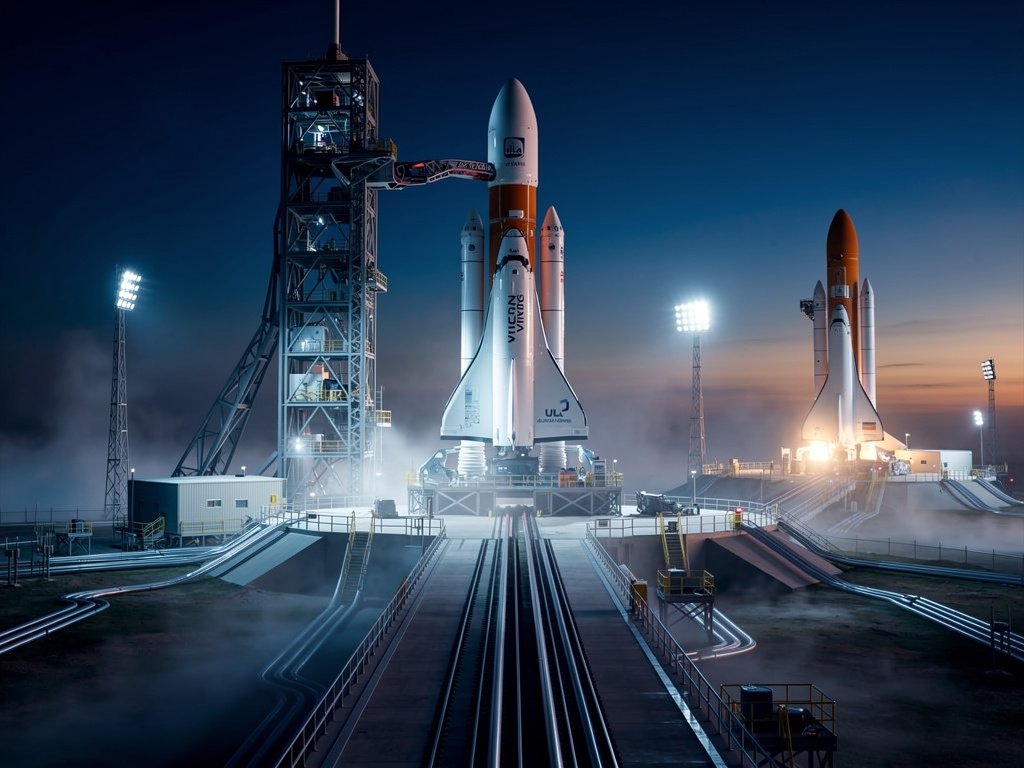
A Sudden Exit: Tory Bruno’s Departure Shakes Up America’s Rocket Powerhouse
In a move that has sent ripples through the aerospace sector, Tory Bruno, the longtime chief executive of United Launch Alliance (ULA), announced his resignation on December 22, 2025, after nearly 12 years at the helm. The joint venture between Boeing and Lockheed Martin, which has long been a cornerstone of U.S. space launches, confirmed the departure in a statement, naming Chief Operating Officer John Elbon as interim CEO. Bruno’s exit comes at a pivotal moment for ULA, as it navigates intense rivalry from upstarts like SpaceX and grapples with the demands of a rapidly evolving space economy.
Details surrounding the resignation remain sparse, with ULA citing Bruno’s pursuit of “another opportunity” as the reason. Industry observers, however, are buzzing with speculation about underlying factors, including the company’s recent struggles to maintain its market position amid cost pressures and technological shifts. Bruno, who took over in 2014, was instrumental in steering ULA through a period of transformation, but his abrupt departure raises questions about the venture’s strategic direction.
This isn’t just a personnel change; it’s a signal of broader shifts in an industry where government contracts and commercial ambitions increasingly collide. ULA, formed in 2006 to consolidate Boeing and Lockheed’s launch capabilities, has historically dominated national security payloads for the U.S. government. Yet, the rise of reusable rockets pioneered by Elon Musk’s SpaceX has forced traditional players like ULA to adapt or risk obsolescence.
Bruno’s Legacy: Revamping a Legacy Player Amid Fierce Competition
Under Bruno’s leadership, ULA launched ambitious projects like the Vulcan Centaur rocket, designed to replace aging Atlas and Delta vehicles with a more cost-effective alternative. The Vulcan’s first certification flight in early 2024 marked a milestone, but delays and certification hurdles have tested the company’s resilience. According to reports from TechCrunch, Bruno’s tenure was defined by efforts to keep pace with SpaceX, which has undercut prices and captured a growing share of both government and private launches.
Bruno, a veteran engineer with a background at Lockheed Martin, brought a blend of technical expertise and social media savvy to the role. He often engaged directly with enthusiasts on platforms like X, formerly Twitter, demystifying rocket science and building ULA’s public profile. Posts on X following the announcement reflect a mix of surprise and admiration, with users praising his transparency while questioning the timing amid ongoing Vulcan deployments.
Financially, ULA has faced headwinds. The company’s reliance on high-margin government contracts has been challenged by SpaceX’s lower-cost Falcon 9, leading to a loss of market dominance. In 2024, ULA secured key deals for national security launches, but the pressure to innovate persisted. Bruno oversaw partnerships, such as with Blue Origin for engine supplies, aiming to bolster competitiveness.
The Competitive Arena: SpaceX’s Shadow and Emerging Challengers
SpaceX’s dominance is undeniable, with its Starship program pushing boundaries in reusability and payload capacity. ULA, by contrast, has bet on the Vulcan’s methane-fueled design for efficiency, but production ramps have been slower than anticipated. A Reuters article notes that Bruno’s resignation follows a year of intensified scrutiny, as ULA fights to retain its role in NASA’s Artemis program and Pentagon missions.
Beyond SpaceX, rivals like Blue Origin and Rocket Lab are gaining ground, diversifying the field of launch providers. ULA’s joint venture structure, while providing stability through its parent companies’ resources, has sometimes hindered agility. Insiders suggest that Bruno’s departure could stem from internal disagreements over strategy, though no official confirmation exists.
The interim appointment of John Elbon, a ULA veteran since 2012, signals continuity. Elbon, previously overseeing operations, has deep experience in engineering and program management. His leadership will be crucial as ULA prepares for upcoming Vulcan missions, including those supporting Amazon’s Kuiper satellite constellation.
Internal Dynamics: Talent Retention and Operational Challenges
Staff retention has emerged as a critical issue for ULA. Earlier in 2025, reports highlighted poaching by competitors, with engineers drawn to SpaceX’s innovative culture and Blue Origin’s ambitious projects. An August 2024 post by space journalist Eric Berger on X underscored these struggles, noting ULA’s efforts to stem the talent drain amid a competitive job market.
Bruno’s social media presence helped humanize the company, but it couldn’t fully counter the allure of faster-paced rivals. ULA’s Colorado-based operations, while strategically located near key facilities, face geographical competition from SpaceX’s Texas and California hubs. The resignation might accelerate efforts to refresh the workforce and culture.
Operationally, ULA has achieved a near-perfect launch success rate, with over 150 missions under Bruno’s watch. Yet, the transition to Vulcan represents a high-stakes gamble. Delays in certification for crewed missions have drawn criticism, and the company must now demonstrate reliability without Bruno’s guiding hand.
Strategic Implications: ULA’s Path Forward in a Government-Dependent Market
The aerospace sector is watching closely, as ULA’s stability affects national security and commercial space endeavors. A piece from SpaceNews describes Bruno’s exit as the end of an era, emphasizing his role in navigating the shift from legacy rockets to next-generation systems. With the U.S. Space Force increasingly favoring diverse providers, ULA must prove its value proposition.
Parent companies Boeing and Lockheed Martin have issued supportive statements, but underlying tensions may exist. Boeing’s ongoing crises in aviation could divert resources, while Lockheed focuses on defense priorities. The joint venture model, once a strength, now requires reevaluation in an era of rapid innovation.
Looking ahead, Elbon’s interim tenure could last months, with a permanent successor likely drawn from industry ranks. Potential candidates might include executives with experience in disruptive technologies, signaling a pivot toward greater agility.
Market Reactions and Broader Industry Ripples
Financial markets reacted modestly to the news, with Boeing and Lockheed shares showing minimal fluctuations. However, analysts at Bloomberg suggest that prolonged uncertainty could impact investor confidence in space-related ventures. The resignation coincides with a surge in private investment in space tech, projected to exceed $10 billion in 2025.
On X, sentiment varies: some users lament the loss of Bruno’s engaging style, while others speculate on his next move, possibly to a startup or advisory role. Posts from aerospace enthusiasts highlight concerns about ULA’s ability to compete without his vision.
The timing also aligns with geopolitical tensions, as reliable launch capabilities are vital for satellite deployments amid global conflicts. ULA’s role in deploying intelligence assets underscores its strategic importance.
Innovation Pressures: Vulcan’s Role in ULA’s Revival
Central to ULA’s future is the Vulcan rocket, which Bruno championed as a bridge to sustainability. With its BE-4 engines from Blue Origin, Vulcan aims for reusability elements, though not to SpaceX’s extent. Recent test flights have been successful, but scaling production remains a hurdle.
Industry experts predict that under new leadership, ULA might accelerate partnerships or even consider acquisitions to bolster its tech portfolio. The company’s Decatur, Alabama, manufacturing facility is ramping up, but supply chain issues persist.
Bruno’s resignation might also influence policy discussions in Washington, where lawmakers debate funding for domestic launch providers to counter foreign competition, particularly from China.
Leadership Transition: Challenges and Opportunities Ahead
Elbon steps into a role demanding quick decisions on key contracts. Upcoming bids for Space Force launches will test his mettle. Insiders referenced in a 9News report emphasize his operational expertise as a stabilizing force.
For Bruno, the “another opportunity” could involve consulting or joining a rival firm, given his stature. His departure leaves a void in advocacy for traditional aerospace amid the new space boom.
As ULA charts its course, the industry awaits signs of renewal. The venture’s ability to innovate while leveraging its heritage will determine its relevance in an increasingly crowded field.
Reflections on a Transformative Tenure
Bruno’s 12 years transformed ULA from a duopoly player to a contender in the reusable era. Challenges like the 2014 Russian engine embargo forced diversification, a feat he navigated adeptly.
Yet, metrics show SpaceX launching far more frequently, highlighting the gap. ULA’s focus on precision over volume has merits, but market dynamics demand evolution.
The aerospace community, from engineers to policymakers, will monitor how this transition unfolds, potentially reshaping alliances and strategies.
Future Horizons: Adapting to New Realities
With Elbon at the interim helm, ULA must prioritize Vulcan’s full operational status. Success here could restore confidence and attract talent.
Broader trends, including satellite mega-constellations, offer growth avenues. ULA’s partnerships with Amazon position it well, provided execution is flawless.
Ultimately, Bruno’s exit underscores the relentless pace of change in space exploration, where leadership must balance tradition with bold innovation. As the sector advances, ULA’s response will be a bellwether for legacy firms worldwide.


 WebProNews is an iEntry Publication