
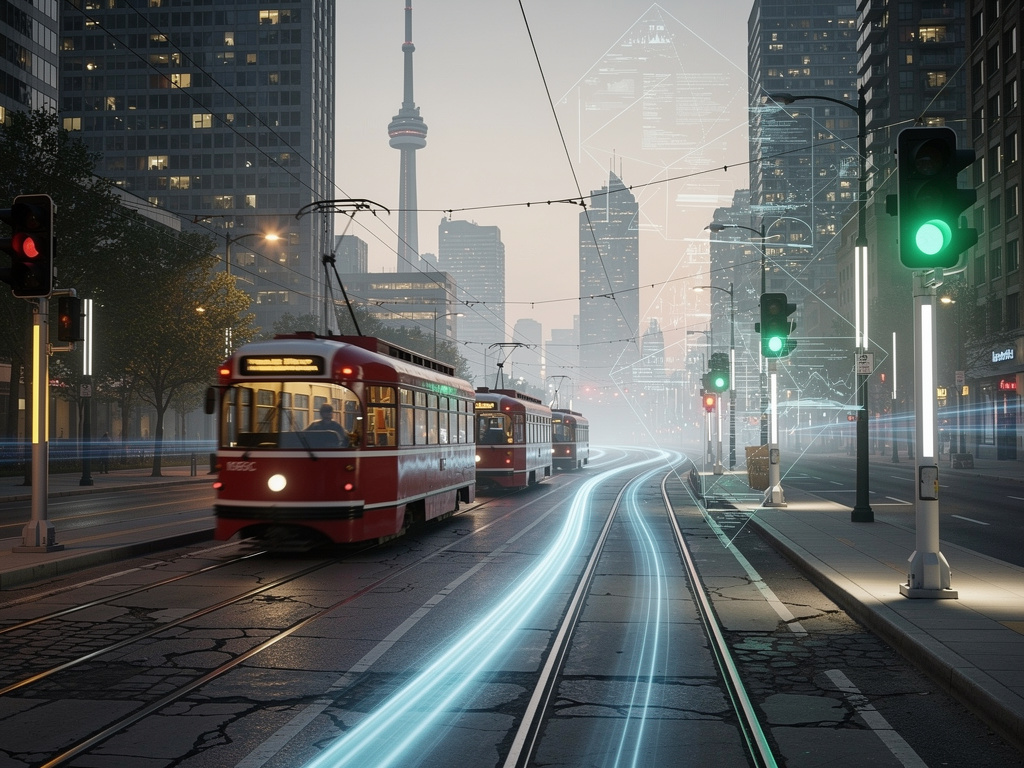
Footsteps Faster Than Steel: Unraveling Toronto’s Transit Turmoil Through a Runner’s Rebellion
In the bustling streets of Toronto, where streetcars have long been a symbol of the city’s public transportation heritage, a 32-year-old resident named Mac Bauer has turned heads—and sparked debates—by literally outrunning them. What began as a personal challenge has evolved into a potent form of activism, highlighting deep-seated issues in the Toronto Transit Commission (TTC) network. Bauer’s races against these hulking vehicles, often weighing over 100,000 pounds and capable of speeds up to 45 mph, underscore a system plagued by delays, congestion, and outdated infrastructure. His exploits, captured in viral videos, have not only entertained but also ignited conversations about signal priority, traffic management, and the future of urban mobility in Canada’s largest city.
Bauer’s campaign gained international attention when he repeatedly bested streetcars on key routes like Spadina, Bathurst, and King Street. As reported in a recent article from The Guardian, Bauer quipped, “I don’t like winning,” emphasizing that his victories are bittersweet indicators of systemic failures. These races aren’t mere stunts; they expose how streetcars, meant to efficiently ferry commuters, are frequently bogged down by mixed traffic, inadequate signal systems, and a lack of dedicated lanes. Industry experts note that Toronto’s streetcar system, one of the oldest in North America, has struggled to adapt to modern demands, with average speeds often dipping below 10 mph in congested areas.
The broader context reveals a transit network under strain. Ridership has yet to recover to pre-pandemic levels, hovering below 2019 figures despite fare freezes and service expansions. According to data cited in a piece from Global News, the TTC’s efforts, including the opening of new lines, have fallen short of projections, leaving commuters frustrated and alternatives like walking or cycling increasingly appealing. Bauer’s actions resonate with a public weary of unreliable service, where a human on foot can outpace multimillion-dollar machinery.
The Roots of Delay: Infrastructure and Policy Shortfalls
Delving deeper, the sluggishness of Toronto’s streetcars stems from a confluence of historical and contemporary factors. The system, dating back to the 19th century, relies on tracks embedded in roadways shared with cars, bikes, and pedestrians. This setup, while charming in theory, leads to frequent stops due to traffic lights, turning vehicles, and blockages. A commentary in The Globe and Mail describes the recently opened Finch West Light Rail Transit (LRT) as a “fiasco,” plagued by slow speeds and integration issues that mirror problems in the streetcar fleet. The article points to government failures at multiple levels, from provincial funding cuts to municipal indecision, resulting in projects that underdeliver.
Bauer’s most notable feat came against the new Finch LRT, where he outran the line by 18 minutes over a several-kilometer stretch. As detailed in a report from CBC News, this race highlighted how even brand-new infrastructure suffers from suboptimal design, such as intersections without transit priority signals. These signals, which could allow streetcars and LRTs to proceed ahead of other traffic, are inconsistently implemented, leading to unnecessary halts that compound delays. Transit advocates argue that without bold reforms, such as dedicated rights-of-way, the system will continue to lag behind peers in cities like Vancouver or even European models in Zurich.
Public sentiment, as gleaned from recent posts on X (formerly Twitter), reflects widespread frustration. Users frequently lament streetcar delays, with one noting that the network’s issues stem from a reluctance to modernize beyond 1950s-era operations. Another post highlighted the irony of an oversupply of streetcars due to construction-related substitutions, yet persistent service gaps. These online discussions underscore a growing call for accountability, aligning with Bauer’s activism to push for change.
Activism on the Move: Bauer’s Strategy and Impact
Bauer’s approach is methodical: he selects high-traffic routes, times his runs against streetcar schedules, and documents everything for social media. This has amplified his message far beyond Toronto, drawing comparisons to historical protests like the “bus boycotts” but adapted to a digital age. In an analysis shared on Slashdot, readers debated the technical merits, with some pointing out that streetcars’ top speeds are theoretical, hampered by real-world constraints like pedestrian crossings and vehicle interference. The discussion emphasized how Bauer’s wins aren’t about superhuman speed but about exposing inefficiencies that cost commuters time and the city productivity.
The ripple effects are evident in policy shifts. Following complaints about the Finch LRT’s pace, Toronto city council approved measures to tweak traffic signals for better transit flow, as covered in another CBC News article. This includes prioritizing LRTs and streetcars over left-turning cars at intersections, a direct response to public outcry amplified by figures like Bauer. Moreover, the appointment of a “traffic czar” in early 2026, reported in a fresh CBC News update, signals a concerted effort to tackle congestion holistically, with Andrew Posluns tasked with coordinating capital projects to alleviate bottlenecks.
Industry insiders view this as a turning point. Transit consultants, speaking anonymously, suggest that Bauer’s stunts have made abstract concepts like “signal priority” household terms, pressuring officials to act. Posts on X from transit enthusiasts echo this, with calls for separated lanes and uninterrupted service between stops, drawing parallels to successful above-ground systems elsewhere that avoid the costs of underground construction.
Economic Ripples: The Cost of Inefficiency
Beyond the spectacle, the economic implications are profound. Toronto’s transit woes contribute to lost productivity, with commuters spending excessive time in transit, deterring economic recovery in a post-pandemic era. A report referenced in The Globe and Mail estimates that delays on lines like the Finch LRT alone could cost millions in wasted hours annually. This inefficiency exacerbates broader urban challenges, including housing affordability and workforce mobility, as workers opt for remote options or relocate to suburbs with better transport links.
Comparatively, other cities have addressed similar issues more effectively. For instance, Calgary’s CTrain system benefits from grade-separated tracks, achieving higher speeds and reliability. In Toronto, however, political wrangling has stalled progress; the Transit City plan, intended to expand light rail affordably, was diluted by budget constraints, as noted in expert commentary on X. Bauer’s races serve as a stark reminder that without investment in priority measures, the system risks obsolescence.
Furthermore, ridership data paints a grim picture. Despite initiatives like fare freezes and new lines, usage remains below expectations, per Global News. This stagnation affects funding cycles, creating a vicious loop where low ridership justifies underinvestment, perpetuating the cycle of decline. Bauer’s activism, by humanizing these statistics, has mobilized public support for reforms that could break this pattern.
Pathways to Reform: Emerging Solutions and Challenges
Looking ahead, potential fixes abound, but implementation hurdles remain. Advocates push for bus rapid transit conversions on routes like Dundas, using standard buses to bypass streetcar pitfalls, as speculated in X discussions. The TTC’s own plans include ramping up service and exploring 24-hour operations to utilize excess vehicles, though construction disruptions continue to hamper efforts.
Recent web searches reveal ongoing debates, with articles from TorontoToday.ca highlighting council’s moves to grant streetcars precedence at lights. Yet, critics argue these are Band-Aid solutions; true transformation requires provincial backing for expansive projects, free from the budget dilutions that plagued past initiatives.
Bauer’s influence extends to cultural shifts, inspiring similar challenges elsewhere and fostering a dialogue on sustainable urban planning. As one X post poignantly stated, the key is uninterrupted, separated transit that delivers subway-like efficiency without the excavation costs. His “racing activism,” as The Guardian termed it, may well catalyze the changes Toronto desperately needs.
Voices from the Ground: Stakeholder Perspectives
Interviews with transit operators reveal internal frustrations. Drivers often cite unpredictable traffic as the primary culprit, with one anonymous source lamenting the lack of enforcement against illegal parking that blocks tracks. This ground-level view aligns with Bauer’s critiques, emphasizing that technology alone—such as advanced signaling—won’t suffice without behavioral and regulatory changes.
Community groups, meanwhile, rally for equity, noting that delays disproportionately affect lower-income neighborhoods reliant on public transport. Posts on X from users in areas like Scarborough highlight how sluggish service exacerbates social divides, turning commutes into endurance tests.
Policymakers, under pressure, are responding. The new traffic czar’s role, as per CBC News, includes strategic coordination to integrate transit with other infrastructure, potentially unlocking federal funds for upgrades. Yet, skepticism persists; historical precedents, like the watered-down GO expansion plans mentioned in expert analyses, suggest that ambition often yields to fiscal caution.
Toward a Swift Future: Lessons from Toronto’s Trials
Ultimately, Bauer’s foot-powered protests illuminate a path forward. By outpacing streetcars, he has not only exposed flaws but also galvanized a movement for reform. Industry observers predict that sustained advocacy could lead to dedicated corridors, enhanced signaling, and integrated multimodal systems, drawing from successful models in peer cities.
The economic case is compelling: efficient transit boosts productivity, reduces emissions, and enhances livability. As ridership sputters, per Global News, embracing innovations like priority lanes could reverse the trend, making Toronto’s network a model rather than a cautionary tale.
In reflecting on these developments, it’s clear that one man’s runs have sprinted ahead of bureaucratic inertia, challenging the city to keep pace. Whether Toronto rises to the occasion will define its mobility future, with Bauer’s legacy already etched in the annals of urban activism.


 WebProNews is an iEntry Publication