
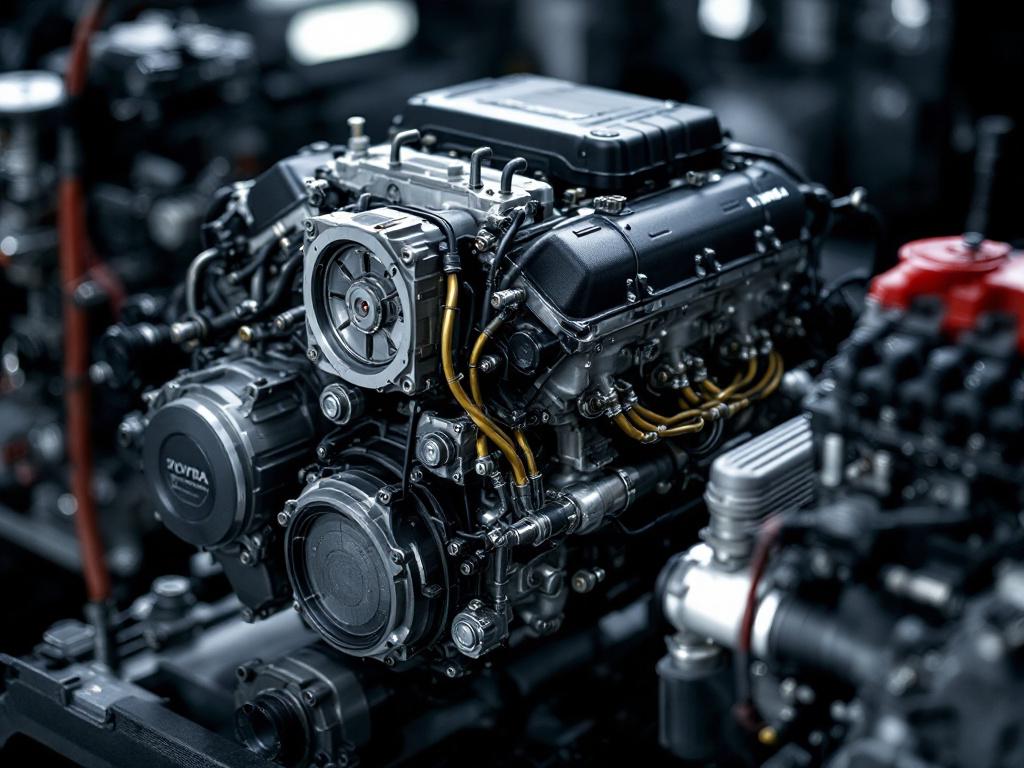
Enduring Power: The Japanese Four-Cylinder Engines Defying Time in 2025
In the fast-paced world of automotive engineering, where innovation often eclipses tradition, a select group of Japanese four-cylinder engines continues to thrive, powering vehicles well into 2025. These powerplants, honed over decades, embody a blend of reliability, efficiency, and adaptability that keeps them relevant amid the rise of electrification and turbocharging. Honda’s K24 engine, for instance, has been a cornerstone since its debut in 2001, and remarkably, it remains in production nearly 25 years later, as detailed in a recent analysis by TopSpeed. This enduring design underscores how Japanese manufacturers prioritize longevity, a trait that resonates deeply with engineers and fleet operators seeking minimal downtime.
The K24’s story begins with its introduction in the 2002 Honda CR-V, where it delivered a balance of power and fuel economy that set new benchmarks. Over the years, Honda has refined the engine through variants like the K24A1 and K24Z7, incorporating technologies such as variable valve timing (VTEC) to enhance performance without sacrificing durability. By 2025, the engine powers models including the Civic and Accord in various global markets, with production lines still active in facilities across Japan and North America. Industry insiders note that its modular architecture allows for easy updates, such as integration with hybrid systems, ensuring it meets modern emissions standards while maintaining a reputation for exceeding 200,000 miles with routine maintenance.
Beyond Honda, Toyota’s 2ZR-FE series exemplifies similar staying power. Introduced in the late 2000s, this 1.8-liter four-cylinder has evolved to include dual VVT-i for improved efficiency, and it’s still fitted in vehicles like the Corolla in select regions. Recent updates, as reported in automotive forums and engineering journals, highlight Toyota’s commitment to incremental improvements, such as enhanced piston rings to reduce oil consumption, making it a favorite for high-mileage applications in taxis and delivery fleets.
Legacy Designs in Modern Assembly Lines
Mitsubishi’s 4G63 engine, another icon, traces its roots to the 1980s but continues to influence production models through licensed variants and aftermarket support. Though the original turbocharged versions powered legends like the Lancer Evolution, its naturally aspirated forms persist in industrial applications and emerging markets. A profile by CarBuzz emphasizes its robust iron block and ability to handle high boost levels, attributes that keep it alive in 2025 through partnerships with Chinese manufacturers adapting it for budget SUVs.
Shifting focus to Mazda, the company’s Skyactiv-G engines, particularly the 2.0-liter four-cylinder, have been in production since 2011 and show no signs of retirement. These units feature high compression ratios—up to 14:1 in some iterations—for diesel-like efficiency in gasoline form. Mazda’s recent announcements, covered in industry updates, reveal plans to integrate mild-hybrid tech into these engines for 2025 models like the Mazda3, extending their lifecycle amid stricter global fuel economy regulations. Engineers praise the design’s lightweight construction and direct injection system, which minimize wear on critical components.
Notably, posts on X (formerly Twitter) from automotive enthusiasts and analysts in late 2025 highlight buzz around Toyota’s upcoming high-output four-cylinder, rumored to deliver 400 horsepower for performance variants like the GR Corolla. While not yet confirmed, such developments suggest Japanese firms are not just preserving old designs but evolving them to compete with electric alternatives, blending heritage with cutting-edge forced induction.
Innovation Meets Reliability in Evolving Markets
Suzuki’s K-series engines, smaller siblings to Honda’s offering, also merit attention for their persistence. The 1.0-liter K10C, turbocharged for models like the Swift Sport, has been refined since 2016 and remains a production staple in 2025, particularly in Europe and Asia where compact efficiency is prized. According to a ranking by SpeedMe, these engines score high for reliability, often outlasting competitors in endurance tests conducted by independent labs.
In the realm of motorcycles, where four-cylinder engines face different demands, Kawasaki and Honda are pushing boundaries. X posts from early 2025 speculate on Kawasaki’s potential Z400RS, a 400cc inline-four that could revive the high-revving spirit of classic Japanese bikes. This aligns with Honda’s rumored revival of a 400cc four-cylinder for models like the CB400, as teased in Japanese media outlets, signaling a niche but vibrant segment where reliability translates to rider confidence on long tours.
Broader market trends reveal why these engines endure. With supply chain disruptions and raw material costs rising, manufacturers like Toyota and Honda opt for proven designs to stabilize production. A forecast from Coherent Market Insights projects the four-cylinder engine sector to grow to $41.11 billion by 2032, driven by demand in emerging economies where electrification lags behind.
Engineering Feats and Future Adaptations
Delving deeper into technical merits, the Honda K24’s dual overhead camshaft setup and aluminum block contribute to its low-friction operation, reducing heat buildup during extended use. Mechanics often cite its timing chain durability over belts, a design choice that minimizes failure points. Referencing the earlier TopSpeed analysis, variants like the K24W in earth-moving equipment demonstrate its versatility beyond passenger cars, adapting to off-road stresses with reinforced internals.
Toyota’s venerable 22R series, though phased out in some regions, persists in modified forms for industrial generators and marine applications. Its simple carbureted design, as lauded in historical reviews, offers repairability in remote areas, a boon for global operations. Meanwhile, Volvo’s Redblock, influenced by Japanese engineering principles through collaborations, shares similar traits but is often overshadowed; however, cross-pollination with brands like Mitsubishi highlights shared innovations in four-cylinder tech.
Recent news from Union Rayo discusses Mazda’s breakthrough in eco-friendly four-cylinders, potentially revolutionizing emissions with advanced combustion chambers. This engine, tested secretly, promises to cut CO2 output while maintaining the high-revving performance that defines Japanese engineering ethos.
Sustaining Dominance Amid Global Shifts
The Mitsubishi 4G63’s legacy extends to tuning communities, where its forged internals support massive power upgrades. CarBuzz notes that even in 2025, aftermarket firms produce parts for it, ensuring longevity for enthusiasts restoring Evo models. This grassroots support feeds back into production decisions, as manufacturers monitor demand for spare components.
Honda’s strategy with the K24 involves global sourcing, with engines assembled in Ohio for North American markets, blending Japanese precision with localized efficiency. Industry reports indicate that this approach has kept costs down, allowing the engine to undercut rivals in total ownership expenses. X discussions in December 2025 echo this, with users praising its role in hybrid setups for the latest CR-V, bridging internal combustion with electric futures.
Looking at broader implications, these engines’ persistence challenges the narrative of rapid obsolescence. In sectors like agriculture and logistics, where downtime equals lost revenue, the reliability of Japanese four-cylinders—often clocking over 300,000 miles—provides a competitive edge. A piece from Goodwood Road & Racing lists several Japanese examples among history’s best, citing their responsive nature and epic soundscapes in high-performance guises.
Pushing Boundaries with Hybrid Integrations
As 2025 unfolds, Toyota’s i-FORCE MAX hybrid system, pairing four-cylinders with electric motors, exemplifies adaptation. The 2.4-liter turbo in the new 4Runner, as announced in X posts from April 2024 but updated for 2025, delivers 326 horsepower while achieving impressive fuel economy. This hybrid evolution ensures four-cylinders remain viable against pure EVs, especially in regions with limited charging infrastructure.
Mazda’s commitment to rotary-inspired tech influences its four-cylinder designs, incorporating elements like variable compression for optimal efficiency. News from News Ongoing reveals testing of a promising unit that could set new standards for thermal efficiency, potentially exceeding 40% in lab conditions.
In motorcycle realms, the speculated Honda CB400 revival, fueled by X buzz from late 2023 and into 2025, points to a resurgence of mid-size fours. These engines, with their smooth power delivery, appeal to riders seeking reliability over raw power, much like their automotive counterparts.
Global Impact and Enduring Appeal
The five standout Japanese four-cylinders highlighted in a feature by Click Petroleo e Gas—including Toyota’s 3S-GE and Honda’s B-series—continue to surprise with their durability, often outlasting vehicles they’re installed in. This longevity fosters a secondary market for engine swaps, keeping production lines humming.
Fleet managers worldwide rely on these engines for their predictable maintenance schedules. In Australia, as per insights from Madman Motors, brands like Honda and Toyota dominate reliability rankings, with four-cylinders at the core.
Ultimately, as the automotive sector navigates toward sustainability, these Japanese four-cylinders stand as testaments to engineering excellence. Their ability to integrate with new technologies while retaining core strengths ensures they’ll power vehicles for years to come, a quiet revolution in an era of bold transformations.


 WebProNews is an iEntry Publication