
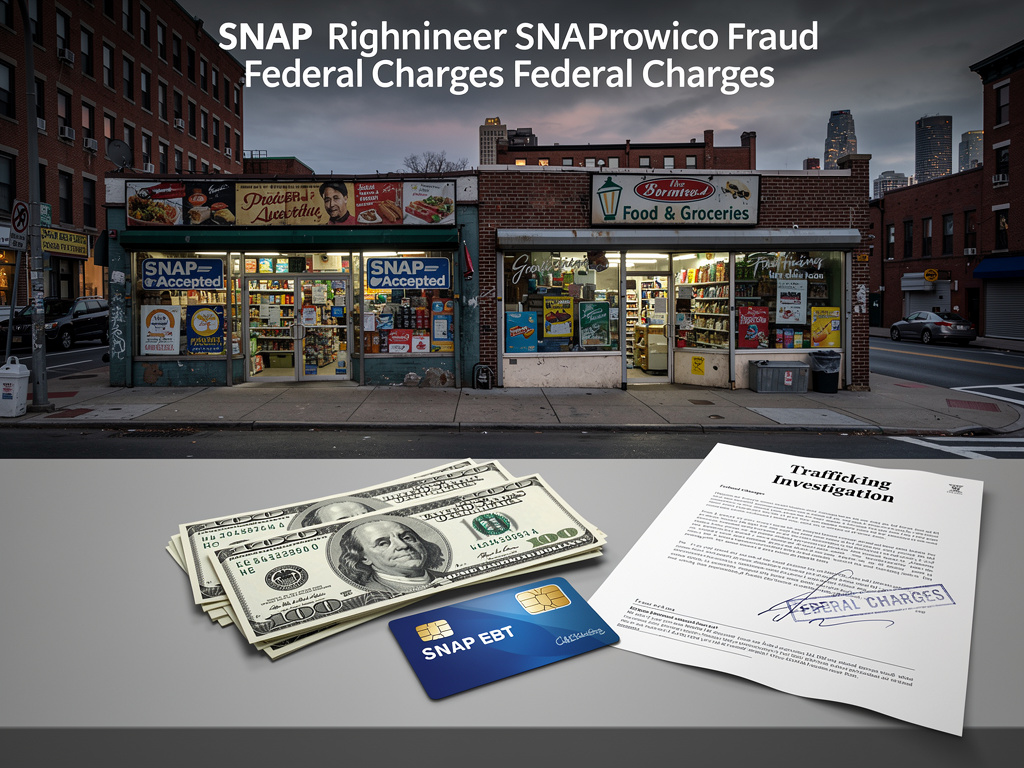
In a stark revelation shaking federal welfare oversight, two Mattapan convenience store owners face charges for allegedly trafficking nearly $7 million in Supplemental Nutrition Assistance Program benefits, swapping EBT cards for cash in operations run from spaces smaller than many apartments. U.S. Attorney Leah Foley confirmed the scheme at a December 17 press conference, declaring, “There is no plausible way SNAP-eligible food could have been purchased from these stores for this long.” The case spotlights vulnerabilities in the program’s monitoring of small retailers.
Antonio Bonheur, 74, owner of Jesula Variety Mart at 914 Morton St., and Saul Alisme, 21, of Saul Mache Mixe Market at 914A Morton St., were arrested that morning on one count each of SNAP fraud. Prosecutors allege the stores, spanning less than 150 square feet each with single registers and no shopping carts, processed up to $480,000 monthly in benefits—far exceeding legitimate peers. WCVB reported officials highlighting the improbability of such volumes from closet-sized outlets.
Over 20 months, Jesula Variety redeemed three to six times the $80,000 monthly average of a nearby legitimate supermarket, per WBUR News. The duo, both Haitian immigrants, allegedly built a criminal enterprise exchanging benefits for cash at steep discounts, diverting funds meant for groceries to illicit gains.
Mechanics of the Fraud Machine
Investigators detailed how the stores operated as fronts: customers surrendered EBT balances for 50 cents on the dollar or less, with owners pocketing reimbursements from the USDA. Foley noted transactions spiked impossibly high, like Jesula’s peaks rivaling big-box grocers. Hidden cameras and data analytics flagged anomalies, leading to raids seizing records and equipment.
The scheme echoes broader patterns. Posts on X from WallStreetApes amplified the bust, calling it proof against prior skepticism, citing the US attorney’s validation of “fake stores” designed solely for cash swaps. Federal complaints outline over $6.9 million trafficked since 2023, with Alisme’s store alone hitting $3.5 million.
Each defendant faces up to 20 years if convicted, plus fines. The USDA terminated both stores’ SNAP authorization immediately. Foley emphasized, “These defendants stole food from the mouths of those who needed it most.”
Scale Dwarfs Typical Retailers
Context underscores the outrage: a legitimate area supermarket processes $80,000 monthly, while these outpaced it routinely. ABC News quoted officials on the stores’ bare shelves and minimal stock, incompatible with claimed redemptions. Bonheur and Alisme allegedly coordinated, sharing addresses and exploiting lax initial vetting for EBT terminals.
Broader probes reveal SNAP trafficking costs $1 billion annually nationwide, per USDA estimates. This bust, dubbed a “criminal enterprise” by The Boston Globe, involved inter-agency teamwork from the USDA Inspector General, FBI, and IRS. Agents executed search warrants December 17, uncovering ledgers matching EBT data to cash payouts.
Defense attorneys entered not-guilty pleas; trial awaits. Prosecutors eye asset forfeiture, including vehicles and properties tied to proceeds.
Immigrant Ties Fuel National Debate
Both suspects hail from Haiti, igniting online discourse. X discussions, including WallStreetApes posts, link it to prior fraud rings involving migrants, though officials stress individual accountability. Boston Herald detailed the stores’ proximity, suggesting collusion.
SNAP’s retailer approval process requires stocking criteria, but small outlets often skirt scrutiny via self-certification. This case prompts calls for tighter audits, like real-time transaction caps or AI anomaly detection already piloted federally.
Victims abound: needy families lose benefit value, taxpayers foot reimbursements. USDA vows enhanced monitoring post-bust.
Precedents and Wider Cracks
Similar schemes plague urban areas. A $250 million Minnesota fraud by Somali operators involved ghost entities; luxury purchases followed. New York’s bodegas face probes for EBT cash-back, per X exposés. Hannity.com framed it as federal hammer on “brazen” trafficking.
Program integrity hinges on tech upgrades. USDA’s 2025 initiatives include blockchain tracking pilots, but critics decry delays. This Massachusetts takedown, yielding $7 million clawed back potentially, sets precedent for high-volume micro-stores.
Foley’s office signals more indictments, vowing to dismantle networks preying on aid systems.
Path Forward for Safeguards
Industry insiders watch for ripple effects: grocers brace for stricter compliance, fintech firms eye EBT terminal reforms. Congress eyes hearings, building on 2023 GAO reports flagging high-risk retailers.
For now, Mattapan residents decry eroded trust in corner stores once community staples. The bust reclaims millions, but exposes oversight gaps demanding urgent closure.


 WebProNews is an iEntry Publication