
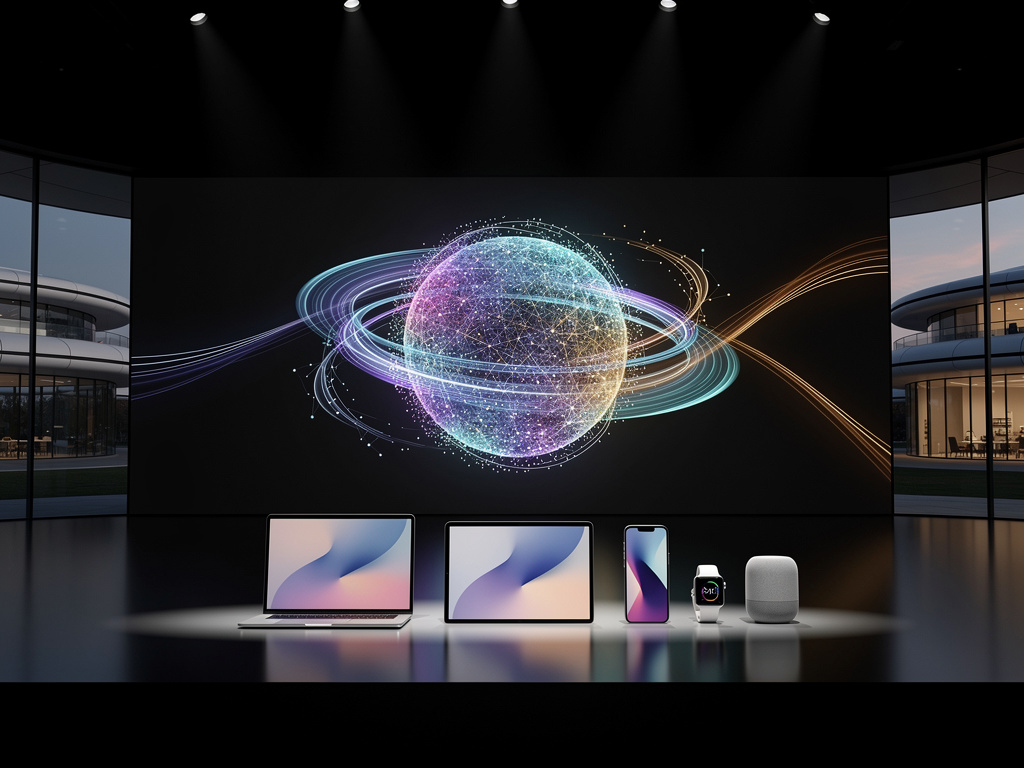
Tim Cook will step onto the stage at Apple Park on Monday morning for what is almost certain to be his last time opening the Worldwide Developers Conference as chief executive. The date is June 8, 2026. The stakes feel higher than they have in years.
After fifteen years at the helm, Cook has steered Apple to unprecedented financial success. Yet the company now confronts questions about whether its artificial intelligence efforts match the bold promises made in 2024. Monday’s keynote offers one final chance for Cook to shape that narrative before John Ternus takes over in September.
And the focus lands squarely on Siri. The voice assistant first appeared in 2011. Its latest promised transformation has slipped from earlier timelines. Now Apple intends to reveal a far more capable version powered in part by Google’s Gemini model. CNBC reported that this event represents Cook’s AI legacy moment. The question hanging over the proceedings is simple. Can Apple deliver the experience it pledged two years ago?
Expectations have built for months. Developers and analysts alike want to see real-time demonstrations of an assistant that understands personal context, handles complex multi-step requests across apps, and interacts with natural conversation. Previous versions often stumbled on basic commands. This time the bar sits much higher.
But Cook rarely indulges in theatrics. His keynotes favor calm precision over spectacle. He will likely open with brief remarks, thank the audience, then hand proceedings to specialists who walk through new software features. Still, the symbolism of this particular appearance lingers. It marks the close of an era that began when Steve Jobs handed him the reins in 2011.
Succession plans surfaced clearly in April. Apple named hardware engineering chief John Ternus as the next CEO, effective September 1. Ternus has overseen major product engineering for years. His promotion signals continuity in a company that prizes operational excellence. Yet the transition also raises fresh questions about creative direction and competitive agility in a market racing ahead on generative AI.
Apple Intelligence, the umbrella branding for the company’s AI features, launched with measured caution. On-device processing and privacy controls formed its foundation. Cloud components arrived under strict privacy safeguards. Early releases delivered writing tools, image generation, and notification summaries. Many users found them useful but hardly groundbreaking. The real test comes now.
Recent coverage points to deeper integration in iOS 27, macOS 27, and other platforms. Photos could gain powerful editing capabilities. Siri might finally maintain awareness of what appears on screen and what the user has done before. Partnerships with external models like Gemini, along with options for ChatGPT and Claude, suggest Apple prefers orchestration over building every foundation model itself.
CNET noted that WWDC 2026 will be Cook’s last developers’ conference as CEO. The event runs from June 8 through June 12. Keynote streams begin at 10 a.m. Pacific on Apple’s site, YouTube, and developer apps. Expectations center on AI news, especially the revamped Siri.
Pressure comes from multiple directions. OpenAI, Google, and Anthropic push aggressive consumer features. Apple’s deliberate pace once looked like prudent design. Now some investors wonder if caution has become hesitation. A strong showing on Monday could quiet those doubts. A lukewarm preview might invite more scrutiny.
Yet Apple holds advantages few competitors match. Its installed base exceeds two billion active devices. Tight hardware-software integration allows optimizations that cloud-only rivals cannot replicate. Privacy remains a stated priority that resonates with many customers. The company also generates enormous cash flow to fund research and acquisitions.
Cook’s record speaks for itself. Under his leadership Apple launched the Apple Watch, grew services into a major business, and expanded into new categories while maintaining margins that competitors envy. Market capitalization climbed from roughly $350 billion at the start of his tenure to well over $3 trillion at peaks. He emphasized supply chain mastery, retail experience, and corporate values on environment and inclusion.
Still, the Jobs shadow never fully lifts. Early Cook years focused on execution. Later periods saw greater ambition in health, augmented reality, and now intelligence. The Vision Pro headset arrived with fanfare but limited adoption so far. AI represents the next major bet.
Analysts have mixed views on timing. Some praise Apple for avoiding the hype cycle that plagued others. Others argue the firm lagged in recognizing how quickly language models would reshape expectations. Monday’s demonstrations will help settle that debate.
Developers attending in person or watching remotely will look past the CEO transition for concrete tools. New APIs, frameworks, and beta software releases traditionally follow the keynote. This year those assets must support sophisticated on-device inference, private cloud compute, and seamless model switching. The work required to make those systems reliable at scale is substantial.
Recent reports suggest Apple has made progress. TechRadar argued this could be one of Apple’s most important events in years. It highlighted the need for live demos rather than polished videos, a more visible role for Cook in his farewell, and concrete evidence that Siri can outperform current assistants on practical tasks.
Live capability demonstrations carry risk. Previous Apple events have occasionally shown glitches. With so much riding on perception, executives will rehearse extensively. The company’s history of tight control suggests the presentation will feel polished even if underlying technology remains preview grade.
Investors appear to be waiting. Apple shares have performed solidly but have not seen the explosive gains some AI-focused peers enjoyed. A compelling vision for intelligent experiences across iPhone, Mac, iPad, and Watch could change sentiment. Conversely, vague promises risk disappointment.
The broader industry context adds weight. Generative AI has moved from research labs into daily tools for coding, writing, and image creation. Consumers now expect their devices to anticipate needs and handle complex workflows. Apple’s bet on privacy-first, context-aware intelligence aligns with its brand. Execution will determine whether that bet pays off.
So what might success look like? A Siri that books travel, summarizes research papers, edits photos based on natural language, and maintains conversation across days without losing thread. Integration with existing apps rather than a standalone chatbot. Strong performance on private data without constant cloud calls. These features would build on Apple’s traditional strengths.
Critics point out that similar promises surfaced before. Delays to the full Siri overhaul have already shifted timelines. Internal labels of “beta” or “preview” for some capabilities suggest the company wants room to iterate. That caution makes sense given past voice assistant missteps. But it also fuels skepticism.
Cook has addressed AI publicly in measured terms. He describes it as a transformative technology that must respect user trust. His final keynote will likely echo those themes. Expect language around thoughtful innovation, human-centered design, and responsible deployment.
Behind the scenes, engineering teams have worked for years on foundational models, silicon optimizations for inference, and developer tools. The new chips in recent iPhones and Macs include dedicated neural engines that improve efficiency. Those advances matter. They allow complex tasks to run locally with minimal battery drain.
John Ternus will inherit both the opportunities and the unfinished business. His hardware background could prove useful as Apple considers how future devices might incorporate AI more deeply, perhaps in wearables or new form factors. For now the immediate task is proving the software vision.
Outside Cupertino, the technology world watches closely. Microsoft integrates OpenAI capabilities across its products. Google embeds Gemini throughout Android and its services. Amazon and others pursue their own paths. Apple’s differentiated approach will face direct comparison starting Monday.
The official WWDC site teases “All systems glow.” The tagline hints at optimism. Whether that glow translates into market leadership in AI experiences remains the central question.
Cook’s departure will not be abrupt. He stays involved as a board member or advisor in some capacity, according to typical transition patterns at the company. Yet the symbolic weight of his last opening keynote cannot be ignored. It closes a chapter that transformed Apple from a computer maker into the world’s most valuable company.
Monday’s event will blend nostalgia with forward momentum. Longtime observers may reflect on past keynotes where Cook introduced new Macs, celebrated App Store milestones, or unveiled health features. This time the message centers on intelligence. The hope is that Apple has caught the wave rather than watching it pass.
Developers ultimately decide much of the outcome. If the new tools excite them and the demonstrated capabilities impress, adoption will follow. If the preview feels incremental, enthusiasm may cool. The difference between those outcomes will shape Apple’s trajectory for years.
So the stage is set. The lights will come up at 10 a.m. Pacific. Tim Cook will say good morning one last time in that role. Then the real work of convincing the world begins. Apple has the resources, the talent, and the distribution. Now comes the proof.


 WebProNews is an iEntry Publication