
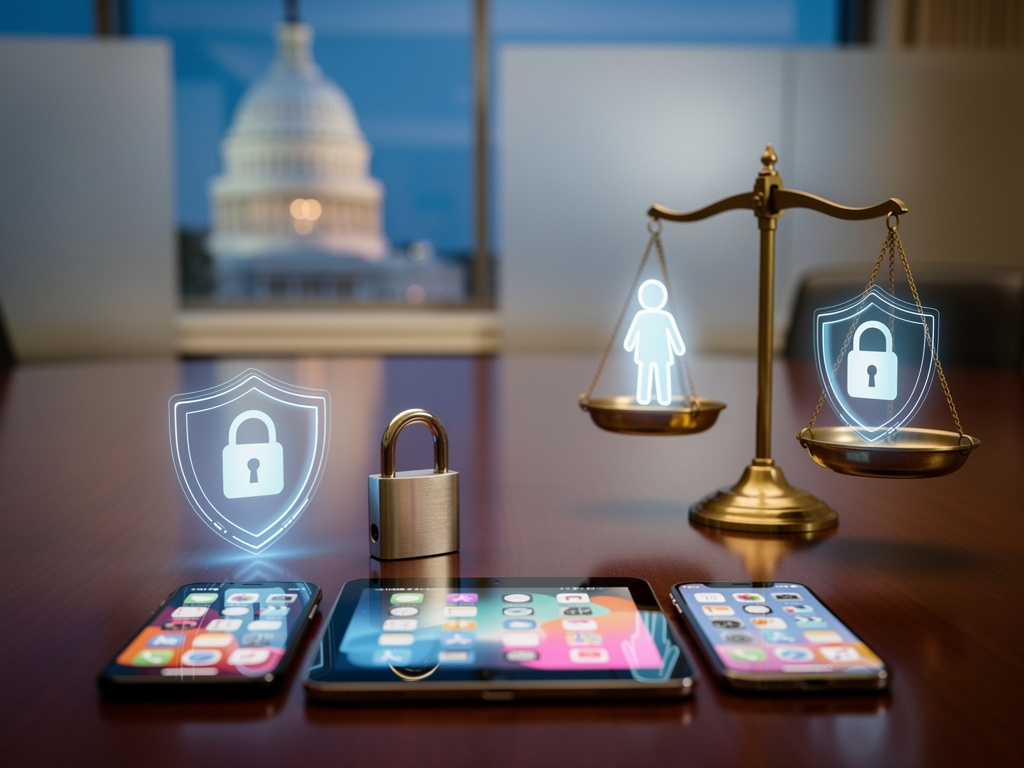
Inside Tim Cook’s Capitol Hill Gambit: Apple’s Fight Against Mandatory App Store Age Checks
Apple Inc.’s Chief Executive Tim Cook made a rare personal appearance in Washington, D.C., on December 10, 2025, to engage directly with lawmakers on a contentious piece of legislation aimed at enhancing child online safety. The visit centered on the proposed App Store Accountability Act, which seeks to impose strict age verification requirements on app store operators like Apple. According to reports from MacRumors, Cook met with members of the House Energy and Commerce Committee to argue against provisions that would mandate verifying users’ ages upon account creation and obtaining parental consent for app downloads by children under 16.
This move underscores Apple’s escalating efforts to influence policy amid growing scrutiny over digital platforms’ roles in protecting minors. The legislation, if passed, would require “commercially available methods” for age verification, a stipulation that Apple contends could compromise user privacy and complicate its ecosystem. Cook’s intervention highlights the high stakes for the tech giant, as similar state-level bills have already prompted aggressive lobbying from the company.
Drawing from recent posts on X, sentiment among tech observers and policymakers reflects a mix of support for child protection measures and concerns over privacy implications. Users have noted Apple’s consistent pushback against such regulations, with some referencing earlier instances where Cook personally lobbied state officials. This federal-level engagement marks a escalation in Apple’s strategy to shape the regulatory environment surrounding its App Store.
The Privacy Versus Protection Debate
At the heart of the debate is a tension between safeguarding children from harmful content and preserving user privacy. Apple has long positioned itself as a champion of privacy, with features like App Tracking Transparency and on-device processing designed to minimize data collection. In his meeting, Cook reportedly advocated for an alternative approach that empowers parents with tools to monitor and control their children’s app usage without mandating widespread age verification, as detailed in a Bloomberg report.
Critics of the bill argue that requiring age authentication could lead to the collection of sensitive personal data, potentially exposing users to risks like data breaches. Apple has emphasized that its current system, including Family Sharing and parental controls, already provides robust protections without infringing on privacy. Lawmakers, however, are pushing for more stringent measures in response to rising concerns about children’s exposure to addictive apps, social media, and inappropriate content.
Posts on X from figures like Sen. Mike Lee highlight the bill’s intent to create a private right of action for parents, allowing them to hold companies accountable for failing to protect minors. This has sparked discussions online about the potential for increased litigation against tech firms, with some users praising the move as a necessary step to curb exploitation.
The App Store Accountability Act draws inspiration from state initiatives, such as Texas’s age verification requirements for app stores, which Apple has actively opposed. In May 2025, reports emerged of Cook calling the Texas governor to lobby against a similar bill, as noted in X posts from financial news accounts. This pattern suggests Apple’s proactive stance in preempting regulations that could disrupt its business model.
Apple’s Lobbying Playbook Unveiled
Cook’s trip to Capitol Hill is not an isolated incident but part of a broader lobbying playbook that Apple has refined over years of regulatory battles. The company has invested heavily in government relations, with expenditures on lobbying reaching record highs in recent quarters. According to insights from Punchbowl News, the meeting focused on potential smartphone regulations, with Cook discussing Apple’s preferred framework for child safety.
Industry insiders point out that Apple’s resistance stems from the App Store’s role as a key revenue driver, generating billions through commissions on app sales and in-app purchases. Mandating age verification could introduce friction in user onboarding, potentially reducing app downloads and engagement, especially among younger demographics. Moreover, it might force Apple to integrate third-party verification services, which could conflict with its closed ecosystem philosophy.
X posts from tech executives like Tim Sweeney of Epic Games have touched on related App Store policies, critiquing Apple’s control while acknowledging shifts toward more competitive practices under court orders. These discussions underscore the interconnected nature of antitrust concerns and child safety regulations, with Apple’s App Store often at the center of both.
Beyond privacy, Apple argues that the proposed legislation could inadvertently harm children by driving them to unregulated platforms or sideloading apps, bypassing official stores. This perspective was echoed in Cook’s pitch to lawmakers, where he promoted Apple’s existing tools as a balanced solution. Reports from 9to5Mac describe Cook’s efforts as an attempt to “halt” or “shift” the proposal, emphasizing parental responsibility over corporate mandates.
Legislative Context and Broader Implications
The App Store Accountability Act is part of a wave of child online safety bills gaining traction in Congress. Sponsored by figures like Rep. John James, the bill aims to treat digital app stores similarly to physical retailers that restrict sales of age-inappropriate items. An X post from Rep. James in early December 2025 reiterated this analogy, comparing app stores to corner stores selling tobacco or alcohol to minors.
This push comes amid heightened public awareness of online harms, fueled by reports of social media’s impact on youth mental health and exposure to explicit content. Lawmakers from both parties have rallied around the cause, with the House Energy and Commerce Committee scheduled to mark up related bills shortly after Cook’s visit. Bloomberg coverage notes that Apple’s alternative version of the bill would shift the burden to parents, aligning with the company’s user-centric ethos.
However, supporters of the Act contend that voluntary measures by tech companies have proven insufficient. They cite statistics from child advocacy groups showing alarming rates of minors accessing harmful apps without oversight. This has led to calls for federal intervention to standardize protections across platforms.
Apple’s stance also intersects with global regulatory trends. In the European Union, the Digital Services Act imposes similar obligations on large platforms, prompting Apple to adapt its App Store policies. Domestically, the company’s lobbying extends to antitrust issues, where it faces scrutiny from the Department of Justice over alleged monopolistic practices.
Stakeholder Reactions and Industry Ripple Effects
Reactions to Cook’s meeting have been mixed, with child safety advocates criticizing Apple for prioritizing profits over protection. Posts on X from vigilant online safety accounts express skepticism toward Apple’s privacy arguments, viewing them as a smokescreen to avoid accountability. Conversely, privacy experts applaud the company’s resistance, warning that mandatory age verification could set a precedent for broader surveillance.
For industry insiders, this episode reveals the delicate balance tech giants must strike in Washington. Apple’s direct involvement by its CEO signals the perceived threat level, potentially influencing other companies like Google, which operates the competing Play Store. If the bill advances, it could reshape app distribution models, forcing integrations with identity verification services and increasing operational costs.
Moreover, the debate highlights evolving consumer expectations. Parents increasingly demand better tools for digital parenting, while users value seamless experiences without excessive data sharing. Apple’s promotion of features like Screen Time and Ask to Buy positions it as responsive to these needs, but critics argue it’s not enough without enforceable standards.
Looking ahead, the outcome of this legislative push could define the future of online child safety in the U.S. If Apple’s lobbying succeeds in amending the bill, it might encourage a model where technology empowers users rather than mandates compliance. However, failure could lead to a more regulated environment, compelling Apple to overhaul its App Store operations.
Historical Parallels and Strategic Insights
Historically, Apple has navigated similar challenges, from antitrust suits to privacy showdowns with governments. Cook’s personal diplomacy echoes past efforts, such as his 2016 refusal to unlock iPhones for the FBI, framing Apple as a defender of user rights. This narrative continues in the current fight, with the company leveraging its brand to influence policy.
Strategic insights from analysts suggest that Apple’s approach involves not just opposition but proposing alternatives. In the D.C. meeting, Cook reportedly outlined how parental controls could be enhanced without age verification mandates, drawing from existing features that allow guardians to approve downloads remotely.
X discussions also reference broader digital ID systems, with some users linking the bill to global trends in age assurance technologies. This raises questions about interoperability and the potential for standardized verification methods across borders.
Ultimately, Cook’s Capitol Hill gambit reflects the intensifying intersection of technology, policy, and societal values. As lawmakers weigh the merits of the App Store Accountability Act, Apple’s influence could tip the scales toward a framework that balances innovation with responsibility.
Economic Stakes and Future Horizons
Economically, the implications for Apple are profound. The App Store ecosystem supports millions of developers and generates substantial revenue, with any regulatory hurdle potentially affecting growth. Insiders note that age verification could deter casual users, impacting metrics like user acquisition and retention.
Furthermore, this issue ties into Apple’s ongoing battles in courts and legislatures worldwide. Success in diluting the bill might bolster its position in related antitrust cases, where App Store policies are under fire.
As the committee markup approaches, all eyes are on how Cook’s intervention shapes the discourse. Whether it leads to a revised bill or galvanizes opposition, the episode underscores the pivotal role of executive leadership in navigating regulatory waters.
In the broader scheme, this confrontation may herald a new era of accountability for digital gatekeepers. Apple’s pushback, while self-interested, contributes to a vital debate on how best to protect the next generation in an increasingly connected world.


 WebProNews is an iEntry Publication