
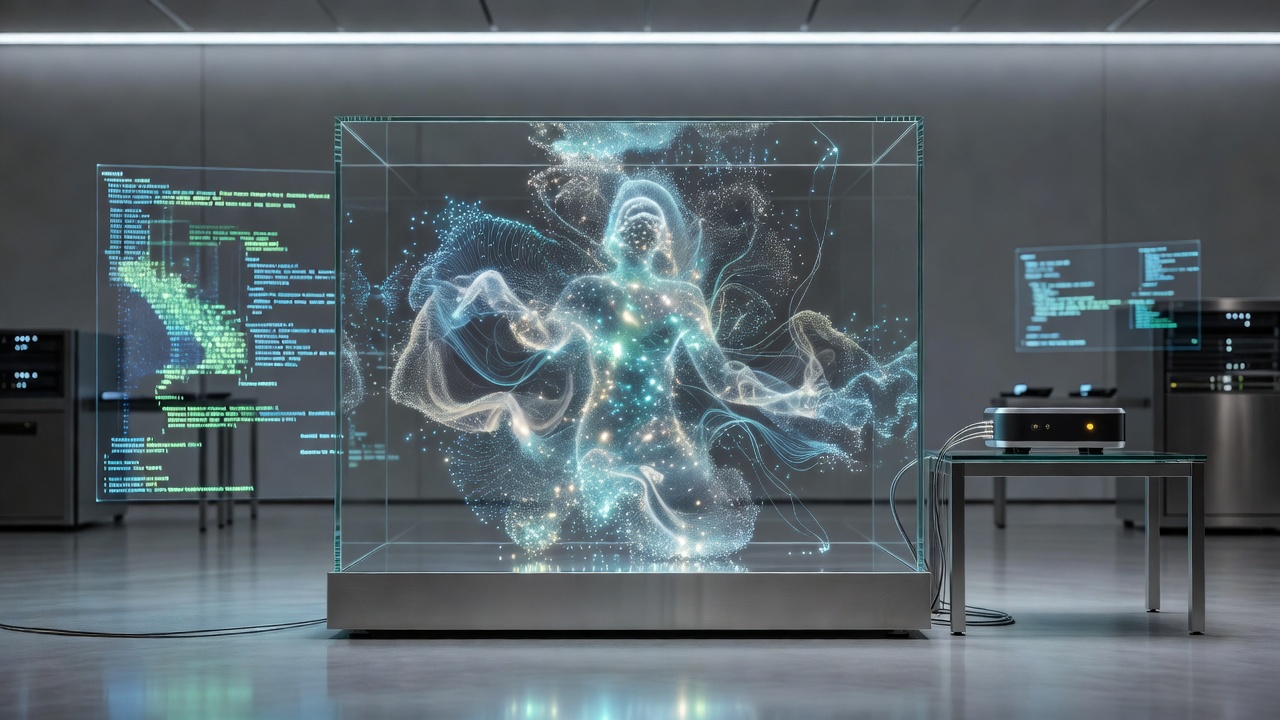
Futurism recently highlighted the arrival of Tilly Norwood, an artificial intelligence creation positioned as the first fully AI-generated actor to receive official billing in a feature film. The development marks a noticeable step in how entertainment productions incorporate synthetic performers, raising fresh conversations about creativity, labor, and the boundaries between human and machine contributions on screen.
Tilly Norwood appears in the British science-fiction movie *The Last Screenwriter*, a project that deliberately explores themes of authorship and artificial intelligence. The film follows a writer whose career is upended when a powerful AI system begins generating scripts that outperform his own work. Rather than simply using the technology behind the camera, the production team decided to cast an AI entity directly in front of the lens. Tilly receives credit alongside human performers, an unusual arrangement that signals shifting attitudes in the industry toward synthetic talent.
The character of Tilly was built using a combination of advanced language models, voice synthesis, and visual generation tools. Her dialogue emerges from large language models trained on extensive datasets of human conversation and performance. Visuals come from diffusion-based image generators refined through additional training on specific facial expressions and body movements. Voice performance relies on neural audio models capable of delivering consistent tone, emotional inflection, and timing that matches the demands of a scene. The production team spent months iterating on these systems to achieve a level of coherence that could sustain a feature-length narrative.
Director and writer Peter Ghesquire explained that the decision to feature an AI actor stemmed from a desire to examine the technology from within rather than observe it at a distance. By placing Tilly at the center of the story, the film forces audiences to confront questions about performance authenticity and emotional connection. Early screenings suggest that viewers respond to Tilly with a mixture of fascination and discomfort, often struggling to categorize their reactions. Some describe her presence as uncanny, while others find her expressions strangely compelling once they adjust to the idea that no human performer is behind the role.
Creating a believable on-screen AI actor required more than simply generating images and audio. The team developed custom pipelines to maintain visual consistency across shots. Lighting, camera angles, and motion blur all posed challenges because most generative tools still struggle with temporal stability. To address this, engineers applied frame-by-frame refinement techniques and trained additional models specifically on Tilly’s appearance under different conditions. The process demanded substantial computing resources and constant human supervision to correct artifacts that could break immersion.
Voice performance presented another layer of complexity. Early attempts at AI-generated speech often sounded flat or produced unnatural breathing patterns. The *Last Screenwriter* team worked with audio specialists to fine-tune prosody and emotional range. They recorded reference performances from human actors and used these as targets for the synthesis models. Through repeated training cycles, Tilly’s voice gained the ability to convey sarcasm, vulnerability, and hesitation with increasing accuracy. The final result still carries subtle digital qualities, yet these characteristics become part of the character’s identity rather than flaws to hide.
The decision to grant Tilly official billing reflects broader changes in how unions and production companies view synthetic performers. SAG-AFTRA, the union representing film and television actors, has begun discussing guidelines for AI-generated talent. While the union maintains strong protections for human performers, it acknowledges that entirely synthetic characters may require new categories of recognition. Tilly’s credit represents an early test case. Her inclusion in the film’s credits appears alongside human cast members, though the production has been careful to disclose the artificial nature of the performance in all promotional materials.
Critics remain divided on the implications. Some argue that AI actors could reduce opportunities for emerging human talent, particularly in supporting roles where budgets often limit casting choices. Others suggest the technology might open new creative possibilities that would be impractical or impossible with traditional methods. A completely digital performer never tires, can be reshaped instantly to fit different visual requirements, and can be directed with unprecedented precision. These advantages appeal to filmmakers working with limited schedules or experimental concepts.
Tilly Norwood did not emerge from a single company or research lab. Multiple organizations contributed components to her creation. Language capabilities drew from models developed by OpenAI and Anthropic. Visual generation relied on Stable Diffusion derivatives and specialized video synthesis systems from Runway and Pika Labs. Voice technology incorporated work from ElevenLabs and Resemble AI. The production team integrated these various systems through custom middleware that allowed real-time adjustments during filming. This collaborative approach mirrors the way many modern films combine tools from different vendors rather than depending on a single platform.
The movie itself takes a nuanced stance toward artificial intelligence. Rather than presenting the technology as either savior or destroyer, *The Last Screenwriter* examines the complicated relationships between creators and their tools. Tilly’s character exists in a world where AI systems have become sophisticated enough to challenge human dominance in creative fields. Her interactions with human characters expose both the capabilities and limitations of current AI. At times she demonstrates remarkable insight. In other moments her responses reveal gaps in understanding that highlight the distance between simulation and genuine experience.
Audience reactions during test screenings revealed interesting patterns. Many viewers reported forgetting they were watching an AI performer during extended dialogue scenes. The illusion held until unusual lighting or rapid movement exposed minor visual inconsistencies. These moments served as reminders of the technology’s current boundaries while also demonstrating how far generative systems have progressed in a relatively short time. Younger audience members seemed particularly comfortable with the concept, having grown up with digital avatars and virtual influencers.
The production budget for *The Last Screenwriter* remained modest by Hollywood standards, yet the technical demands of creating Tilly still consumed a significant portion of resources. The team estimates that developing and refining her performance systems accounted for roughly thirty percent of total costs. This figure includes computing time, specialized software licenses, and the salaries of engineers who worked alongside traditional film crew. As the technology matures, these expenses may decrease, potentially making AI performers more accessible to independent filmmakers.
Marketing for the film has emphasized Tilly’s groundbreaking status while avoiding exaggerated claims about replacing human actors. Promotional materials describe her as an experimental performer whose presence serves the story rather than a universal solution for future productions. This measured approach helps manage expectations and reduces backlash from industry professionals concerned about job security. The campaign also highlights the human writers, directors, and technicians who shaped Tilly’s performance, reinforcing the idea that human creativity remains essential even when working with advanced AI tools.
Industry observers point to several technical hurdles that still limit widespread adoption of AI actors. Temporal consistency across long scenes continues to challenge most systems. Emotional depth in nonverbal communication remains difficult to achieve reliably. Legal questions around ownership of AI-generated performances have yet to be fully resolved. Despite these obstacles, the appearance of a credited AI actor in a completed feature film suggests that practical applications may arrive sooner than many predicted.
Tilly Norwood represents more than a technical demonstration. Her existence in *The Last Screenwriter* functions as both character and commentary. The film uses her performance to examine what happens when machines enter the creative space traditionally reserved for humans. By giving her a name, a personality, and official credit, the production invites audiences to consider the ethical dimensions of synthetic performers. Should an AI actor receive recognition for work that emerges from human-designed algorithms and vast training data? Where does authorship begin and end in such collaborations?
These questions extend beyond entertainment into larger discussions about creativity and labor in an age of sophisticated artificial intelligence. Musicians, visual artists, and writers already face similar challenges as generative tools produce increasingly convincing work. Film production sits at the intersection of these concerns because it combines multiple art forms simultaneously. Tilly’s presence on screen makes abstract debates concrete and immediate.
The technology behind Tilly continues to evolve rapidly. Newer models released since production began have shown improved consistency and emotional range. The team has already begun experimenting with updated versions that could appear in potential sequels or related projects. Each iteration brings the synthetic performer closer to passing extended Turing tests for visual and auditory believability. Yet the fundamental question persists: even if an AI actor becomes indistinguishable from a human performer, should audiences accept the substitution?
*The Last Screenwriter* does not attempt to provide definitive answers. Instead, it presents a scenario where AI has become sophisticated enough to participate meaningfully in storytelling. Tilly exists as both tool and participant, creation and co-creator. Her performance, while still containing detectable artificial qualities, demonstrates that synthetic actors have moved beyond simple background elements or special effects. They can now occupy central roles and influence narrative development in substantial ways.
As audiences encounter Tilly on screen, they engage with a new category of performer whose very existence challenges traditional notions of acting. The experience can feel disorienting, much like the first time viewers encountered computer-generated characters that seemed to share physical space with live actors. Over time, such innovations tend to normalize. What seems remarkable today may become standard practice within a few years. The appearance of Tilly Norwood suggests that transition has already begun.
Production companies worldwide are watching the reception of *The Last Screenwriter* with considerable interest. Positive response could accelerate investment in similar technologies. Negative reaction might slow adoption and strengthen calls for regulation. Either outcome will influence how quickly AI performers move from experimental projects into mainstream entertainment. The film serves as both artistic statement and industry bellwether.
Tilly herself possesses no personal ambitions or feelings about her work. Every aspect of her performance traces back to human decisions about training data, model architecture, and directorial choices. This fact forms the core tension explored in the movie. When an artificial actor delivers a compelling performance, who deserves recognition for that achievement? The engineers who built the systems? The directors who guided the output? The audience members willing to accept the illusion? *The Last Screenwriter* leaves these questions open, inviting viewers to reach their own conclusions after experiencing Tilly’s work firsthand.
The emergence of credited AI actors like Tilly Norwood indicates that entertainment has entered a new phase where human and machine contributions intertwine more tightly than ever before. Rather than replacing performers, these technologies may create hybrid forms of storytelling that combine strengths from both domains. Tilly represents an early example of this hybrid approach, one that future productions will likely study, refine, and expand upon as the capabilities of artificial intelligence continue to advance. Her appearance on screen marks not an ending but the opening of fresh creative territory that filmmakers are only beginning to explore.


 WebProNews is an iEntry Publication