
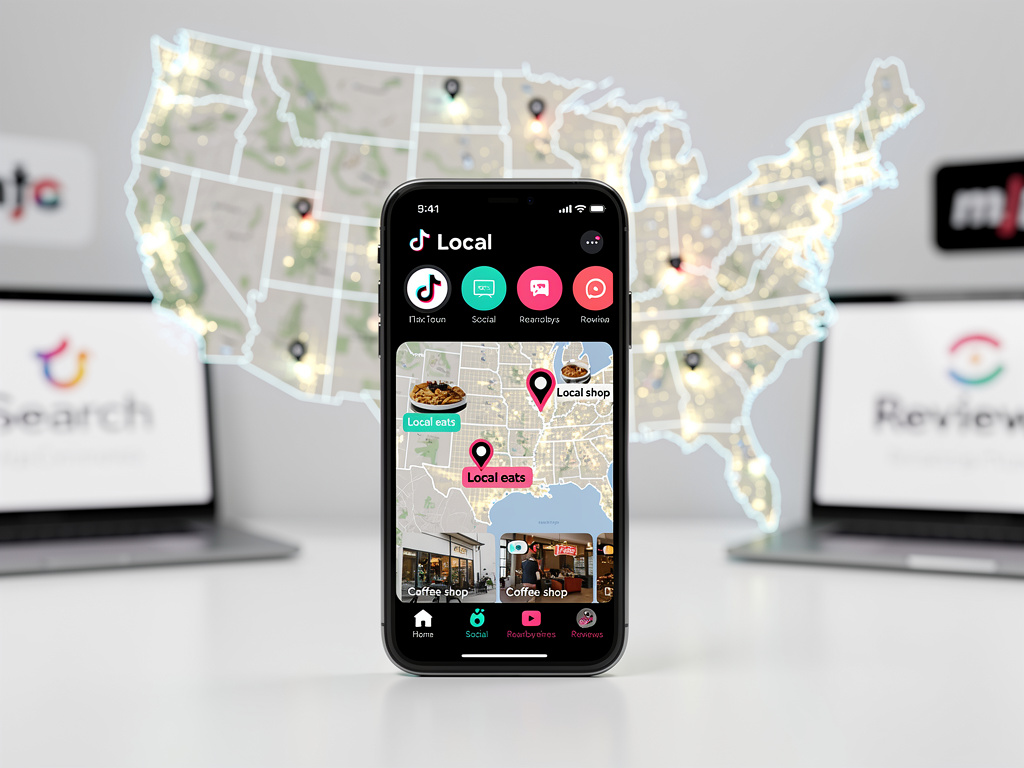
In a move that signals both strategic adaptation and a deeper entrenchment into the American digital ecosystem, TikTok has begun rolling out a new “Local” feed to users across the United States. The feature, which surfaces short-form video content tied to a user’s geographic location, represents one of the most significant product shifts the embattled platform has undertaken since its dramatic near-ban and subsequent reprieve in the U.S. market. For industry insiders, the implications stretch far beyond a simple UI tweak — this is TikTok attempting to become something closer to a local utility than a global entertainment app.
As first reported by MacRumors, the Local feed appears as a new tab within the TikTok app, sitting alongside the familiar “For You” and “Following” feeds. The feature uses location data to populate a stream of videos from nearby creators, local businesses, community events, and regionally relevant content. While TikTok has experimented with location-based features in other markets — notably in Southeast Asia and parts of Europe — this marks the first time a dedicated Local feed has been made broadly available to American users.
A Strategic Pivot Born From Political Pressure
The timing of this rollout is anything but coincidental. TikTok has spent the better part of the last three years navigating an extraordinarily hostile regulatory environment in Washington. The platform faced a potential nationwide ban under legislation signed in 2024 that required its Chinese parent company, ByteDance, to divest its U.S. operations or face prohibition from American app stores. After a series of legal challenges, executive orders, and eleventh-hour negotiations, TikTok secured a temporary reprieve, but the specter of forced divestiture — or outright removal — has never fully dissipated.
By introducing a Local feed, TikTok is making a calculated bet that embedding itself more deeply into the fabric of American communities will make it politically and practically harder to uproot. A platform that helps users discover the best taco truck in their neighborhood, promotes a local high school’s fundraiser, or amplifies a small-town business’s weekend sale is a fundamentally different proposition to regulators than one perceived primarily as a conduit for algorithmically optimized, globally sourced entertainment. It is, in essence, a domestication strategy — an effort to make TikTok feel less like a foreign-owned tech giant and more like a hometown digital bulletin board.
How the Local Feed Actually Works
According to details shared by MacRumors, the Local feed leverages a combination of GPS data, user-set location preferences, and content metadata — including geotags, captions, and hashtags — to curate a regionally specific video stream. Users can adjust the radius of their Local feed, toggling between hyper-local content (within a few miles) and broader regional content (spanning a metro area or state). The algorithm also factors in engagement patterns: if a particular local restaurant’s video is gaining traction among nearby users, it is more likely to surface in other local feeds within the same area.
Creators, for their part, are being given new tools to optimize for local discovery. TikTok has introduced enhanced geotagging options, a “Local Business” profile badge for verified merchants, and a set of analytics dashboards that allow creators and businesses to track how their content performs within specific geographic zones. Early reports from beta testers suggest that local content is receiving a meaningful boost in impressions compared to non-geotagged videos, indicating that TikTok’s algorithm is actively prioritizing the Local feed as a growth vector.
The Competitive Implications for Google, Meta, and Yelp
For competitors, TikTok’s Local feed represents a direct incursion into territory that has long been dominated by other players. Google Maps, Yelp, and Meta’s Facebook and Instagram have all invested heavily in local discovery and small-business advertising. Google, in particular, has built an enormous revenue engine around local search — when a user types “best pizza near me” into a search bar, the resulting ads and listings generate billions of dollars annually. TikTok’s Local feed threatens to intercept that intent at an earlier stage, capturing users’ attention before they ever open a search engine or a dedicated review app.
Meta has been especially watchful. Instagram has its own location-tagged content and has experimented with map-based discovery features, but none have achieved the kind of algorithmic virality that TikTok’s core product delivers. Facebook, meanwhile, has seen its local Groups feature become one of its most durable engagement tools, particularly among older demographics. TikTok’s entry into local content could siphon younger users who might otherwise turn to Facebook Groups for community recommendations and event information. Industry analysts have noted that TikTok’s ability to make local content feel native to its entertainment-first format — rather than bolted on as an afterthought — gives it a distinct advantage.
Small Business Owners See Opportunity — and Risk
For America’s small-business community, the Local feed is a double-edged sword. On one hand, it offers an unprecedented opportunity for organic reach. Unlike Google or Yelp, where visibility often requires paid advertising or years of accumulated reviews, TikTok’s algorithm can catapult a single compelling video from a local bakery or auto shop into tens of thousands of local views overnight. Early anecdotal reports from business owners in test markets suggest that the Local feed is already driving measurable foot traffic.
On the other hand, the platform’s algorithmic unpredictability introduces real risk. A business that goes viral locally one week may find its content buried the next, with little transparency into why. And the pay-to-play dynamics that have gradually overtaken organic reach on platforms like Facebook and Instagram are likely to follow on TikTok as well. The company has already begun testing “Local Promote” — a paid advertising product that allows businesses to boost their content within the Local feed for a fee. If history is any guide, the organic golden age of TikTok’s Local feed may be short-lived.
Data Privacy Concerns Resurface With New Intensity
The introduction of a location-centric feature inevitably reignites the data privacy concerns that have dogged TikTok since its earliest days in the American market. Critics, including several members of Congress, have long argued that TikTok’s collection of user data — particularly location data — poses a national security risk given ByteDance’s obligations under Chinese law. A feature that explicitly encourages users to share and engage with location-based content will only deepen those concerns.
TikTok has sought to preempt this criticism by emphasizing that all U.S. user data is stored domestically through its partnership with Oracle, under the so-called “Project Texas” framework. The company has also stated that location data used for the Local feed is processed entirely within U.S.-based servers and is not accessible to ByteDance employees in China. Whether these assurances will satisfy lawmakers remains to be seen. Senator Mark Warner of Virginia, who has been among the most vocal critics of TikTok’s data practices, has previously indicated that technical safeguards alone are insufficient without structural separation from ByteDance.
What This Means for the Creator Economy
For TikTok’s vast creator community, the Local feed introduces a new dimension to content strategy. Creators who have built audiences on the strength of universally appealing content — dance trends, comedy sketches, life hacks — now have an incentive to produce geographically specific material. This could give rise to a new class of “local influencer” — creators whose value lies not in their global reach but in their deep connection to a specific community. Real estate agents, local food critics, neighborhood historians, and community organizers all stand to benefit from a feed that rewards geographic relevance over raw virality.
The monetization implications are significant as well. TikTok’s existing Creator Fund and its newer subscription and tipping features have been criticized for offering relatively modest payouts compared to YouTube’s ad-revenue sharing model. But local content opens the door to a different kind of monetization: direct partnerships with local businesses. A creator who can demonstrably drive foot traffic to a neighborhood restaurant is offering a value proposition that is easy for a small-business owner to understand and willing to pay for — potentially bypassing TikTok’s own advertising infrastructure entirely.
A Defining Moment for TikTok’s American Identity
Taken together, the Local feed represents more than a product update. It is a statement of intent. TikTok is signaling that it sees its future in the United States not merely as an entertainment platform competing with YouTube and Instagram for screen time, but as a deeply integrated local discovery and commerce engine. If successful, this strategy could make TikTok indispensable to American communities in a way that would make any future ban or forced sale far more disruptive — and therefore far less politically palatable.
But success is far from guaranteed. The history of social media is littered with ambitious local initiatives that failed to gain traction — from Facebook’s ill-fated “Nearby Friends” feature to Snapchat’s underwhelming Snap Map commerce experiments. TikTok’s algorithmic prowess gives it a better shot than most, but converting passive entertainment consumption into active local engagement is a fundamentally different challenge. The coming months will reveal whether TikTok’s Local feed is a genuine paradigm shift or merely the latest in a long line of features designed more to appease regulators than to serve users.


 WebProNews is an iEntry Publication