
ByteDance’s TikTok, facing years of U.S. national security scrutiny, announced on January 22, 2026, the formation of TikTok USDS Joint Venture LLC, a majority American-owned entity designed to avert a ban. American and global investors now hold 80.1% ownership, with ByteDance retaining 19.9%, while managing investors Oracle, Silver Lake, and MGX each control 15%. Adam Presser, formerly TikTok’s head of operations, serves as CEO of the new venture. The structure promises U.S.-based data storage in Oracle’s cloud, algorithm retraining on domestic data, and enhanced content moderation safeguards, as detailed in Reuters.
President Donald Trump hailed the arrangement on Truth Social, posting, “TikTok will now be owned by a group of Great American Patriots and Investors, the Biggest in the World,” and thanked Chinese President Xi Jinping for approving the deal. The joint venture serves over 200 million U.S. users and 7.5 million businesses, with a seven-member board including executives from Oracle, Silver Lake, MGX, a TPG senior advisor, and TikTok CEO Shou Zi Chew, according to The Guardian. Yet this supposed victory quickly unraveled as users rebelled.
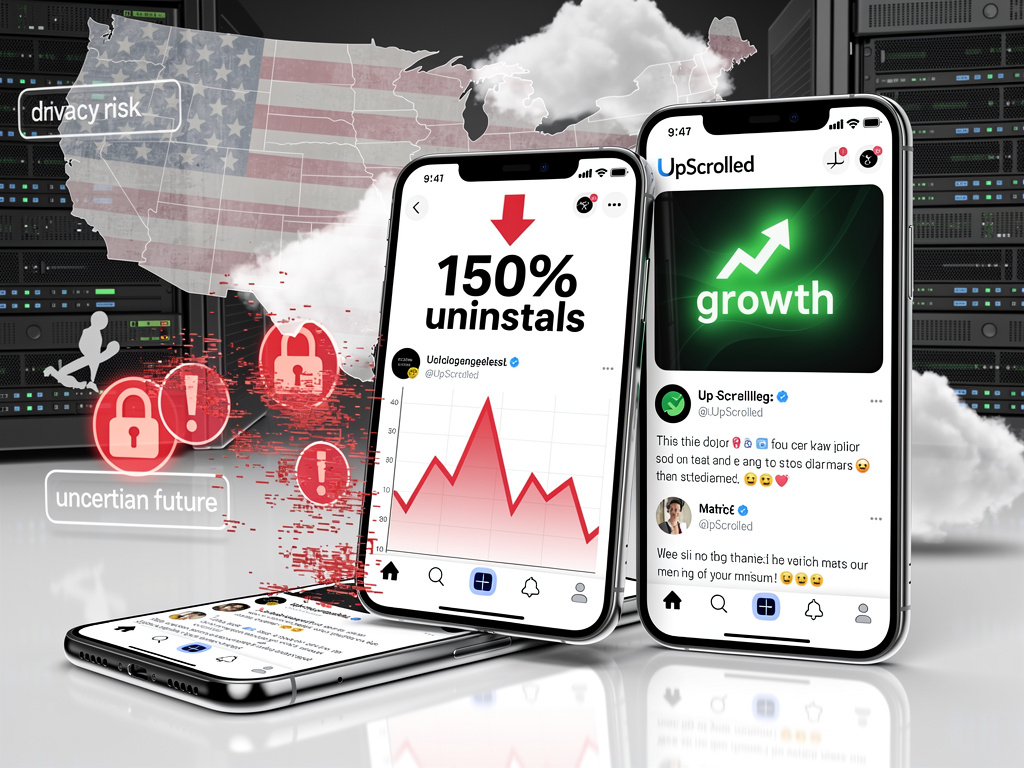
The daily average of U.S. TikTok uninstalls surged nearly 150% over the five days following the announcement compared to the prior three months, data from market intelligence firm Sensor Tower showed. Active user levels held steady week-over-week, but rival apps capitalized: UpScrolled downloads jumped more than tenfold, Skylight Social rose 919%, and Rednote climbed 53%. Sensor Tower’s metrics, shared exclusively with CNBC, pinpointed the joint venture reveal as the trigger.
Privacy Policy Prompts User Backlash
Users encountered an updated privacy policy on January 22, highlighting data collection on “your racial or ethnic origin” and “sexual life or sexual orientation, status as transgender or nonbinary, citizenship or immigration status, or financial information.” Though similar language appeared in an August 2024 version, the timing fueled suspicions amid the ownership shift. Creator Nadya Okamoto, with over 4 million followers, told CNBC, “That’s why there is so much paranoia, because we’re all kind of looking at this platform and we just don’t know what’s happening.”
Okamoto added, “Online there’s a lot of conversation about — is this all coincidence or censorship, and what does this look like? For everything to be happening at once, it is very scary.” She reported inability to upload videos for 24 hours, joining widespread complaints of outages and failed posts. Creator Dre Ronayne, with nearly 400,000 followers, deleted her account, posting on Threads, “If I can delete my biggest platform because their terms of agreement and censorship have gotten out of control, so can you!” as cited in CNBC.
TikTok offered no comment to CNBC inquiries, while the joint venture’s X account blamed a U.S. data center power outage for disruptions, stating, “We’re working with our data center partner to stabilize our service. We’re sorry for this disruption and hope to resolve it soon.” Lack of clarity on creator impacts amplified fears, per Okamoto.
Rivals Ride the Wave of Distrust
Independent app UpScrolled recorded 41,000 downloads from January 22 to January 24, per App Figures estimates reported by Engadget. TikTok attributed U.S. app bugs, including view count errors and load delays, to the outage, with no fix timeline provided. International Business Times UK noted the uninstall spike as “one of the steepest short-term pullbacks in user sentiment the app has experienced in recent years,” linking it directly to ownership uncertainties, as covered in IBTimes UK.
The venture addresses a 2024 law mandating divestiture or ban, upheld by the Supreme Court, with Trump delaying enforcement post-inauguration to broker the deal. Oracle oversees data in its U.S. cloud and algorithm adjustments, while ByteDance licenses the core technology but cedes control below the 20% threshold, details from Fox Business. Investors also include Dell Family Office, Alpha Wave Partners, and others.
U.S. lawmakers called for congressional review. Reuters reported demands for scrutiny over sparse details, with some questioning ByteDance’s lingering influence despite the structure.
National Security Roots of the Rift
The joint venture caps years of tensions, starting with Trump’s 2020 executive order, blocked in courts, revived via bipartisan 2024 legislation citing data access risks for Chinese authorities. TikTok denied sharing U.S. user data, but concerns persisted over algorithm manipulation and surveillance, as Forrester analysts observed: nearly half of U.S. adults under 35 deem TikTok addictive, with retraining potentially altering feeds, per Forrester.
Al Jazeera highlighted the venture’s independent U.S. arm for data, apps, and moderation, yet ByteDance’s global oversight of e-commerce and ads remains. TechRepublic noted the algorithm’s separation for U.S. retraining under Oracle audits to meet privacy standards.
Marketing Dive reported relief among marketers, with ByteDance’s stake ensuring continuity amid 170 million monthly U.S. users. However, the uninstall surge signals fragility, as brands eye volatility, echoing IBTimes UK warnings on advertising impacts.
Creator Uncertainty Fuels Flight
Creators like Okamoto pivoted to Instagram and YouTube amid upload failures and policy prompts. Ronayne’s exit underscored terms and censorship gripes. Sensor Tower data shows no user base drop yet, but sustained exits could erode engagement, critical for TikTok’s $14 billion valuation hints in Politico snippets.
The venture’s X updates promised stability, but Reddit threads on r/technology speculated on ideological shifts, with users decrying potential U.S.-Israeli influences or preferring Chinese data risks. DW.com framed it as dodging ban threats via investor safeguards.
BBC clarified user contracts now bind to the U.S. entity, hinting at seamless continuity sans new downloads, yet skepticism persists over global integrations.
Investor Stakes and Road Ahead
Oracle, Silver Lake, and MGX’s 45% combined managing stake anchors operations, with Trump crediting the deal for averting blackout. Washington Post noted divestiture ends Chinese majority control. HousingWire saw positives for businesses reliant on TikTok marketing.
The Hill detailed the entity’s safeguards for 200 million users. Despite backlash, TikTok’s dominance endures, but this rocky debut tests the venture’s resilience amid user paranoia and technical woes.


 WebProNews is an iEntry Publication