
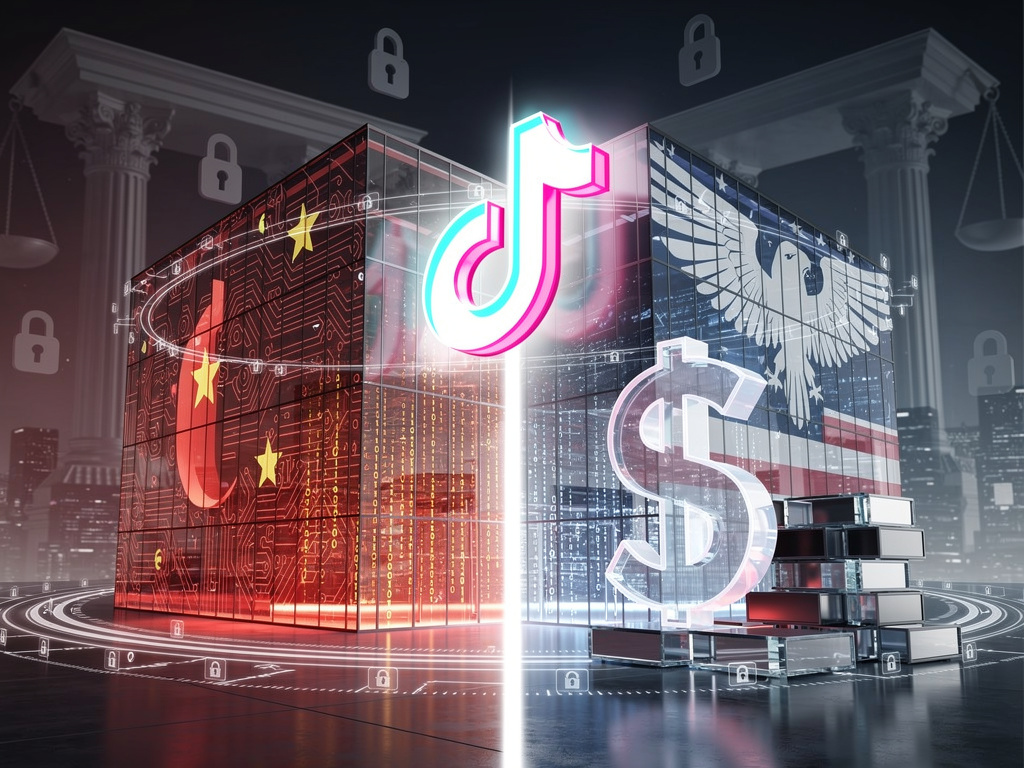
Unraveling the TikTok Accord: A High-Stakes Pivot in Global Tech Diplomacy
The saga of TikTok’s U.S. operations has reached a pivotal juncture, with a deal signed in late 2025 that promises to reshape the popular video-sharing app’s presence in America. Backed by former President Donald Trump, the agreement involves spinning off TikTok’s U.S. assets into a new entity controlled by a group of predominantly American investors. This move, announced by TikTok CEO Shou Chew in an internal memo, aims to address longstanding national security concerns tied to the app’s Chinese parent company, ByteDance. According to reports, the deal includes provisions for data protection, algorithm security, and content moderation under U.S. oversight.
Details emerging from various sources paint a picture of intense negotiations that spanned years, culminating in this joint venture. The agreement reportedly values TikTok’s U.S. business at upwards of $60 billion, drawing interest from high-profile investors and tech giants eager to capitalize on the platform’s massive user base. While the deal averts an outright ban, it raises questions about how effectively it severs ties with ByteDance and ensures American control over sensitive operations.
Critics, however, argue that the arrangement may not fully mitigate risks. Some experts point out that the structure preserves certain connections to China, potentially undermining the intent of U.S. laws designed to protect against foreign influence in digital platforms. This skepticism is echoed in opinion pieces and analyses that question the deal’s compliance with existing regulations.
The Genesis of Regulatory Scrutiny
The roots of this deal trace back to 2020, when the Trump administration first targeted TikTok over fears that user data could be accessed by the Chinese government. Those concerns led to executive orders demanding ByteDance divest its U.S. operations, setting off a chain of legal battles and failed acquisition attempts. Fast-forward to 2025, and the landscape has evolved with new legislation like the Protecting Americans from Foreign Adversary Controlled Applications Act, which empowers the government to restrict apps deemed security threats.
In the lead-up to the agreement, TikTok faced mounting pressure, including a brief outage that some attributed to regulatory actions. The signed deal, as detailed in a CNN Business report, establishes a joint venture where American entities take the reins on key functions. Oracle, leading an investor group, is poised to handle data storage and oversight, a nod to earlier proposals that positioned the company as a trusted technology partner.
Yet, the path to this resolution was fraught with geopolitical tensions. China has insisted that any solution must comply with its laws, as noted in statements from its commerce ministry. This stance introduces uncertainty, with some analysts suggesting Beijing could still influence the app’s algorithms, a core component of TikTok’s success.
Investor Dynamics and Valuation Debates
A consortium of U.S. investors, including prominent moguls and firms, has emerged as the frontrunners in this acquisition. Their involvement signals confidence in TikTok’s growth potential, despite the regulatory hurdles. The platform’s U.S. arm boasts hundreds of millions of users, generating substantial ad revenue and cultural influence that investors are keen to harness.
Valuation estimates have fluctuated wildly, with figures reaching $60 billion in some projections. This high stake reflects not just current earnings but also the app’s role in shaping social media trends. However, the deal’s structure—a partial spin-off rather than a full sale—has sparked debates about its true worth and the extent of control ceded by ByteDance.
Public sentiment, gleaned from posts on X, reveals a mix of relief and suspicion. Users and commentators express concerns over potential government overreach, with some viewing the deal as a template for broader social media regulation. One post highlighted fears that similar measures could target other platforms, underscoring broader anxieties about digital sovereignty.
National Security Implications Explored
At the heart of the deal are national security safeguards, including U.S. veto power over hires and board selections, as outlined in proposals TikTok submitted to federal officials. These measures aim to insulate American users from foreign data risks, with third-party monitoring by defense contractors ensuring compliance.
Nevertheless, skepticism persists. An opinion piece in The New York Times argues that the agreement fails to fully sever problematic ties, potentially allowing Chinese influence to linger. Former officials from the Biden administration have voiced similar doubts, questioning the feasibility of implementing the proposed separations.
Congressional oversight is ramping up, with calls for transparency. A report from the Center for American Progress urges lawmakers to scrutinize the transaction against un enforced laws, highlighting potential constitutional issues in how the deal was brokered.
Geopolitical Ripples and Chinese Responses
China’s reaction has been measured but firm. Commerce ministry spokespeople have emphasized the need for balanced solutions that respect Chinese regulations, as reported by Reuters. This could complicate the handover of TikTok’s algorithms, a sticking point in negotiations.
The deal’s timing aligns with broader U.S.-China tech tensions, including trade restrictions and intellectual property disputes. Observers note that while the agreement averts a ban, it might set precedents for how other Chinese-owned apps operate in the U.S., influencing global tech policies.
On X, discussions frame this as a win for American interests, with some users praising Trump’s role in “safeguarding” the app through retrained algorithms. Others criticize it as a form of digital dictatorship, echoing sentiments from international figures like Russian spokespeople who see it as market manipulation.
Operational Shifts and User Impacts
Under the new entity, TikTok’s U.S. operations will undergo significant changes. Content moderation will fall under American purview, potentially altering how videos are recommended and policed. This shift could affect user experience, with algorithms tailored to comply with U.S. standards while maintaining the app’s addictive appeal.
For employees, the transition means new leadership and possible relocations, as the joint venture establishes headquarters in the U.S. TikTok has assured staff of job security, but industry insiders speculate on cultural clashes between ByteDance’s innovative ethos and American corporate norms.
Users, meanwhile, might notice subtle differences in data privacy notices and ad targeting. The deal’s emphasis on U.S.-based data storage aims to build trust, but privacy advocates remain wary, citing past incidents of data mishandling.
Competitive Ramifications in Social Media
The agreement positions TikTok to compete more aggressively against rivals like Instagram Reels and YouTube Shorts. With American backing, the platform could accelerate expansions into e-commerce and live streaming, areas where it has shown promise.
However, regulatory scrutiny might hamper innovation. Competitors are watching closely, as the deal could influence antitrust considerations in the tech sector. If successful, it might encourage similar divestitures for other foreign apps, reshaping the global app economy.
Insights from Axios describe this as the end of a yearslong saga, but with potential delays pushing full implementation into 2026. This timeline allows for further adjustments, possibly addressing compliance doubts raised in recent analyses.
Legal Hurdles and Future Uncertainties
Legal experts anticipate challenges to the deal’s validity. TikTok’s own court filings have questioned the realism of some separation requirements, as noted in analyses from former officials. This could lead to litigation if stakeholders feel the agreement falls short of legislative mandates.
Congress is poised to demand full details, potentially through hearings that expose the deal’s inner workings. Such transparency could reveal concessions made to appease both U.S. and Chinese interests, balancing security with commercial viability.
Posts on X reflect ongoing debates, with some users speculating on hidden clauses or “surprises” from China. These sentiments underscore the deal’s fragility, as geopolitical shifts could unravel progress.
Economic Stakes and Investor Optimism
Economically, the deal injects vitality into the U.S. tech scene, creating jobs and fostering innovation under domestic control. Investors see it as a bet on TikTok’s enduring popularity, with projections of soaring revenues post-spin-off.
Yet, risks abound. Market volatility tied to U.S.-China relations could devalue the asset, and any failure to comply with regulations might trigger penalties or a forced sale.
A BBC article details the joint venture’s focus on security, but warns of lingering uncertainties. Similarly, The Guardian highlights Trump’s backing as a key enabler, though it questions long-term efficacy.
Broader Policy Implications
This accord exemplifies evolving U.S. policy on foreign tech investments, prioritizing national security amid digital globalization. It may inspire frameworks for other sectors, from semiconductors to AI, where foreign ownership raises red flags.
Industry insiders view it as a test case for hybrid ownership models, blending foreign innovation with local oversight. Success here could ease tensions in international tech collaborations, while failure might escalate bans and restrictions.
Finally, as the deal unfolds, stakeholders from Washington to Beijing will monitor its execution closely. The outcome could redefine boundaries in the tech world, influencing how nations navigate the intersection of commerce, security, and digital freedom. With updates continuing to emerge, such as those in a recent TechCrunch overview and NPR coverage, the story of TikTok’s American evolution is far from over, promising more twists in the quest for a secure, vibrant social media ecosystem.


 WebProNews is an iEntry Publication