
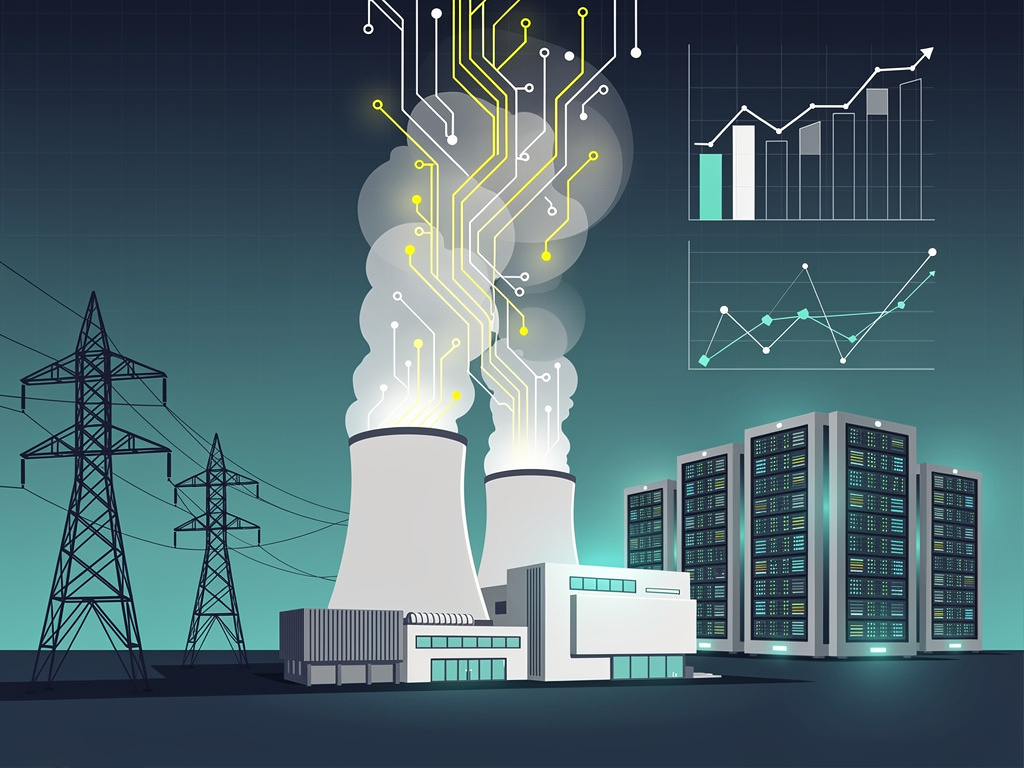
Constellation Energy struck a deal with Microsoft in September 2024 that few saw coming. The power company would spend $1.6 billion to restart a reactor at the shuttered Three Mile Island nuclear plant in Pennsylvania. Microsoft would buy every megawatt the facility produced for the next 20 years. The plant, infamous for the 1979 partial meltdown that scarred a generation’s view of atomic energy, gained a new name: the Crane Clean Energy Center. Target restart? 2028. Or maybe 2027 if regulators cooperate.
That single transaction crystallized a larger truth. Artificial intelligence demands electricity on a scale that outstrips anything the tech industry anticipated. Data centers now consume power like small cities. Training one large model can require as much electricity as thousands of households use in a year. Running those models at scale multiplies the load further. Hyperscalers face a stark choice: slow their ambitions or secure reliable, always-on generation.
The Financial Times reported on the intense pressure building inside corporate boardrooms. Executives watched forecasts showing U.S. data center electricity use potentially doubling or tripling by the end of the decade. Renewables alone couldn’t deliver the constant output required. Natural gas helped bridge gaps but carried emissions and price volatility. Nuclear offered the one proven technology that ran 24 hours a day, seven days a week, without pumping carbon into the atmosphere.
Microsoft wasn’t alone. Google signed agreements with Kairos Power for small modular reactors. Amazon poured money into the Susquehanna nuclear site and explored deals reaching multiple gigawatts. Meta issued requests for proposals seeking 1 to 4 gigawatts of new nuclear capacity. In total, big tech companies committed to more than 10 gigawatts of nuclear-related projects in the past year, according to industry trackers. The numbers keep climbing.
But here’s the complication. Nuclear projects take time. A lot of it. Restarting an existing reactor sounds simpler than building from scratch. Even so, Constellation must secure approvals from the Nuclear Regulatory Commission, upgrade equipment, source fresh fuel, and navigate grid interconnection issues. Recent delays in transmission projects threatened to push full operations past 2030. Federal Energy Regulatory Commission stepped in with waivers. Progress continues. The target now sits at 2027.
Joe Dominguez, Constellation’s president and chief executive, captured the stakes. “Powering industries critical to our nation’s global economic and technological competitiveness, including data centers, requires an abundance of energy that is carbon-free and reliable every hour of every day, and nuclear plants are the only energy sources that can consistently deliver on that promise,” he said in the company’s announcement.
Bobby Hollis, Microsoft’s vice president of energy, called the Crane project “a once-in-a-lifetime opportunity” to bring nuclear capacity online at the speed demanded by artificial intelligence growth. The company pledged to match the electricity consumed by its data centers with carbon-free sources. This deal delivered a direct, dedicated supply.
Critics point to history. Three Mile Island’s Unit 2 suffered the worst commercial nuclear accident in U.S. history. Unit 1, the one being revived, operated safely until its 2019 economic shutdown. No one disputes the symbolic weight. Local communities express both hope for jobs and lingering unease. Pennsylvania officials back the restart, seeing it as economic development and a signal of the state’s readiness for high-tech industry.
The financial details reveal the premium placed on certainty. Microsoft reportedly pays above $100 per megawatt-hour. That’s higher than many renewable contracts. Yet the value lies in reliability. Intermittent solar and wind require massive battery storage or backup generation to achieve similar uptime. Nuclear delivers 93 percent capacity factors year after year.
Power prices near data center clusters tell another story. Wholesale electricity costs in some regions have soared as much as 267 percent over five years, Bloomberg reported. Consumers feel the impact through higher utility bills. Politicians face pressure to explain why their districts subsidize tech giants’ expansion. Some states explore rules requiring data centers to pay for their full grid upgrades.
Small modular reactors promise faster deployment and factory-built standardization. Google aims for its first Kairos unit by 2030. Amazon works with X-energy on plans for over 5 gigawatts by 2039. These technologies excite investors. They also face first-of-a-kind risks, supply chain bottlenecks, and lengthy regulatory reviews. No commercial SMR fleet operates in the United States yet.
Existing nuclear plants offer quicker wins. Constellation explores uprates across its fleet. Vistra signed a 20-year agreement to supply Meta with more than 2.6 gigawatts, including power from upgraded reactors. The Department of Energy approved a $1 billion loan to accelerate the Three Mile Island restart. The Trump administration highlighted the project as delivering on promises for energy abundance and American technological leadership.
Analysts project U.S. nuclear capacity could grow 63 percent by 2050 under optimistic scenarios, according to BloombergNEF analysis. That adds more than 50 gigawatts after 2035. Much depends on policy continuity, financing availability, and supply chain development. Uranium prices, enrichment capacity, and skilled labor all matter. The industry shrank for decades. Reversing that trend requires sustained commitment.
Data center developers now scout locations based on power availability first. Land, water, and fiber come second. Some build their own generation assets. On-site natural gas turbines provide quick power but face emissions scrutiny. Others pursue co-location with nuclear facilities, effectively creating private grids for AI workloads.
The scale challenges imagination. A single large training cluster can draw 1,000 megawatts. Forecasts suggest U.S. data center demand reaching 74 gigawatts by 2028 with potential shortfalls of 49 gigawatts. Silicon Valley’s planned $600 billion data center spend in 2026 alone intensifies the scramble.
And utilities feel squeezed. PJM Interconnection, the grid operator covering much of the eastern United States, works through interconnection queues swollen by data center requests. Rules evolve on how these massive loads connect and who pays for upgrades. Independent power producers like Constellation position themselves as partners rather than traditional suppliers.
Shares of nuclear operators surged. Constellation’s stock more than doubled in recent years on the strength of these deals. Investors bet that long-term contracts with creditworthy tech buyers de-risk the sector. Power purchase agreements lasting 20 years provide revenue visibility that project finance models crave.
Yet risks remain. Construction delays routinely plague nuclear projects. Cost overruns follow. Public opposition can flare if incidents occur. Waste disposal questions persist even as advanced reactors promise to burn existing stockpiles. Geopolitical tensions around uranium supply add another layer.
Still, momentum builds. The Department of Energy supports uprates that could add 5 gigawatts across the fleet by 2029. States pass legislation streamlining permitting for advanced reactors. Tech executives testify before Congress about the strategic necessity of domestic power capacity for AI superiority.
Microsoft’s move on Three Mile Island set a precedent. It demonstrated willingness to pay premium prices for carbon-free, firm power. It revived a plant many wrote off. And it forced the rest of the industry to confront the true cost of scaling artificial intelligence.
Other deals followed rapidly. Amazon’s investments in Pennsylvania. Google’s SMR orders. Meta’s aggressive procurement targets. Each one reinforced the message. The AI boom runs on electrons. Those electrons must come from sources that don’t flicker with the weather or vanish at night.
Energy now ranks as a core strategic input for technology companies, equal to chips or talent. Executives who once delegated power strategy to facilities teams now sit in meetings with utility chiefs and nuclear operators. Boards review gigawatt-scale forecasts the way they once reviewed server counts.
The Crane Clean Energy Center, when it comes online, will power the equivalent of 800,000 homes. All that output flows to Microsoft’s data centers. The arrangement bypasses much of the traditional grid, reducing transmission losses and congestion. It’s a model others study closely.
Challenges persist. Grid operators warn of reliability risks if too many large loads connect without adequate planning. Supply chains for nuclear components stretch thin. Talent shortages loom as retirements hit the aging workforce. These hurdles won’t vanish overnight.
But the direction feels set. Nuclear power, long stuck in political and economic limbo, finds fresh purpose in the age of artificial intelligence. The technology that once symbolized danger now offers a path to energy abundance. Three Mile Island’s revival stands as the most visible symbol of that transformation. Its success or struggles will shape decisions for years ahead.
Tech companies bet billions that nuclear can scale fast enough. Utilities and regulators scramble to adapt. Communities weigh economic gains against historical memories. The outcome will determine not just who leads in artificial intelligence but how America powers its economy through the coming decades.


 WebProNews is an iEntry Publication