
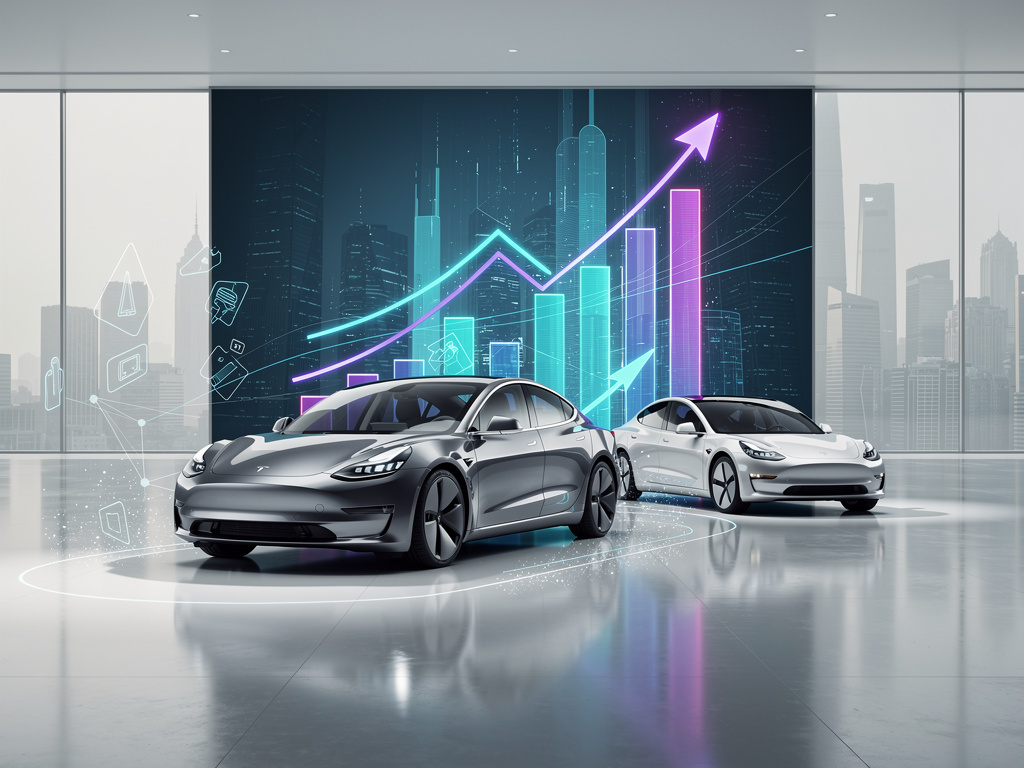
SHANGHAI—For years, Tesla Inc.’s Model 3 was the undisputed benchmark for electric sedans in China, a symbol of foreign innovation in the world’s most crucial automotive market. That changed in April. For the first time, the American titan was outsold in the pure electric sedan category not by a legacy automaker or even a seasoned EV rival, but by a company best known for budget-friendly smartphones.
Xiaomi Corp., the consumer electronics behemoth, delivered 7,058 units of its inaugural vehicle, the SU7, in its first full month of sales. That figure eclipsed the Tesla Model 3’s 5,866 units for the same period, according to data from the China Passenger Car Association reported by CarNewsChina. While a single month’s data does not signal a permanent power shift, the upset is a stark illustration of a new reality: in China’s brutally competitive EV arena, the most dangerous challenger may come from outside the auto industry entirely.
The SU7’s success is not merely a story of a new car hitting the market; it is a case study in brand loyalty, ecosystem integration, and the power of celebrity leadership in a market that craves novelty. Xiaomi, under its charismatic co-founder and CEO Lei Jun, has leveraged its massive user base and technological prowess to create a vehicle that functions less like a traditional car and more like a rolling smartphone—a strategy that is clearly resonating with Chinese consumers.
The Ecosystem Advantage
At the heart of Xiaomi’s strategy is what the company calls its “Human x Car x Home” smart ecosystem. The SU7 is not pitched as a standalone product but as the central, mobile hub of a connected life already populated by Xiaomi phones, televisions, and smart home devices. The vehicle’s infotainment system is powered by the company’s own HyperOS, designed for seamless integration. A driver’s phone automatically connects upon entry, apps and navigation preferences transfer to the car’s main screen, and a passenger can control vehicle functions from their own Xiaomi tablet.
This deep integration creates a powerful lock-in effect that traditional automakers struggle to replicate. While companies like Ford and GM rely on third-party systems like Apple CarPlay or Android Auto, Xiaomi controls the entire hardware and software stack. This allows for a level of coherence and functionality that has become a significant selling point, transforming the vehicle into what The Wall Street Journal has dubbed a “smartphone on wheels,” a description that captures the essence of its appeal for a tech-savvy generation, according to a report from The Wall Street Journal.
The vehicle itself is aggressively specified to compete. Priced starting under $30,000, the base model undercuts the Tesla Model 3 while offering a longer range. The high-end “Max” version boasts dual motors, supercar-like acceleration, and advanced driver-assistance features, positioning itself as a direct challenger to both Tesla and, in its design aspirations, the Porsche Taycan. This combination of familiar technology, aggressive pricing, and high performance has created a potent market entry.
A Masterclass in Marketing and Manufacturing Hurdles
A significant factor in the SU7’s explosive debut is the cult of personality surrounding Lei Jun. Often compared to Steve Jobs for his meticulous product presentations and black-shirt-and-jeans uniform, Mr. Lei has cultivated a massive following on Chinese social media. He personally orchestrated the SU7’s launch with a multi-hour livestream, engaging directly with fans and building a level of hype rarely seen for a vehicle launch. This direct-to-consumer marketing, honed over a decade of selling electronics, has translated seamlessly to the automotive world.
The results have been staggering. Within 24 hours of its launch, Xiaomi announced it had received nearly 90,000 firm orders for the SU7. By the end of April, locked-in orders—those with non-refundable deposits—had climbed to 83,000, as reported by CnEVPost. This overwhelming demand, however, presents Xiaomi’s greatest challenge: manufacturing at scale. The company is a novice in the complex world of automotive production, and wait times for new orders now stretch for many months. Whether Xiaomi can ramp up its Beijing factory to meet this demand without the quality control issues that have plagued other startups will be the ultimate test of its long-term viability.
Tesla, by contrast, is a manufacturing veteran. Its Shanghai Gigafactory is a model of efficiency, though even it is facing new pressures. The company’s overall domestic sales in China have shown signs of softness. In April, Tesla sold 31,421 China-made vehicles locally (a figure that includes both the Model 3 and Model Y), a significant drop from the previous year, according to data from the China Passenger Car Association cited by Reuters. The American automaker is contending with an aging product lineup and relentless price wars initiated by domestic giant BYD, which remains the undisputed overall sales leader in the country.
A New Competitive Blueprint
Xiaomi’s success has sent a clear signal to the global automotive and technology industries. The battle for the future of mobility in China is no longer just about horsepower and battery range; it is about software, user experience, and brand integration. Companies with deep roots in consumer electronics, like Xiaomi and telecommunications giant Huawei with its Aito brand, are proving they can leverage their expertise to build compelling electric vehicles that challenge established players.
The market has taken notice. Xiaomi’s stock surged following the SU7’s launch, reflecting investor confidence in its automotive ambitions. The company’s entry validates the idea that the car is evolving into the ultimate smart device. This convergence was a long-held ambition for Apple Inc. before it reportedly shelved its own car project, but Xiaomi has now provided a tangible, successful example. As noted by Bloomberg, Lei Jun has committed to a $10 billion investment in the automotive venture over the next decade, signaling a long-term fight.
For Tesla and other international automakers in China, the ground has irrevocably shifted. The premium status once afforded to foreign brands is eroding as domestic competitors innovate at a blistering pace. As one Digital Trends analysis put it, the SU7’s performance shows that a well-executed product from a trusted tech brand can quickly disrupt the established order. Tesla’s response will be critical, likely involving an acceleration of its next-generation, lower-cost vehicle platform and a renewed focus on marketing its Full Self-Driving software as a key differentiator. But in the fast-moving Chinese market, standing still for even a moment means getting left behind. The smartphone maker has proven it is here to race.


 WebProNews is an iEntry Publication