
The Unseen Fence: Segway’s AI-Powered Mowers Plot a Course to Upend the Robotic Yard Care Industry
For years, the promise of an automated, perfectly manicured lawn has been tangled in a frustrating reality: the boundary wire. Early adopters of robotic mowers spent weekends painstakingly burying or pegging down hundreds of feet of low-voltage cable to define the machine’s operational area. This tedious installation process created a significant barrier to entry, relegating the technology to a niche market of enthusiasts willing to trade hours of setup for automated upkeep. A single break in the wire from a stray shovel or burrowing pest could render the entire system useless, sending owners on a maddening hunt for the fault.
This long-standing friction point is now the central battleground for the next generation of automated yard care, and Segway, a company synonymous with personal mobility, is making a formidable push. The company is betting that the key to unlocking the mainstream market lies in eliminating the wire entirely. Its Navimow series of robotic mowers employs a sophisticated fusion of satellite navigation and artificial intelligence, aiming to replace the physical fence with a precise, invisible one, a strategy that could fundamentally reshape the consumer experience and challenge established industry leaders.
A Market Tangled in Wires
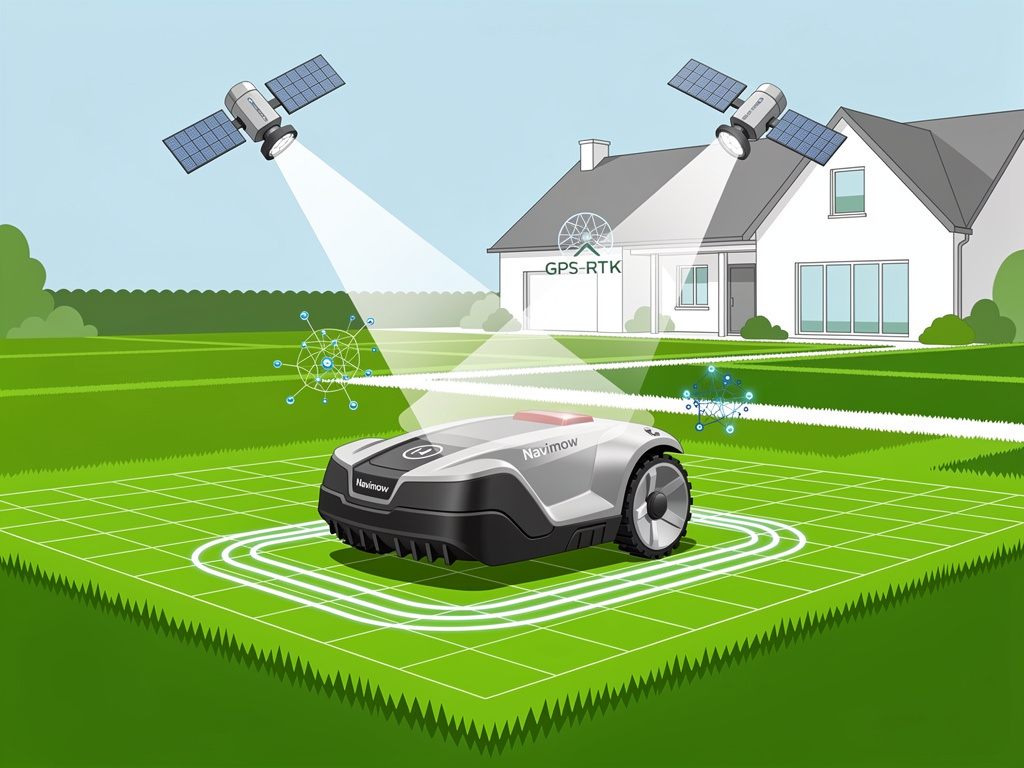
The core innovation behind the Navimow’s wire-free operation is what Segway calls its Exact Fusion Locating System (EFLS). Unlike first-generation robots that relied on bouncing randomly within a wired perimeter, the Navimow uses a high-precision GPS system augmented with Real-Time Kinematic (RTK) positioning. This technology, commonly used in surveying and precision agriculture, utilizes a small base station in the yard to correct for standard GPS signal drift, allowing the mower to determine its position with what the company claims is centimeter-level accuracy. This precision enables the user to map their property’s boundaries simply by “driving” the mower via a smartphone app, creating a virtual perimeter that is both exact and easily modified.
This technological leap directly addresses the primary complaint of early adopters. George Ren, CEO of Segway Navimow, emphasized this focus in an interview, stating the goal is a product that is “literally worry-free.” Speaking with TechRadar, Ren explained that eliminating the boundary wire was the first and most critical step in creating a seamless user experience. By digitizing the setup process, the company aims to reduce initial configuration from a multi-hour physical chore to a 20-minute digital task, a significant reduction in user friction that could prove pivotal for mass-market adoption.
Navigating a New Path with Satellites and AI
While precise positioning solves the boundary issue, navigating the complexities within that boundary is another challenge altogether. A yard is a dynamic environment, littered with temporary obstacles like garden hoses, children’s toys, and wandering pets. To address this, Segway integrated its VisionFence sensor, an AI-powered camera system that acts as the mower’s eyes. This system uses a built-in neural network to identify and classify common objects, allowing the mower to intelligently avoid them rather than bumping into them or getting stuck. This proactive avoidance is a marked improvement over simpler systems that rely on mechanical bump sensors.
The combination of EFLS for macro-positioning and VisionFence for micro-navigation allows the Navimow to cut in systematic, efficient patterns, much like a human would. This methodical approach not only provides a more uniform cut but also improves efficiency, allowing the machine to cover more ground on a single charge. It represents a significant evolution from the random, chaotic paths of older robotic mowers, moving the technology from a functional but clumsy tool to a truly smart home device that understands and interacts with its environment.
The Vision for an Uninterrupted Cut
Segway’s strategy extends beyond high-end models for early adopters. At CES 2024, the company unveiled its new i Series, a more accessible line designed to bring its wire-free technology to a broader consumer base. With a starting price point under $1,000, the Navimow i105 is positioned to directly compete with traditional riding mowers and premium push mowers. This strategic pricing, detailed by publications like The Verge, signals a clear intent to move from a niche luxury item to a mainstream appliance. The i Series retains the core EFLS and AI-powered vision system, demonstrating Segway’s belief that these features are not premium add-ons but essential components for the future of the category.
This push for affordability is critical. For robotic mowers to achieve the same market penetration as their indoor counterparts, like the Roomba, they must be perceived as not just a convenience, but a value proposition. By lowering the financial barrier to entry, Segway is challenging the notion that advanced, wire-free technology must come with an exorbitant price tag, a move that is likely to put significant pressure on competitors across the industry.
A Strategic Push for the Mainstream Market
Segway is not operating in a vacuum. The global market for outdoor power equipment is a massive, multi-billion dollar industry, and established players are not standing still. Swedish giant Husqvarna, a long-time leader in the robotic mower space, has its own line of wire-free mowers that use a similar satellite-based technology called EPOS (Exact Positioning Operating System). These professional-grade and high-end consumer models represent formidable competition, backed by a deep-rooted brand reputation and extensive dealer network. The race is on to see which company’s technology and market strategy will prove more effective in capturing the burgeoning consumer interest in automated property care.
The competition also serves to validate the technological path. The parallel development of high-precision GPS systems by major industry players indicates a broad consensus that virtual boundaries are the future. As reported by outlets like ZDNet, the key differentiators will likely come down to the sophistication of the AI, the reliability of the navigation in challenging environments, and, crucially, the accessibility of the price point. Segway’s aggressive pricing with the i Series appears to be a direct salvo in this escalating turf war.
Facing the Headwinds of Signal and Trust
Despite the technological advancements, challenges remain. The reliance on GPS means that performance can be degraded in areas with heavy tree cover, near tall buildings, or in any environment where a clear line of sight to the sky is obstructed. While Segway’s system is designed to use its vision and other sensors to navigate through brief signal losses, persistent GPS blackouts can still pose a problem. Overcoming these environmental limitations will be key to ensuring a consistently reliable experience for all users, regardless of their property’s specific characteristics.
Furthermore, there is the hurdle of consumer trust. Entrusting a fully autonomous machine armed with spinning blades to operate safely around family and pets requires a significant leap of faith. The effectiveness and reliability of the AI-powered obstacle avoidance systems will be under intense scrutiny. A single high-profile failure could set the entire industry back. Building this trust through flawless performance, transparent safety features, and robust design will be as important as any feature or price point in the long-term success of these products and the category as a whole.


 WebProNews is an iEntry Publication